Washington and Manila reaffirmed their historic 1951 Mutual Defence Treaty during their annual bilateral dialogue, pledging deeper military and economic cooperation in the Indo-Pacific region. President Ferdinand Marcos Jr. declared the alliance remains a "beacon of stability" amid regional tensions. The dialogue, first convened in 2011, covers political, security, and economic cooperation.
US-PH Defense Ties Set for Major Expansion in 2026
Reaffirmation of the 1951 Mutual Defence Treaty
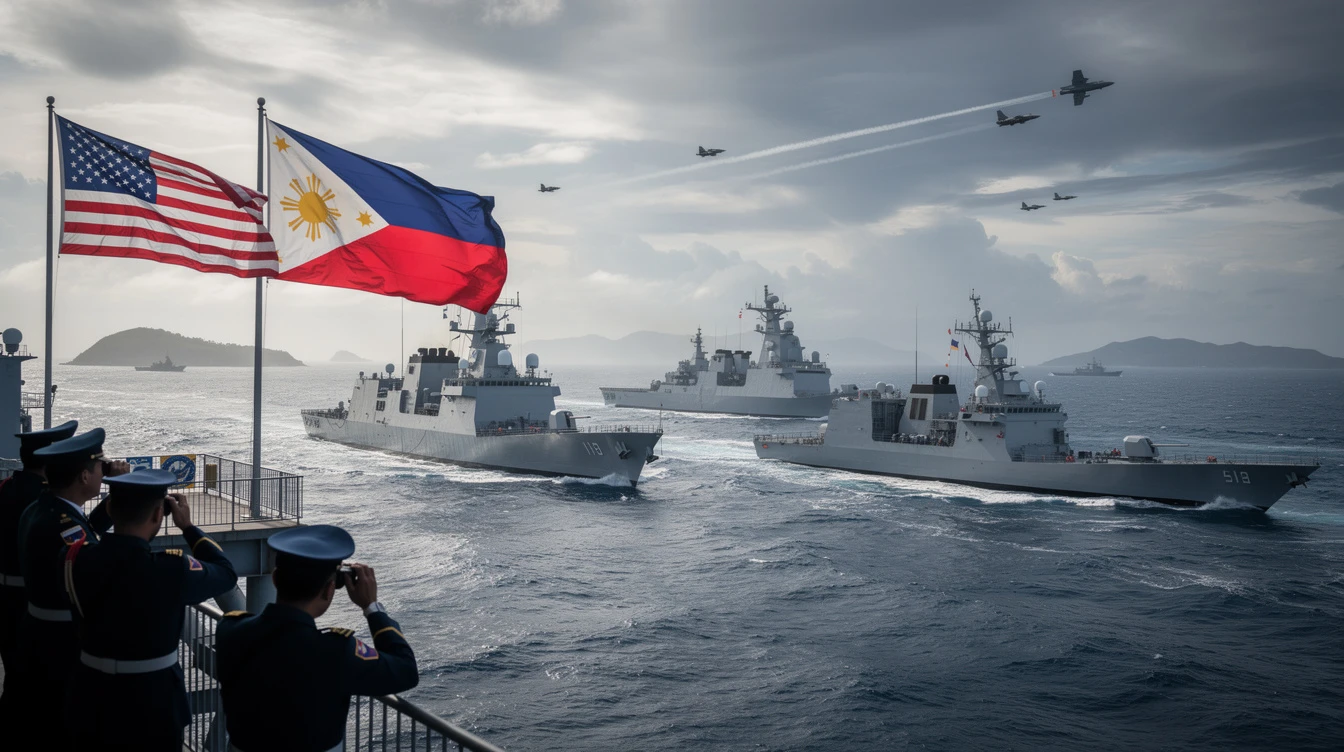
Washington and Manila reaffirmed their historic 1951 Mutual Defence Treaty, pledging deeper military and economic cooperation in the Indo-Pacific region. The annual bilateral dialogue, first convened in 2011, served as the platform for both nations to discuss the full range of political, security, and economic cooperation. President Ferdinand Marcos Jr. declared that the alliance remains a "beacon of stability" in an increasingly volatile region.
Expanded Access to Philippine Military Sites
The United States has expanded access to Philippine military installations under the Enhanced Defence Cooperation Agreement (EDCA) in recent years. This access allows American forces to operate from designated Philippine bases, positioning assets closer to potential flashpoints in the region. The strategic positioning is particularly significant given growing concerns about China's assertiveness in contested waters.
Civil Nuclear Cooperation Initiative
In a notable development, the United States committed $1.5 million through the State Department's FIRST program to build a small modular reactor (SMR) control room simulator in the Philippines. This initiative aims to ensure nuclear development in the region meets the highest standards of nuclear safety, security, and nonproliferation. The funding represents a new dimension in bilateral cooperation beyond traditional defense matters.
Strategic Implications for the Philippines
Taiwan Proximity and Regional Security
The Philippines finds itself at the forefront of regional security concerns as speculation mounts that China might attempt to take Taiwan as soon as 2027. Being Taiwan's nearest neighbor places the Philippines in a strategically sensitive position. Philippine officials recognize that any conflict involving Taiwan would have direct implications for national security, making the alliance with the United States increasingly vital.
South China Sea Tensions
The 1951 Mutual Defence Treaty has gained renewed focus amid rising tensions in the South China Sea, where Beijing has asserted sweeping territorial claims. The treaty alliance has withstood shifts in domestic and international politics over the decades, demonstrating its resilience. Both nations view the partnership as essential for maintaining freedom of navigation and regional stability.
Looking Ahead: 2026 and Beyond
According to bilateral roadmaps, 2025 focused on accelerating advanced capabilities, joint operations, and strengthened defense industrial cooperation. For 2026, both nations have committed to increased collaboration across multiple fronts. The partnership continues to evolve from a traditional security arrangement into a comprehensive alliance addressing emerging threats and opportunities in the Indo-Pacific. Military analysts note that the strengthened cooperation signals a unified front among democratic nations in the region, though challenges remain in balancing regional stability with escalating great power competition.