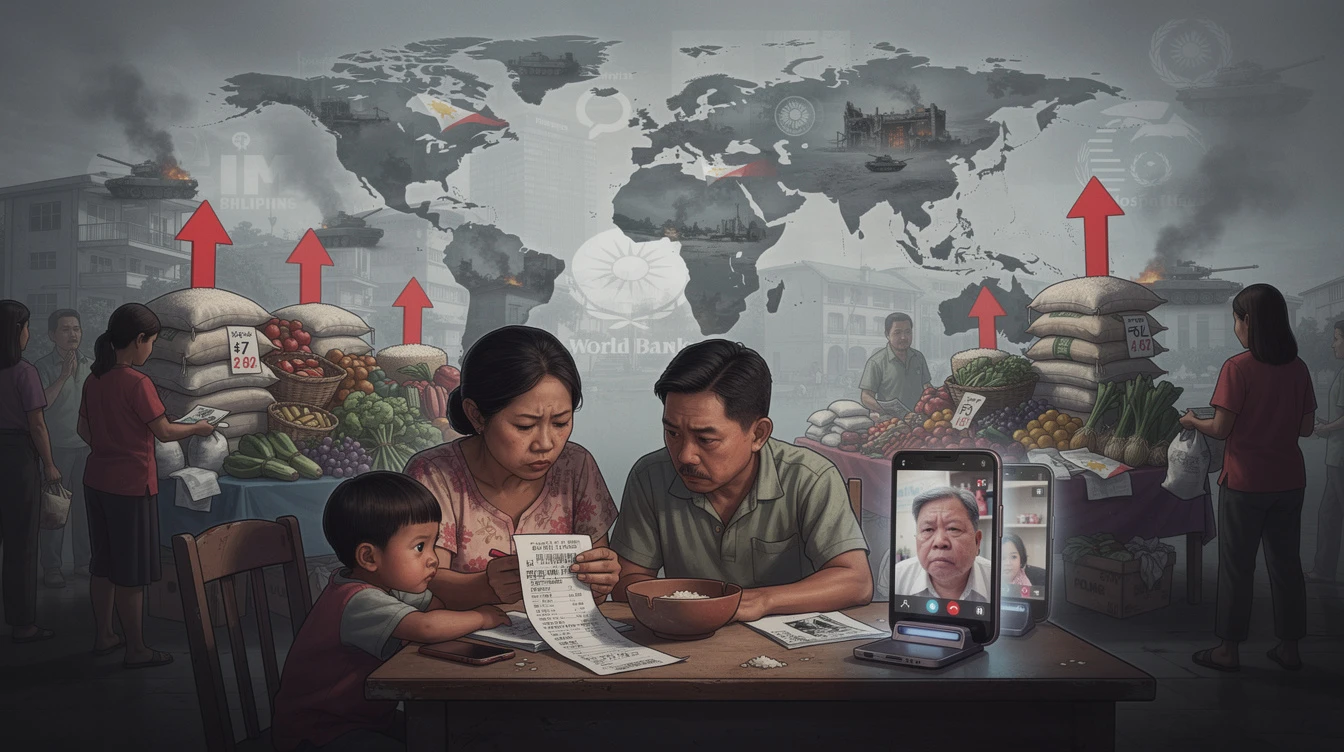
The heads of the International Monetary Fund, World Bank, and UN World Food Programme jointly warned that ongoing global conflicts are sharply increasing food prices and insecurity worldwide. Their statement, issued from Washington, highlights spikes in fuel and food costs as particularly concerning for vulnerable nations.
This global alert carries immediate weight for the Philippines, a major food importer sensitive to international price shocks. The Philippine Statistics Authority recently reported inflation at 3.9% for May, with food and non-alcoholic beverages remaining a primary driver.
IMF Managing Director Kristalina Georgieva stated, "Conflict is a dominant driver of acute food insecurity, affecting over half of the people facing crisis or worse levels." The agencies specifically pointed to how war disrupts trade routes, agricultural production, and supply chains.
For Filipino consumers, this translates to continued pressure on prices of imported staples like wheat, meat, and cooking oil. The Philippines imports a significant portion of its food, making its domestic market highly exposed to the international volatility these leaders describe.
The warning also directly impacts millions of Overseas Filipino Workers and their families. Remittances, which fuel household consumption, lose purchasing power when global food prices rise. This creates a double burden for families dependent on foreign earnings.
National Economic and Development Authority Secretary Arsenio Balisacan has previously emphasized stabilizing food supply as key to managing inflation. The joint statement from global institutions underscores the external challenges to this goal.
Furthermore, potential increases in global fuel prices mentioned by the agencies would ripple through the Philippine economy, affecting transport and production costs for local goods. This could stall recent progress in tempering inflation.
The Food and Agriculture Organization has indicated food price rises may continue if conflicts persist. For a nation where a large segment of the population spends a major portion of income on food, this is an urgent economic security issue.
The significance for Filipino readers is profound. Rising global food prices threaten to reverse gains in poverty reduction and strain the budgets of ordinary households, from local markets to OFW-dependent homes. It underscores the need for enhanced local agricultural resilience and strategic government buffer stocking to shield the most vulnerable from external shocks.