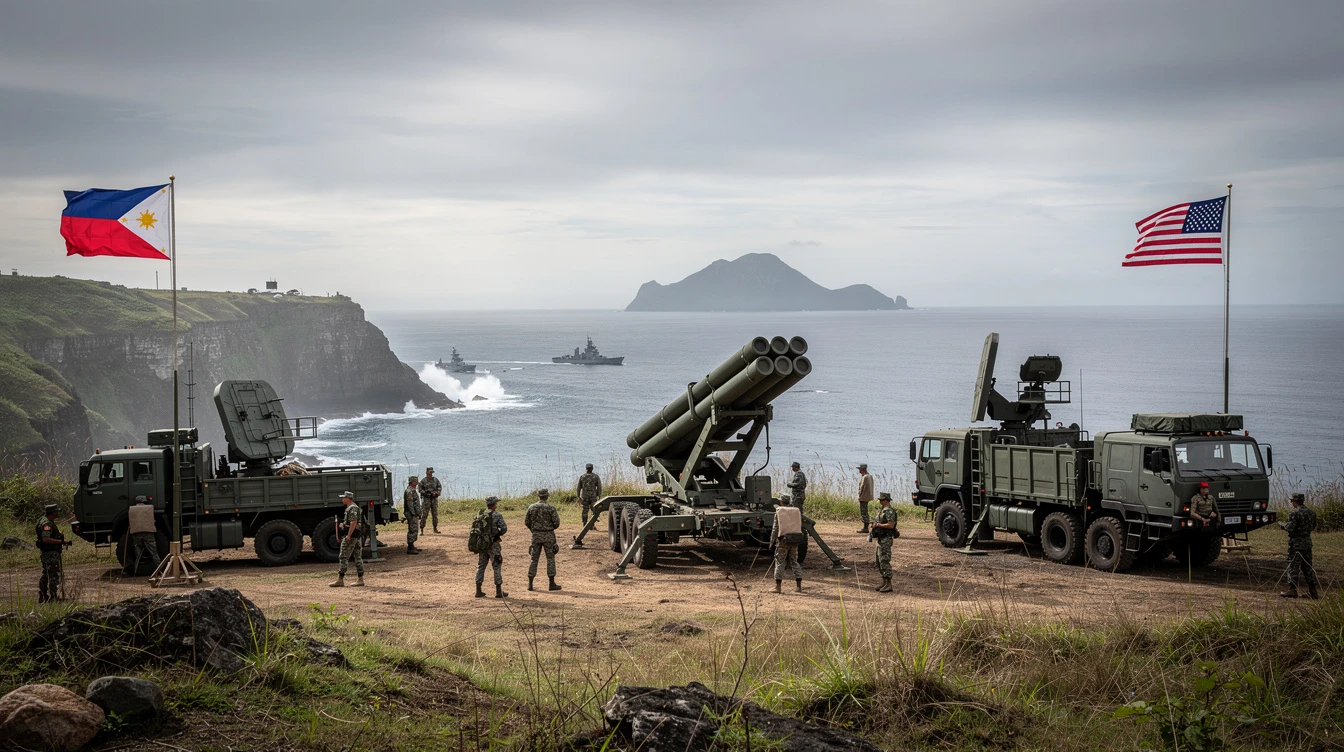
BATANES, Philippines — Philippine and US military forces on Saturday, May 2, 2026 deployed and showcased the Navy-Marine Expeditionary Ship Interdiction System (NMESIS), an advanced anti-ship missile system, in Basco, Batanes province, as part of the annual Balikatan 2026 war games. The deployment, just 140 kilometers from Taiwan, comes as tensions simmer over the self-governed island that China claims as its own territory.
NMESIS Deployment Details
US Marine Corps Lt. Col. Thomas L. Gibbs, commander of the 3rd Marine Littoral Regiment, told reporters that the NMESIS is designed for remote operation. "The purpose of this system is for it to be fully autonomous, for us not to require a driver or passenger inside the vehicle itself," Gibbs said. The system can be airlifted and deployed to any coastline in the Philippine archipelago within hours, according to Philippine Army Col. Michael Cabalza.
Strategic Location Batanes
The Batanes Islands, the northernmost province of the Philippines, sit between Luzon and Taiwan. Cabalza said the placement in Batanes is likely viewed by Beijing as part of the "US-led encirclement" of China. The system's ability to strike ships makes it a significant deterrent asset in the region.
Balikatan 2026 Context
Balikatan, Filipino for "shoulder-to-shoulder," is the largest annual joint military exercise between the Philippines and the United States. This year's exercises include over 12,000 troops from both nations, focusing on external defense and humanitarian assistance. The NMESIS deployment marks the first time the system has been used in the Luzon Strait, a critical waterway for global trade and military transit.
Regional Reactions and Market Impact
China has consistently opposed foreign military activities near Taiwan. The Chinese Foreign Ministry has previously warned against any actions that could escalate tensions. However, a report from CryptoBriefing on May 2 noted that prediction markets showed a decrease in the probability of a Chinese invasion of Taiwan by June 30, 2026 following the deployments. The analysis suggests that "the presence of US and allied forces in the region appears to be a deterrent to escalation, influencing participant sentiment towards a reduced likelihood of immediate military conflict."
Deterrence vs. Escalation
Defense analysts are divided on the NMESIS deployment. Some see it as a necessary deterrent against Chinese aggression, while others warn it could provoke a stronger Chinese response in the South China Sea and Taiwan Strait. The Philippine Defense Secretary has emphasized that the exercises are purely defensive in nature.
Philippine Military Modernization
The Philippines has been aggressively modernizing its military under the Revised AFP Modernization Program. The NMESIS deployment aligns with Manila's strategy of enhancing territorial defense, particularly in the northern approaches where the Bravo, Delta, and Philippine Rise features are located. For many Filipinos, the presence of cutting-edge US technology offers a sense of security but also raises questions about sovereignty and alliance dependency.
Significance for Filipino Readers
For Filipinos, the deployment of the NMESIS in Batanes underscores the country's central role in Indo-Pacific security dynamics. It highlights the government's commitment to defending its territory under the Mutual Defense Treaty with the US, while also exposing the nation to potential blowback from China. As geopolitical tensions persist, Filipino citizens can expect increased military activity near their shores and heightened attention from global powers.
Frequently Asked Questions
What is the NMESIS anti-ship missile system?
NMESIS stands for Navy-Marine Expeditionary Ship Interdiction System. It is a remotely operated mobile missile launcher designed to strike enemy ships from land. It can be airlifted and deployed to any coastline within hours.
Why was it deployed in Batanes during Balikatan 2026?
Batanes is strategically located near Taiwan, making it a key position for controlling the Luzon Strait. The deployment is part of joint exercises to demonstrate defensive capabilities and deter potential aggression in the region.
How has China reacted to the deployment?
China has not officially responded to the specific deployment as of May 2, 2026, but has historically criticized US and Philippine military activities near Taiwan as provocative and escalating tensions.
For more updates on Philippine defense and security, read our articles onPhilippine defense policy andabout PinoyPulse. Also check out our coverage ofBalikatan 2025 highlights andEDCA bases expansion. For external context, seeReuters andAsiaOne for original reporting.