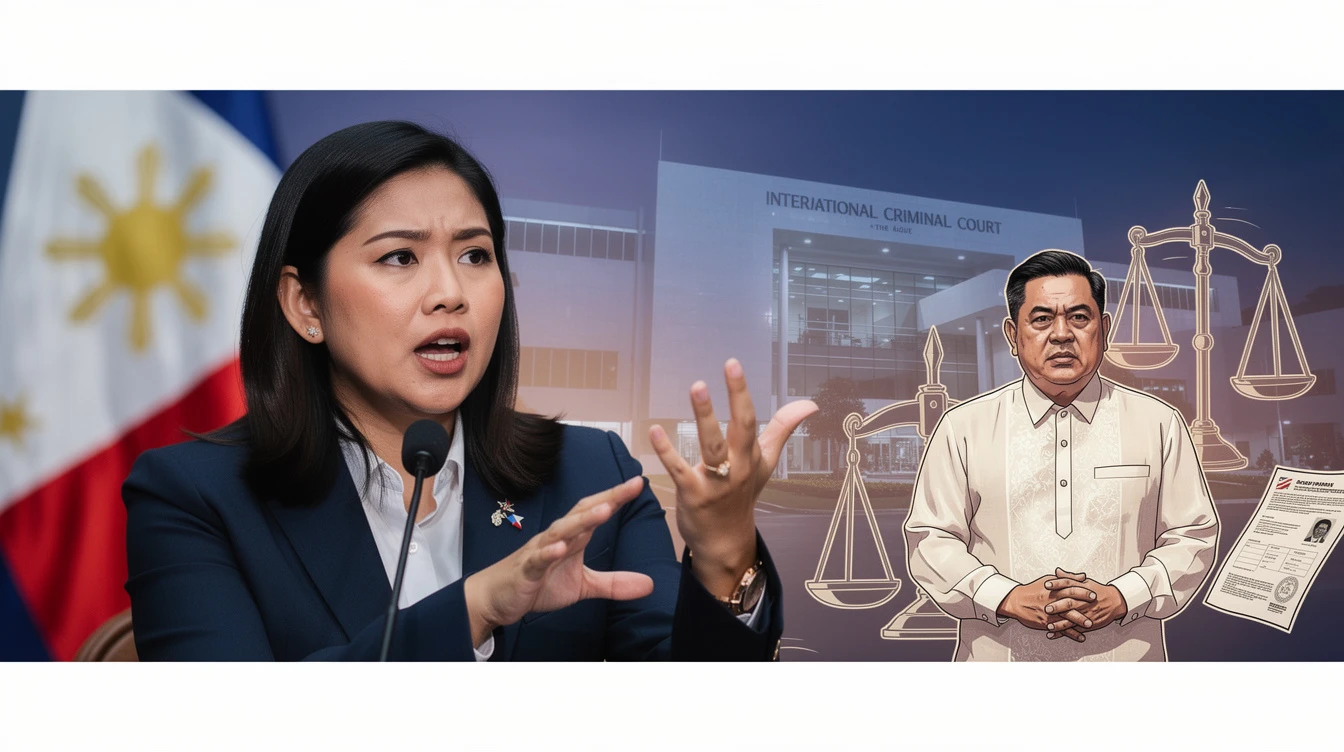
Vice President Sara Duterte on Monday criticized the attempted enforcement of an arrest warrant from the International Criminal Court (ICC) against Senator Ronald “Bato” dela Rosa, calling the move a violation of Philippine sovereignty and an overreach by the international tribunal.
In a statement, the Vice President said the attempt to serve the warrant was “wrong and baseless,” adding that the ICC has no jurisdiction over the Philippines since the country withdrew from the Rome Statute in 2019 under her father, former President Rodrigo Duterte.
The incident took place last week when authorities allegedly tried to serve the warrant on Dela Rosa as he was returning to the Senate after months of absence. Dela Rosa has been absent from Senate sessions since November last year after Justice Secretary Jesus Crispin Remulla said an ICC warrant against him was imminent.
What happened
Senator Dela Rosa returned to the Senate on Monday, March 10, after a long hiatus, and was greeted by the news that an ICC arrest warrant had been served on him in his absence. According to sources, the warrant relates to the ICC’s investigation into the drug war killings during the Duterte administration, in which Dela Rosa served as the first Philippine National Police chief under President Rodrigo Duterte.
The warrant was reportedly delivered to his office, but Dela Rosa was not physically present at the time. Senate officers received the document, which was later confirmed by the chamber’s sergeant-at-arms.
“The honorable gentleman is not here, but we have received the papers,” Senate President Juan Miguel Zubiri said in a brief statement. “We will turn them over to the proper authorities.”
VP Sara’s reaction
Vice President Duterte, who is also the concurrent Secretary of Education, issued a statement Monday afternoon, saying: “The attempt to serve an ICC warrant on Senator Bato dela Rosa is wrong. The ICC has no jurisdiction over the Philippines. We have withdrawn from the Rome Statute, and we are a sovereign nation.”
“This is a clear violation of our sovereignty,” the Vice President said. “The ICC has no right to dictate on us. Senator Dela Rosa served his country as a police chief and as a senator. He deserves respect, not harassment.”
Sara Duterte also urged the Philippine government to assert its position and reject any ICC intervention, warning that such actions could undermine the country’s legal system and set a dangerous precedent.
Background on the ICC investigation
The International Criminal Court has been investigating the drug war under the Duterte administration since 2018, focusing on alleged extrajudicial killings. The Philippine government under President Rodrigo Duterte withdrew from the ICC in March 2019, arguing that the court had no jurisdiction over its internal affairs.
Despite the withdrawal, the ICC has maintained that it retains jurisdiction over crimes committed while the Philippines was still a member state, which ended in March 2020. The court has since pursued cases against several high-ranking officials, including Senator Dela Rosa, who led the PNP during the first six months of the drug war.
Senator Dela Rosa, a key ally of the Duterte family, has repeatedly denied any wrongdoing and maintained that the drug war operations were legal and conducted within the bounds of the law. He has also accused the ICC of being a political tool used by foreign powers to interfere in Philippine affairs.
Bato Dela Rosa’s return to Senate
Dela Rosa’s return to the Senate on Monday was his first appearance since November 2024, when he went on leave following reports that the ICC was preparing an arrest warrant. His absence had raised questions among colleagues and the public, with some senators calling for an explanation.
On Monday, Dela Rosa appeared composed and thanked his supporters. “I am here to fulfill my duties as a senator,” he told reporters. “I have nothing to hide. I am ready to face any legal challenge, but it must be done through our own courts, not a foreign tribunal.”
Senate President Zubiri said the chamber would discuss the matter, but stressed that the Senate respects the independence of the judiciary and the rule of law. “We will let the legal process take its course,” Zubiri said. “But the Senate will not be a party to any foreign interference.”
Government response
The Philippine government, through the Department of Justice, has maintained its position that it will not cooperate with the ICC investigation. Secretary Jesus Crispin Remulla has previously stated that the government will not execute any ICC arrest warrant, as it considers the court’s actions as an infringement on Philippine sovereignty.
“We have withdrawn from the ICC, and we will not honor any warrant coming from them,” Remulla said in a briefing last week. “If they want to enforce it, they will have to do it themselves. But they cannot operate inside the Philippines without our consent.”
Despite this, the ICC continues to push forward with its investigation, and analysts say it may rely on international cooperation to execute warrants, though the Philippine government has said it will not assist.
Legal implications
Legal experts are divided on the issue. Some argue that the Philippines’ withdrawal from the Rome Statute does not shield officials from ICC prosecution for crimes committed while the country was a member. Others maintain that the ICC has no enforcement mechanism in the Philippines and that any warrant served without state cooperation is essentially symbolic.
“This is a test of the ICC’s resolve,” said University of the Philippines law professor Michael Yusingco. “Without Philippine cooperation, the ICC’s warrant is just a piece of paper. But it adds political pressure on Senator Dela Rosa and the Duterte administration.”
Senator Dela Rosa said he is consulting with his legal team and plans to challenge the validity of the warrant in Philippine courts. “I will fight this,” he said. “I will not allow the ICC to destroy my reputation and my service to the Filipino people.”
The Vice President’s statement adds to the growing political tension, as the Duterte family remains a powerful force in Philippine politics. Sara Duterte is widely seen as a potential presidential candidate in 2028, and her stance on the ICC issue aligns with her father’s position, appealing to nationalist sentiments among her supporters.
As the ICC proceedings continue, the government is expected to maintain its non-cooperation stance, while Dela Rosa prepares for what could be a lengthy legal battle domestically and internationally.