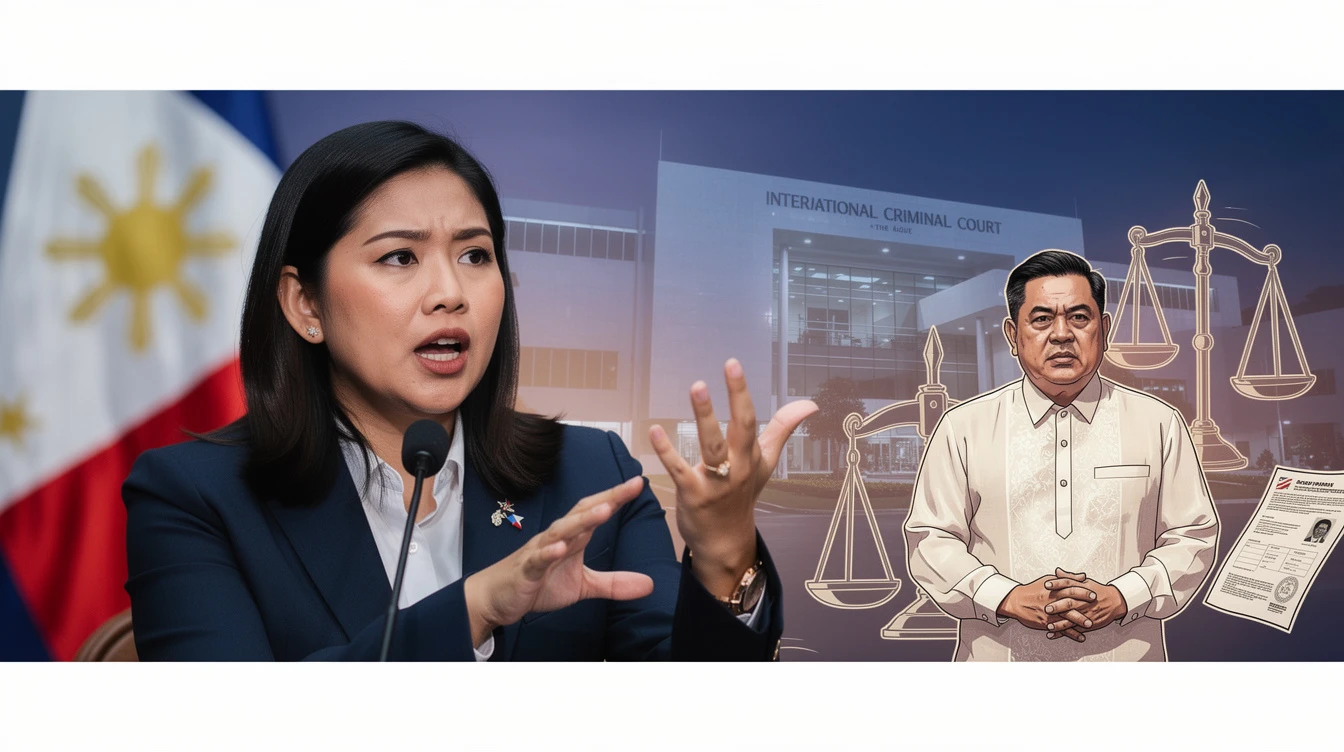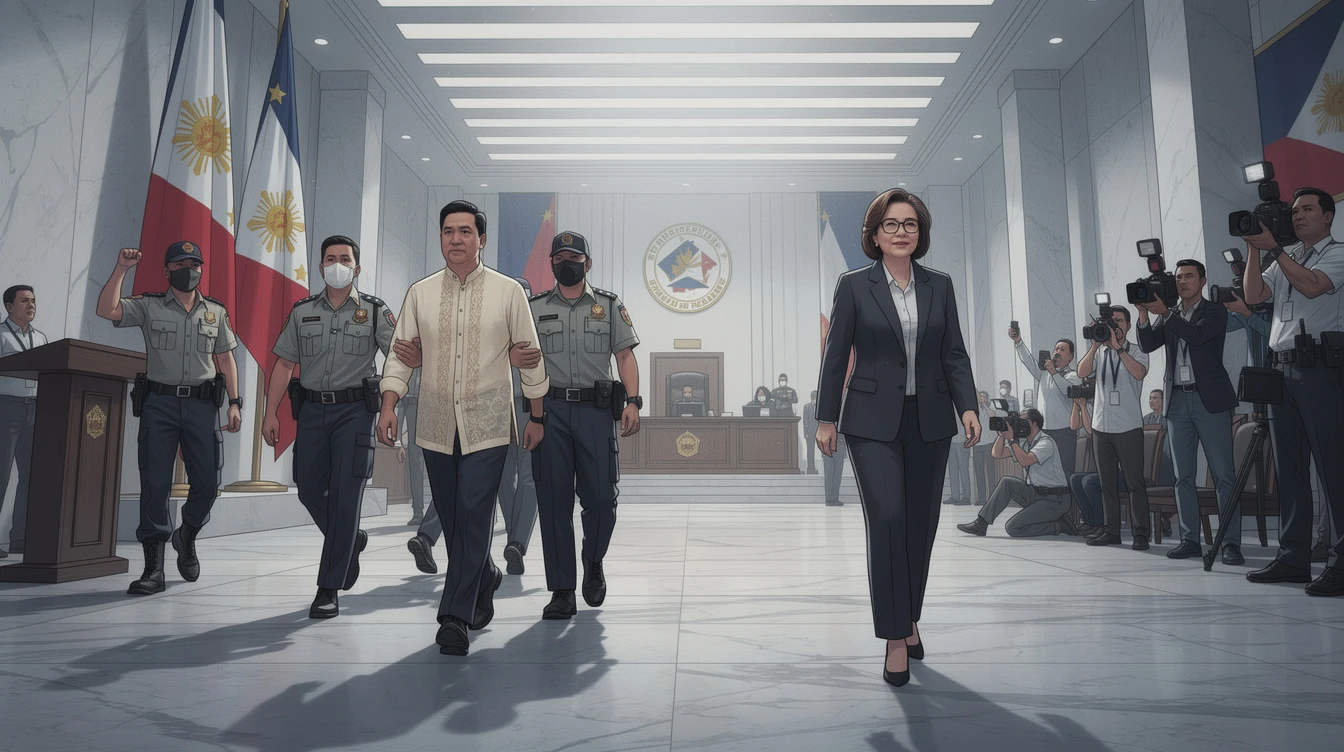
Two former Philippine senators were arrested inside the Senate premises in separate incidents that drew national attention and raised questions about legal procedures and political motives.
Former Senator Antonio Trillanes IV was taken into custody after presenting what he claimed was an International Criminal Court arrest warrant against President Rodrigo Duterte. Hours earlier, former Senator Leila de Lima was arrested by order of a regional trial court, marking the second time in less than two years that a senator had been arrested inside the legislative building.
Trillanes Arrested After ICC Warrant Presentation
On the morning of the arrests, Trillanes arrived at the Senate carrying a document he identified as an ICC arrest warrant. He showed the paper to reporters and security personnel before he was detained.
Police officers took Trillanes into custody without immediate explanation of the charges. Sources later confirmed he was arrested in connection with allegations related to his previous testimony before the international court.
Video footage showed Trillanes calmly holding the document as officers approached him. He did not resist arrest and was led away from the Senate grounds.
Trillanes was one of the most productive senators in the 17th Congress, according to legislative records.
De Lima Arrested by RTC Order
Earlier that same day, former Senator Leila de Lima was arrested inside the Senate by order of a regional trial court. The warrant cited drug-related charges that de Lima has consistently denied.
De Lima, who served as Justice Secretary before becoming a senator, was taken from a committee hearing room. She was later transferred to a police detention facility.
The arrest order was issued by a court in Muntinlupa City. De Lima's legal team said they would file a motion to quash the warrant, arguing it was politically motivated.
Unprecedented Arrests of Lawmakers on Senate Grounds
The back-to-back arrests marked an extraordinary event in Philippine legislative history. Never before had two incumbent or former senators been arrested inside the Senate building on the same day.
Senate President Vicente Sotto III issued a statement expressing concern over the incidents. He said the Senate would review security protocols but acknowledged that arrest warrants are legal processes that must be respected.
Legal experts noted that the arrests raised questions about the separation of powers. They said arresting lawmakers inside the legislative chamber could be seen as an infringement on parliamentary immunity.
Trillanes as Productive Senator
Records from the 17th Congress show Trillanes had one of the highest attendance rates among senators. He authored several bills that became law, including measures on public accountability and military reform.
His arrest came as a surprise to many colleagues, who described him as actively engaged in legislative work. Trillanes had been vocal in his criticism of the Duterte administration's policies, particularly the war on drugs.
De Lima's Drug Case
De Lima was arrested on charges of alleged involvement in the illegal drug trade while she was Justice Secretary. She has been detained for several years, including at the Philippine National Police Custodial Center.
Human rights groups have called for her release, describing the charges as fabricated. The Philippine government maintains that her arrest was based on evidence and due process.
International Reaction
The arrests drew attention from international organizations. The United Nations Office of the High Commissioner for Human Rights called for transparency in the legal proceedings.
The European Union issued a statement expressing concern over what it described as selective arrests of opposition figures. The Philippine government dismissed these concerns as interference in domestic affairs.
Legal Implications
Lawyers for both former senators said they would challenge the legality of the arrests. They pointed to the 1987 Constitution, which grants senators immunity from arrest during sessions for offenses punishable by less than six years in prison.
The Supreme Court had previously ruled on the limits of legislative immunity. The high court said the privilege is not absolute and does not cover criminal offenses.
What the ICC Warrant Means
Trillanes' claim of possessing an ICC arrest warrant added another layer of complexity. The Philippines withdrew from the Rome Statute in 2019, but the ICC retained jurisdiction over crimes allegedly committed while the country was still a member.
Legal analysts said Trillanes would likely face contempt charges for actions related to his testimony before the international court. They said the arrest was based on domestic law rather than the ICC warrant itself.
The incidents underscored the deepening political divide in the country. Supporters of the former senators called the arrests a crackdown on dissent, while government officials said they were routine law enforcement.
Both cases are expected to proceed through the courts, with hearings scheduled in the coming weeks.