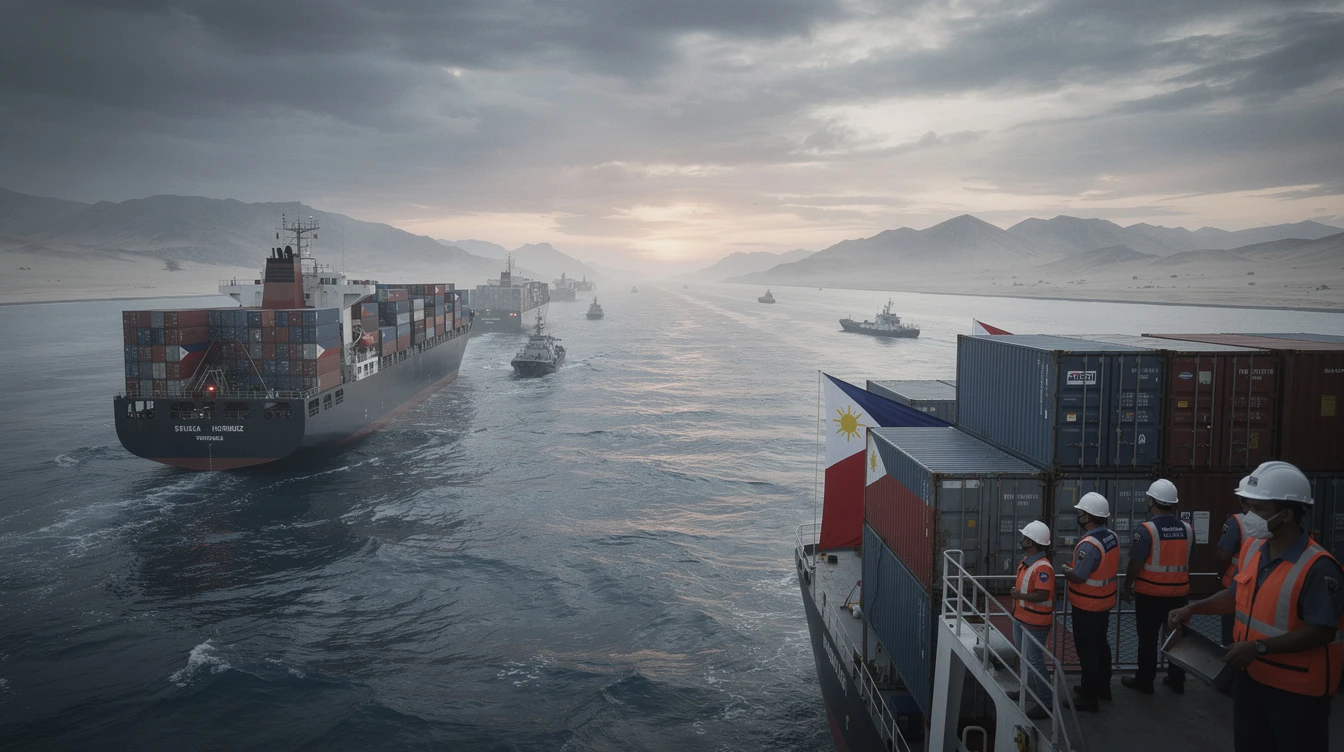
International shipping firms are demanding concrete security guarantees before resuming normal transit through the Strait of Hormuz, a critical development for the Philippines which imports over 90% of its oil and a vast quantity of goods through this waterway. The hesitation follows Iran's announcement that the strait is open during a ceasefire, but companies cite unresolved mine threats and coordination requirements with Iran's Revolutionary Guard.
According to a Reuters report, a U.S. Navy advisory on Friday warned the mine threat in parts of the strait is \"not fully understood\" and avoidance should be considered. This caution directly threatens to increase freight costs and cause delays for Philippine imports of fuel, electronics, and manufactured goods, potentially driving up local consumer prices.
German shipping giant Hapag-Lloyd stated it was working for its ships to sail through \"as soon as possible\" but acknowledged numerous unanswered questions. Around 20 ships were tracked moving toward the strait's exit on Friday evening, indicating some movement but not a full resumption of traffic.
The Strait of Hormuz is a chokepoint for roughly 20-30% of global seaborne oil trade. IMF Managing Director Kristalina Georgieva warned recently that reduced traffic there might become a \"new reality,\" mirroring the near-halving of traffic in the Red Sea's Bab al-Mandeb strait since Houthi attacks began in October 2023.
For the Philippines, prolonged disruption risks a double economic hit: higher costs for imported energy and raw materials, and increased shipping insurance premiums. This comes as the nation grapples with inflation and seeks stable economic growth.
Iranian Foreign Minister Abbas Araqchi linked the strait's opening to a 10-day Lebanon ceasefire, causing a brief fall in global oil prices. However, shipping executives remain skeptical without operational details and safety assurances from naval authorities.
The situation remains fluid. A senior Iranian official told Reuters all commercial ships, including U.S. vessels, can sail through but must coordinate plans with the Islamic Revolutionary Guard Corps (IRGC). This requirement adds a layer of bureaucratic uncertainty for global logistics.
Any sustained shipping crisis in the Middle East also threatens the timely and cost-effective delivery of goods ordered online by millions of Filipinos, and could impact the value of remittances from OFWs in the region if economic activity slows.
The Philippine economic team must monitor this situation closely, as supply chain stability is crucial for maintaining price controls and supporting the purchasing power of Filipino households and businesses.