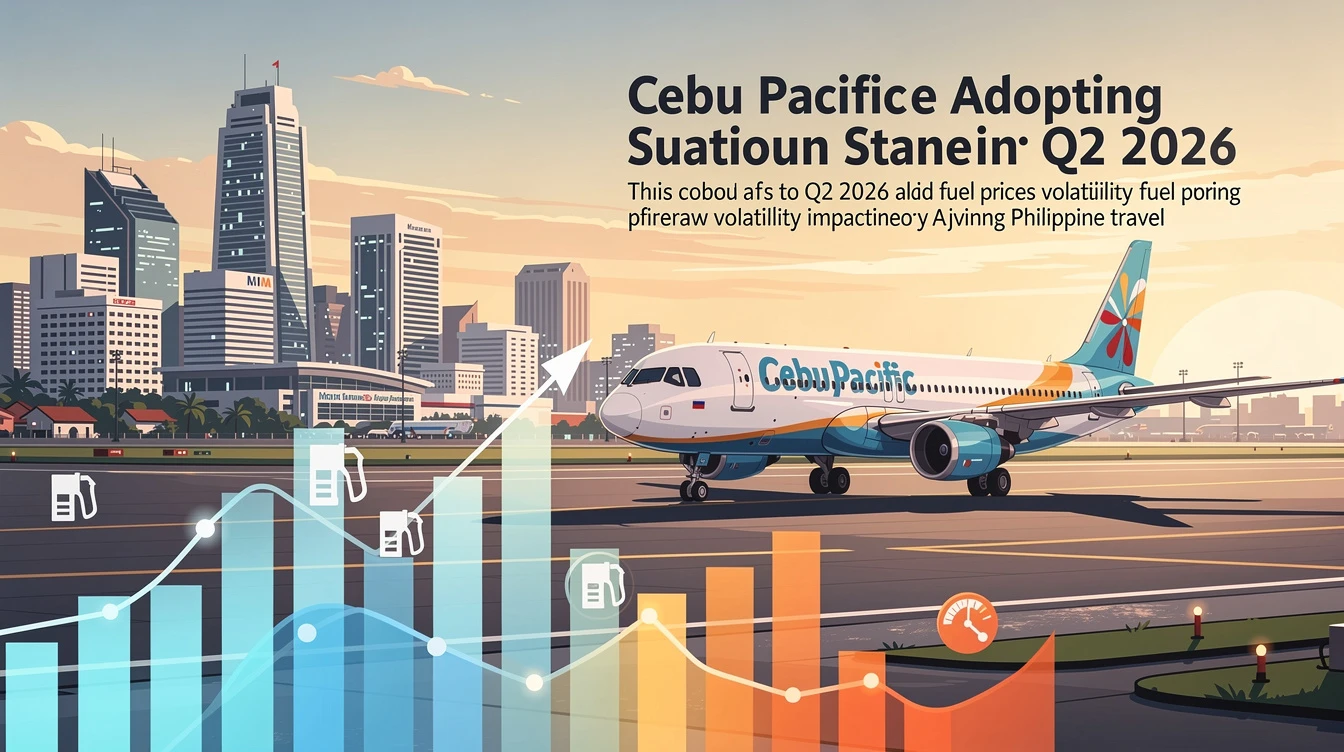
Cebu Pacific Air is implementing a "cautious and measured" operational strategy for the second quarter of 2026, its chief executive officer announced this week.
CEO Mike Szucs cited a "volatile fuel price environment" as the primary driver for the airline's careful planning nearly two years in advance.
"For the second quarter, we are taking a cautious and measured approach amid a volatile fuel price environment," Szucs stated in a briefing covered by GMA News Online.
The airline plans to optimize flight schedules and capacity to manage costs while navigating unpredictable jet fuel markets.
This forward-looking strategy signals Cebu Pacific's preparation for sustained economic headwinds that directly impact its low-cost business model.
Fuel typically constitutes 30% to 40% of an airline's operating expenses, making price swings a critical factor for profitability.
The Philippine carrier's announcement provides an early glimpse into the travel landscape for 2026, affecting both domestic and international routes.
For the Filipino traveling public, this cautious approach may translate to more stable but potentially less aggressive fare promotions.
It could also influence the launch of new routes, particularly to secondary destinations that rely on Cebu Pacific for connectivity.
The airline's strategy reflects a broader industry trend of hedging against geopolitical and economic uncertainties affecting global oil supply.
Cebu Pacific, which operates the largest fleet in the Philippines, serves as a vital economic link for tourism and OFW family visits.
Any adjustment to its growth plans has ripple effects across the Philippine tourism sector, which contributes significantly to GDP.
Hotels, resorts, and local businesses in tourist destinations closely monitor airline capacity projections for future planning.
The airline's measured stance comes as the Philippines continues to recover international tourist arrivals post-pandemic.
Competitors Philippine Airlines and AirAsia Philippines are likely monitoring similar fuel price challenges for their own network planning.
Szucs emphasized that optimization efforts are designed to maintain reliability while protecting the airline's financial health.
This long-range planning is unusual in the aviation industry, where schedules are typically finalized 12-18 months in advance.
The early announcement suggests Cebu Pacific anticipates prolonged market instability requiring extended strategic adjustments.
For OFW families planning reunions in 2026, the news highlights the importance of monitoring fare trends well ahead of travel dates.
The airline's caution may lead to more conservative seat inventory management on popular OFW routes like Manila to Dubai or Singapore.
Domestic travelers, especially in Visayas and Mindanao, depend on Cebu Pacific's extensive network for affordable inter-island travel.
A scaled-back growth plan could affect frequency on some provincial routes, potentially impacting local economies.
The Philippine government's infrastructure projects, like new airports, also depend on airline commitments for future service.
Cebu Pacific's decision underscores how global commodity markets directly influence everyday Filipino mobility and economic opportunity.
The carrier transported over 20 million passengers in 2023, demonstrating its massive footprint in Philippine aviation.
Its strategic choices therefore carry substantial weight for the national economy and the personal plans of millions of citizens.
As fuel prices remain a wild card, Filipino travelers are advised to stay informed about airline strategies that shape the market.
The significance for Filipino readers is clear: airline planning years ahead directly shapes travel affordability and accessibility.
For a nation of island communities and millions working abroad, reliable and affordable air connectivity is not a luxury but a necessity.
Cebu Pacific's cautious 2026 outlook serves as an early indicator of potential travel cost pressures facing Filipino families and businesses.
It reminds stakeholders that the price of global oil ultimately influences the cost of visiting family, conducting business, or exploring one's own country.