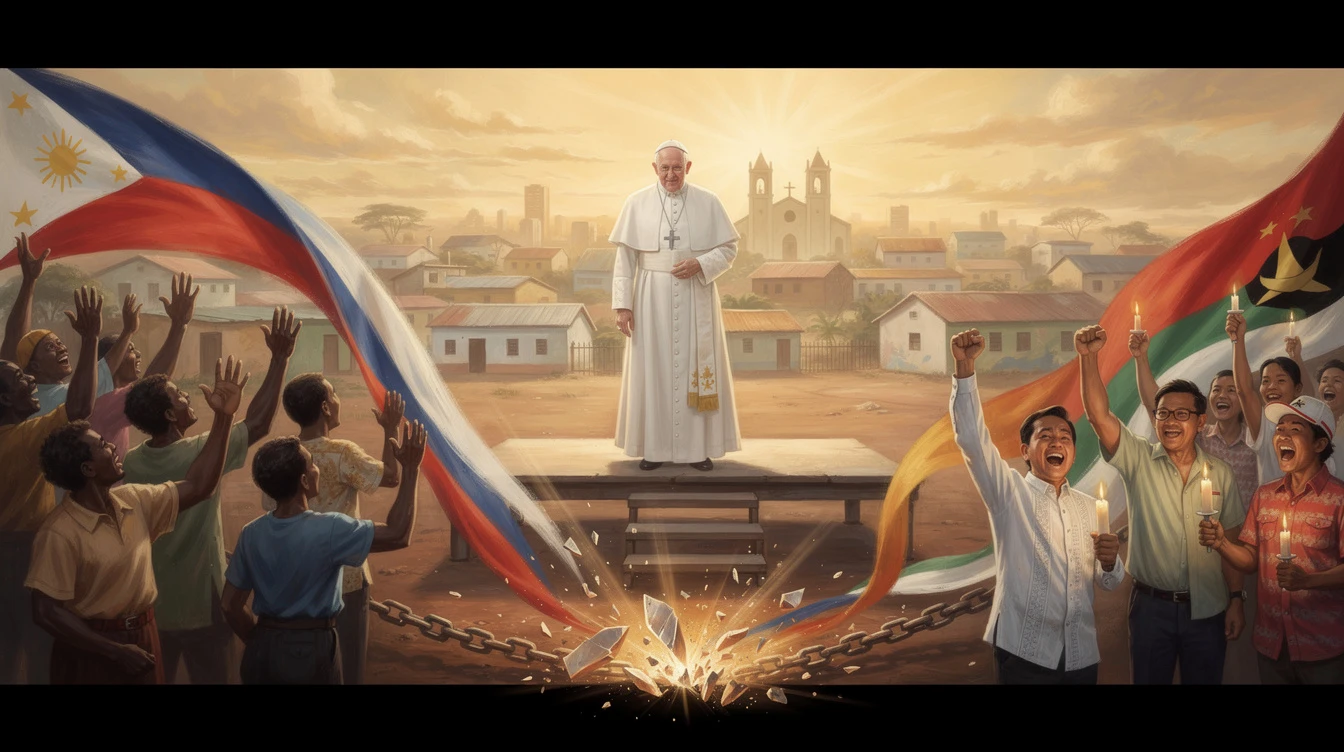
Pope Leo, during his visit to Angola on Saturday, April 18, 2026, sharply criticized leaders who plunder natural resources and make false promises to their people. His message, delivered to a global audience, carries significant weight for Filipino Catholics and anti-corruption advocates who see similar patterns in domestic politics.
The Pontiff specifically denounced \"despots and tyrants\" who exploit national wealth for personal gain while failing to deliver development. According to a Reuters report from the event, Pope Leo framed this exploitation as a grave injustice against the poor and vulnerable populations.
This public condemnation from a major religious figure provides moral backing for Philippine civil society groups. These organizations have long fought against corruption in mining, logging, and government procurement. The Pope's words offer a universal ethical framework for their advocacy.
Per the Vatican press office, Pope Leo's Africa tour aims to highlight themes of justice and equitable development. His forceful language in Angola marks a shift toward more direct political commentary from the Holy See, a development closely watched by the Philippine Church.
The Philippine Catholic Bishops' Conference (CBCP) has historically issued pastoral letters on social justice. Pope Leo's unequivocal stance may encourage local bishops to adopt stronger language regarding resource management and political accountability in the Philippines.
Analysts note the timing is pertinent for the Philippines, where debates over mining laws, ancestral domain, and the use of natural resource revenue are ongoing. The Pope's message reinforces the argument that these resources must benefit the entire nation, not just a privileged few.
For the millions of Filipino overseas workers, many in Africa and the Middle East, the Pope's focus on leaders who break promises resonates deeply. They often witness or experience governance failures firsthand, which impacts their families and communities back home.
The Vatican's stance, as reported by international news agencies, does not name specific countries. However, its principles apply universally, challenging all nations, including the Philippines, to audit their governance of natural and public resources.
This global religious intervention into governance issues provides a non-partisan touchstone for discussion. It allows Filipino citizens to evaluate their leaders' performance against a clear, moral standard set by a respected global figure.
Pope Leo's discourse moves beyond abstract theology to address concrete political failures. This approach empowers local clergy and lay leaders to connect faith directly with issues of transparency and anti-corruption in their homilies and community work.
The Pope's message serves as a critical reminder for Filipino voters and civil society. It underscores the importance of holding leaders accountable for their promises and their stewardship of the nation's wealth, a concern that transcends national borders.