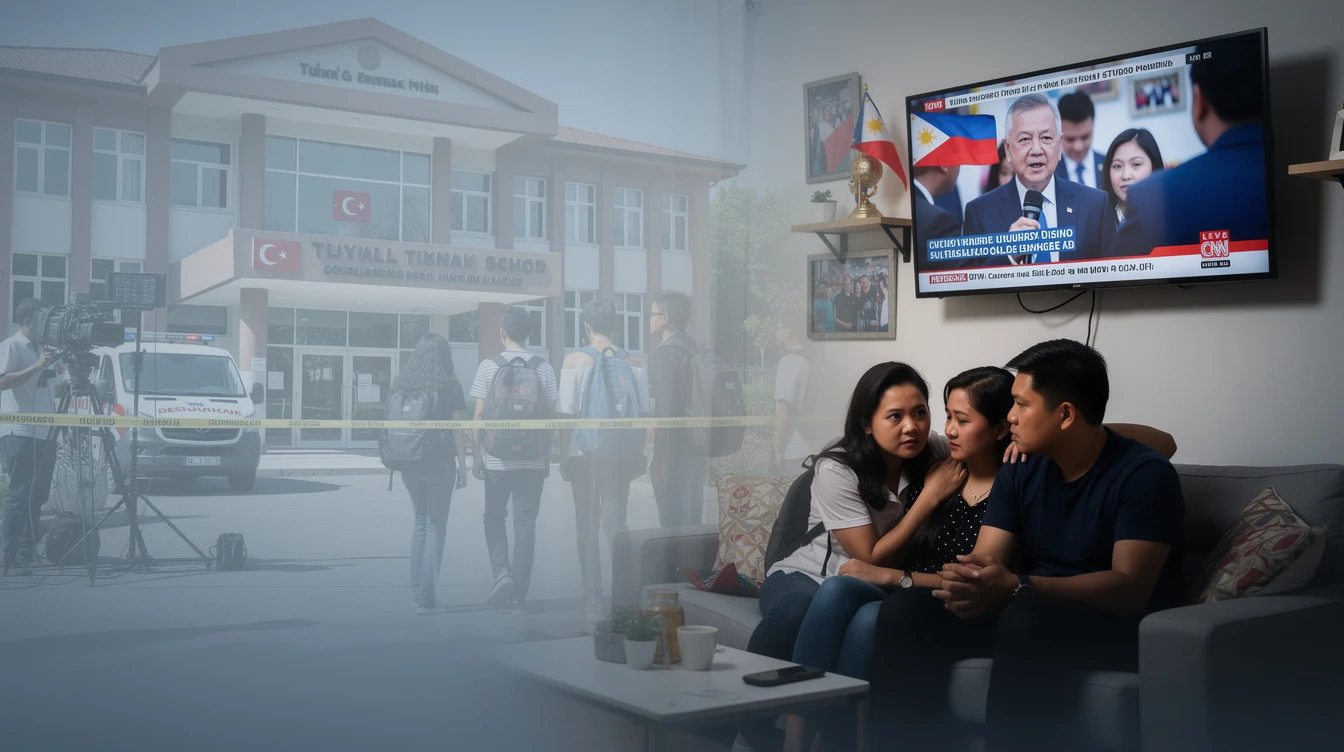
A 14-year-old student opened fire at a middle school in southern Turkey on Wednesday, killing nine people and wounding 13 others using his father's firearms.
The shooting occurred in two classrooms, sparking panic and highlighting a troubling rise in gun violence in educational institutions globally.
Turkish authorities confirmed the attacker was an eighth-grade student who used five guns belonging to his father during the assault.
"We are faced with a painful incident that has shaken our entire nation," a Turkish interior ministry official stated in Ankara.
Emergency responders rushed the wounded to nearby hospitals while security forces secured the school premises.
This tragedy immediately raised concerns within Philippine diplomatic circles about the safety of Filipino students abroad.
The Department of Foreign Affairs monitors approximately 1,200 Filipino students currently studying in Turkey through various exchange programs.
"Our embassy in Ankara is checking if any Filipino students were affected," DFA spokesperson Teresita Daza told PinoyPulse.com.
Initial verification indicates no Filipino casualties, but the incident has triggered safety reassessments for overseas communities.
The shooting underscores growing global anxiety about school security that resonates deeply with Filipino families.
Many OFW parents in Turkey and neighboring countries now worry about their children's safety in foreign educational systems.
"This hits close to home because many OFWs sacrifice everything for their children's education overseas," said Migrante International chairperson Joanna Concepcion.
"When violence erupts in schools abroad, it shatters that dream of safety they work so hard to provide."
In the Philippines, the Department of Education quickly referenced the Turkey incident during discussions about local school security measures.
"While our context differs, any school violence anywhere demands our attention and vigilance," Education Secretary Sara Duterte stated.
The Philippine National Police has been instructed to coordinate with school officials regarding potential security enhancements.
Mental health professionals emphasize that such international incidents affect Filipino communities both locally and globally.
"Filipino families worldwide share this trauma vicariously through media coverage," noted psychologist Dr. Carolina Babao.
"Our collective concern for children's safety transcends borders, making foreign school shootings feel personally relevant."
The Turkey attack follows several high-profile school shootings worldwide, prompting renewed debate about gun access.
Turkish officials have launched an investigation into how the minor obtained his father's multiple firearms despite existing regulations.
This scrutiny parallels ongoing Philippine discussions about loose firearms and their potential impact on community safety.
For the estimated 12,000 Filipinos living in Turkey, mostly OFWs and their families, the shooting has prompted safety conversations.
The Philippine Embassy in Ankara is preparing advisory updates for the Filipino community regarding emergency protocols.
Community leaders are organizing support groups to address anxiety among parents and students following the violent incident.
This tragedy matters profoundly to Filipino readers because it highlights universal parental fears about children's security.
Whether in Turkish schools or Philippine classrooms, the sanctity of educational spaces remains a fundamental concern for all families.
The incident reinforces the need for continued vigilance and international cooperation on school safety measures worldwide.