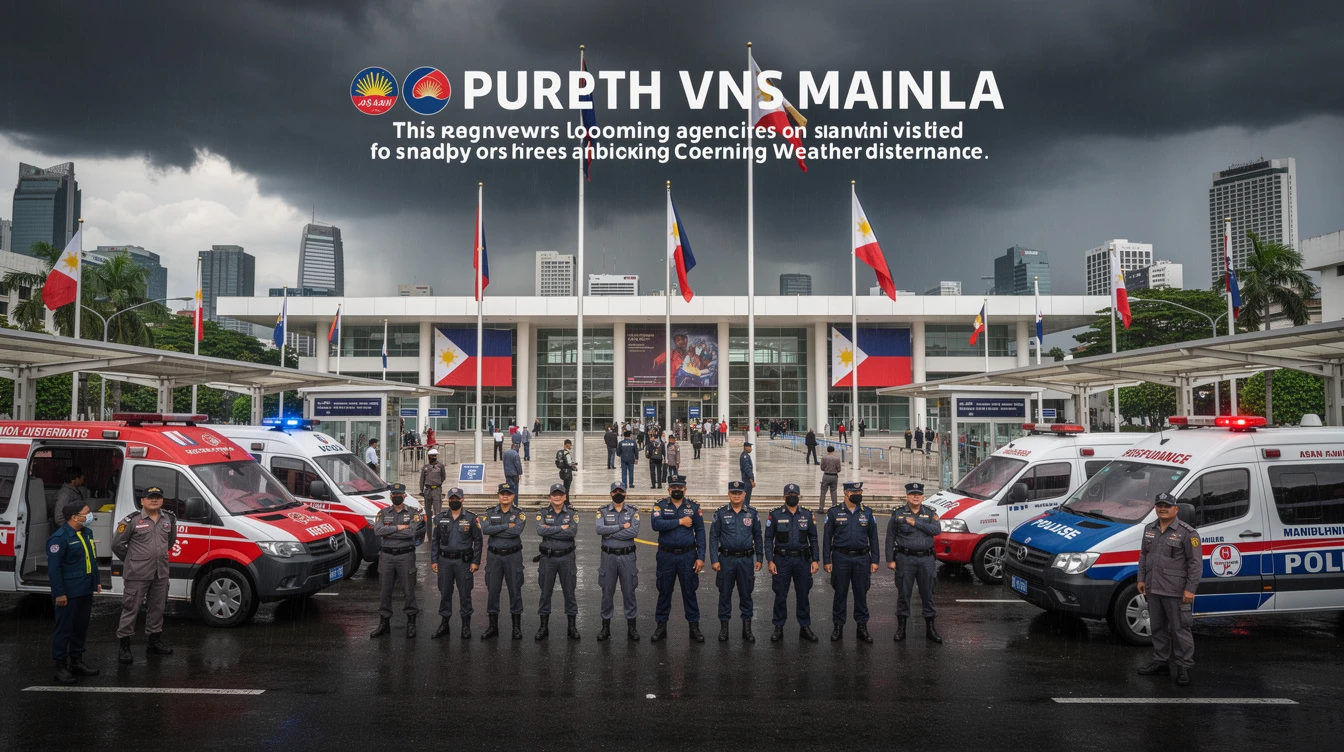
The Philippines is prepared to respond to any weather disturbance that could affect the ASEAN Summit 2026, the National Disaster Risk Reduction and Management Council said on Tuesday, May 5, as the country hosts the regional gathering in Manila.
The NDRRMC announced it has activated its Emergency Operations Center to monitor weather conditions around the clock. The agency is coordinating with multiple government bodies to ensure uninterrupted proceedings during the summit.
We are ready to respond to any weather disturbance that could affect the ASEAN Summit venues or the safety of delegates, an NDRRMC official said in a statement. Showcasing readiness without disruption is a key goal for the host nation.
Weather Monitoring in Full Swing
The assurance comes amid the summer season in the country, which typically transitions into the rainy season by June. The Philippines records an average of 20 tropical cyclones per year, according to the Philippine Atmospheric, Geophysical and Astronomical Services Administration.
Weather data recorded on Tuesday showed Manila experiencing temperatures reaching 34.1 degrees Celsius with partly cloudy skies. Winds blew at 20.9 kilometers per hour from the east-southeast with no recorded precipitation.
ASEAN Summit Background
The ASEAN Summit brings together leaders from the 10-member Association of Southeast Asian Nations to discuss regional cooperation, trade, and security issues. The Philippines is set to host the main leaders' summit in the second half of 2026, marking a significant diplomatic event for the country.
This will be one of the largest international gatherings the Philippines has hosted in recent years. The summit is expected to draw leaders from Brunei, Cambodia, Indonesia, Laos, Malaysia, Myanmar, Singapore, Thailand, and Vietnam alongside the Philippine delegation.
Coordination Across Government Agencies
The NDRRMC said it is working closely with the Department of Health, Department of Transportation, and local government units to ensure comprehensive contingency plans are in place. These agencies have conducted inspections of summit venues and identified evacuation routes should severe weather occur.
The Department of Foreign Affairs is also involved in coordinating with foreign delegations to ensure they are informed of any weather-related developments during their stay in the Philippines.
We have coordinated with all relevant agencies to ensure our weather monitoring systems are functioning properly and that all contingency measures are ready to be deployed immediately if needed, the NDRRMC official stated.
Understanding Philippine Weather Patterns
The Philippines sits within the typhoon belt of the Western Pacific Basin, making it one of the most disaster-prone countries in the world. The country experiences an average of 20 tropical cyclones annually, with most forming between June and November.
These weather disturbances range from tropical depressions to super typhoons that can cause widespread flooding, landslides, and significant damage to infrastructure. The timing of the ASEAN Summit places it near the start of the rainy season, a period when weather systems can develop rapidly.
PAGASA maintains a network of weather stations across the country that provide real-time data to the NDRRMC. The agency uses satellite imagery, radar systems, and surface observations to track potential weather threats.
Impact on Summit Operations
Weather disruptions at international summits can affect delegate arrivals, ground transportation, and the overall schedule of events. Manila, as the host city, has experienced heavy rainfall and flooding in previous years during the rainy season.
The government has identified alternate routes and additional transportation resources to ensure delegates can travel safely between venues regardless of weather conditions. Indoor venues have been selected to minimize the impact of outdoor activities on the summit schedule.
The NDRRMC said it has pre-positioned rescue equipment and emergency supplies near summit venues. Teams from the Armed Forces of the Philippines and Philippine National Police are on standby to provide assistance if needed.
Preparation Timeline
With the summit scheduled for later in 2026, authorities said they will continue to refine their contingency plans in the coming months. Regular coordination meetings are being held to address any gaps in the emergency response system.
PAGASA will provide regular weather updates to NDRRMC throughout the summit period. The agency has committed to issuing advance warnings at least 24 hours before any tropical cyclone is expected to affect the Manila area.
International summits like the ASEAN Summit require careful planning across multiple government agencies. Weather contingencies are a standard part of event management for host countries, particularly in the Philippines where extreme weather is a recurring challenge.
The NDRRMC said it remains vigilant as the country transitions from summer to the wet season. Officials have reminded the public to also prepare for the rainy season while authorities focus on ensuring the success of the ASEAN Summit 2026.
Planning for the summit continues as the Philippines aims to provide a safe and productive environment for regional leaders to discuss matters of mutual interest and regional significance.