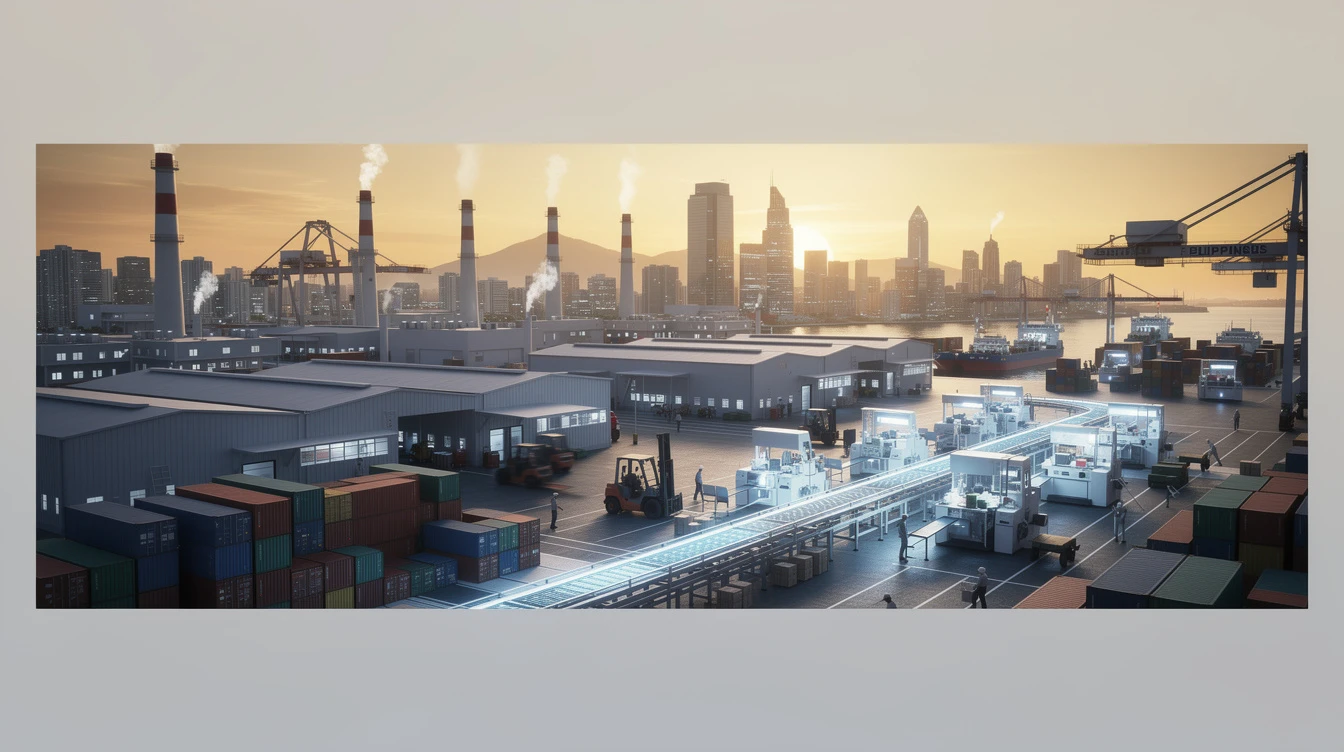
The Philippine manufacturing sector expanded at its fastest pace in over eight years during February, according to a survey released Monday by S&P Global. The Purchasing Managers’ Index (PMI) rose sharply, driven by robust growth in new orders and production levels.
"The Philippines manufacturing sector has had a solid start to 2026," said S&P Global Market Intelligence economist Maryam Baluch. "February marked its strongest performance since late 2017." The data indicates a second consecutive month of output expansion at the fastest rate since November 2018.
Manufacturers recorded significant growth in new orders, fueled by improvements in both domestic and international demand. This surge in business activity has led to rising backlogs of work, creating pressure on existing production capacity.
Baluch noted the rising backlogs give manufacturers "further scope to increase their staffing numbers in the coming months." This suggests potential job creation in the industrial sector as firms ramp up operations to meet demand.
Business sentiment for the next twelve months also improved in February, recovering from a low point in January. Survey respondents expressed confidence in continued production volume growth, linked directly to anticipated improvements in demand trends.
"Firms were hopeful that demand conditions would continue to improve and drive further expansions in production volumes," Baluch stated in her commentary. This optimism points to sustained manufacturing growth through the first quarter.
The positive PMI reading aligns with separate government data showing the Producer Price Index (PPI) for manufacturing grew by 1.4 percent in February. This was slightly higher than January's 1.3 percent and indicates firming price trends at the factory gate.
Analysts view the strong manufacturing performance as a critical driver for broader economic growth. The sector's expansion supports gross domestic product (GDP) targets and contributes to the country's industrial development goals.
The sustained increase in new export orders is particularly noteworthy. It suggests Philippine-made goods are gaining competitiveness in international markets despite global economic headwinds.
Industry groups are now watching for follow-through on hiring intentions. Increased employment in manufacturing would amplify the sector's positive impact on household consumption and overall economic momentum.
Government economic managers are expected to cite the strong manufacturing data as evidence of resilient economic fundamentals. The performance may influence upcoming policy reviews on investment and trade.
Moving forward, the key challenge will be maintaining this growth trajectory. Manufacturers must navigate potential supply chain constraints and input cost pressures to sustain the current expansion cycle.