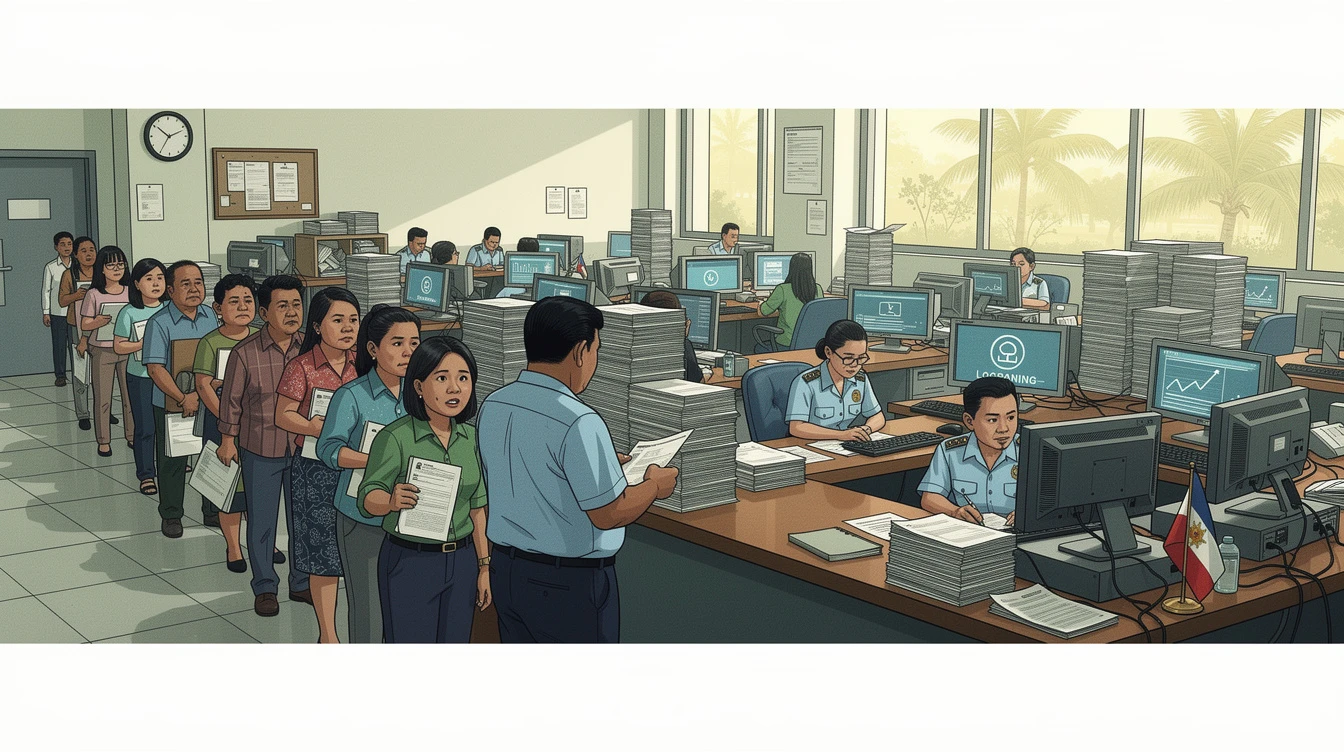
The Bureau of Internal Revenue confirmed significant processing delays affecting taxpayers, particularly for documents requiring manual handling, while pledging to streamline its system by reducing required paperwork. Commissioner Romeo Lumagui Jr. acknowledged the widespread inconvenience during a press briefing in Manila on Thursday, responding to mounting complaints about bureaucratic bottlenecks.
"Most electronically filed returns are processing normally," Lumagui stated. "Where we are still seeing delays is in anything that requires manual handling." He emphasized that the audit process involves strict legal steps and deadlines that contribute to the backlog. The commissioner did not provide specific figures on affected taxpayers or average delay times.
The BIR will implement measures to simplify procedures, including reducing the number of required documents for common transactions. Officials are examining which certificates and forms can be eliminated or consolidated. This initiative aims to limit taxpayers to receiving only essential documentation, reducing both processing time and physical paperwork.
Tax practitioners have reported delays spanning several weeks for document authentication, registration updates, and audit-related submissions. These bottlenecks occur despite the agency's ongoing digitalization push. Many taxpayers must make multiple office visits to complete simple transactions, incurring additional costs and lost work hours.
Internal sources indicate the manual processing backlog worsened after recent policy changes and staffing adjustments. The BIR processes millions of documents annually across its regional and district offices. Digital filing has increased but many transactions still require physical submission under current regulations.
Lumagui assured the public that addressing these delays is a top priority for the bureau's operational improvement plan. "We recognize the inconvenience this causes compliant taxpayers," he said. The streamlining effort will focus on frequently used processes like certificate issuance and amendment filings.
The commissioner noted that some delays stem from taxpayers submitting incomplete or incorrect documents, requiring follow-up communications. However, he conceded the system itself needs simplification to reduce such errors. The BIR will launch public information campaigns about proper document preparation alongside the procedural changes.
Business groups have welcomed the proposed reforms but urged faster implementation. The Philippine Chamber of Commerce and Industry previously cited tax administration as a major concern in ease-of-doing-business surveys. They argue that predictable processing times are crucial for financial planning and compliance.
Legislative support may be needed for some streamlining measures, particularly those involving statutory requirements. The BIR is coordinating with the Department of Finance on proposed regulatory amendments. Temporary measures include deploying additional staff to high-volume offices during peak periods.
Taxpayers experiencing delays are advised to keep complete copies of all submissions and record tracking numbers. The BIR promises to provide clearer timelines once the streamlining measures take effect in the coming months. Monitoring mechanisms will be established to track improvement in processing speeds across different transaction types.