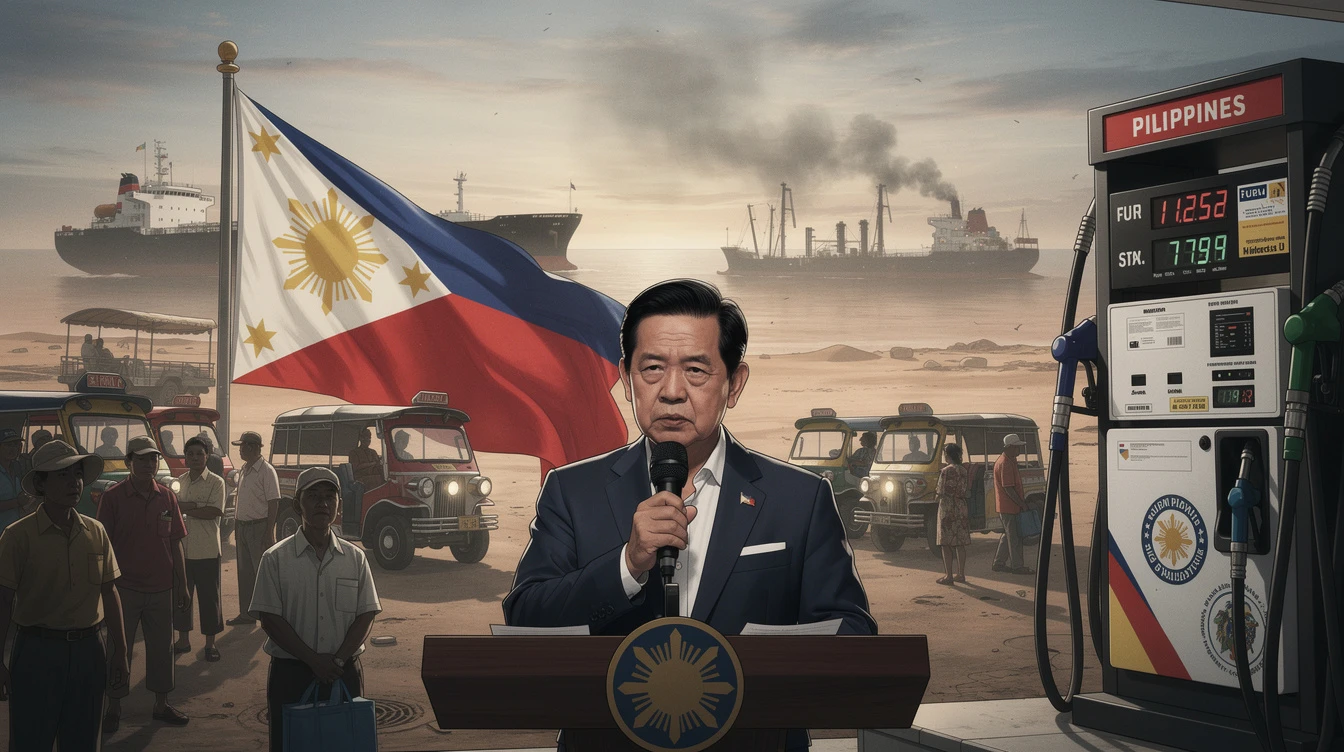
President Ferdinand Marcos Jr. has indicated openness to a third Bayanihan law as fuel costs continue to surge amid Middle East tensions, with Malacañang confirming the possibility on Sunday.
Press Secretary椒 릴 Rolly said the administration remains committed to protecting ordinary Filipinos from the ripple effects of the global energy crisis. The proposed Bayanihan 3 would provide direct assistance similar to measures enacted during the COVID-19 pandemic.
The Philippines has declared a state of national energy emergency—the first of its kind in the world amid the ongoing Middle East crisis. This extraordinary measure signals how seriously the government views the threat to the nation's energy supply.
Energy Secretary Rafael Lotilla said the declaration grants the administration flexibility to deploy emergency powers and fast-track solutions to prevent fuel prices from rising further out of control.
"We are closely monitoring developments in the Middle East and their impact on global oil prices," Lotilla stated. "This declaration ensures we can respond swiftly and decisively to protect Filipino consumers."
The proposed Bayanihan 3 would follow two previous emergency laws passed during the COVID-19 pandemic. Those measures provided direct cash assistance and subsidies to millions of Filipino families struggling with pandemic-related hardships.
Analysts suggest a new Bayanihan law could similarly cushion the impact of rising fuel costs on household budgets across the country. Oil prices have risen significantly following increased tensions in the Middle East, a major oil-producing region.
Middle East tensions have disrupted global oil supply chains, driving up pump prices worldwide. The Philippines, heavily dependent on imported fuel, has felt the impact acutely at gas stations nationwide.
Consumer groups have urged the government to provide immediate relief as Filipino families struggle with higher transportation and food costs. Fuel price increases typically cascade through the economy, affecting basic goods and services.
The first Bayanihan law was enacted in March 2020, allocating approximately 400 billion pesos for COVID-19 response efforts. The second followed in December 2020 with additional funding for pandemic recovery.
Malacañang has not disclosed specific details about potential Bayanihan 3 provisions. Officials say consultations with Congress and affected agencies are ongoing to determine the scope and timeline of any proposed legislation.
Economic managers have warned that prolonged Middle East instability could further strain the Philippine economy. The government balances providing relief while maintaining fiscal discipline, officials noted.
The energy emergency declaration allows authorities to prioritize fuel allocation to essential services and potentially regulate prices in extreme cases. Implementation details are expected to be announced in the coming days.
Marcos, who serves as both president and agriculture secretary, has prioritized food security and energy affordability since taking office. Rising fuel costs threaten both priorities by increasing farm production and transportation expenses.
Government agencies are coordinating to ensure adequate fuel supply and monitor price movements across the country. Violations of price caps or hoarding may face penalties under the emergency declaration.
The Philippines imports roughly 90 percent of its oil requirements, making it particularly vulnerable to global price fluctuations. Domestic oil companies have been absorbing some increases but have also adjusted pump prices upward.
Oil industry officials say they are working with the government to ensure stable supply. They acknowledged the challenges posed by geopolitical tensions but expressed confidence in the sector's resilience.
Legislators have expressed willingness to work on emergency legislation if proposed by Malacañang. Congress is currently in session and could act quickly on any Bayanihan 3 bill submitted by the executive branch.
Fuel price hikes have been a persistent concern since 2022, with cumulative increases exceeding previous administrations. The current surge compounds existing economic pressures on Filipino households.
International oil prices have fluctuated amid uncertainty over Middle East developments. Analysts project continued volatility in the coming months, maintaining pressure on importing nations like the Philippines.
The administration's approach combines short-term relief measures with longer-term efforts to develop domestic energy sources. Renewable energy projects are being accelerated to reduce future dependence on imported fuel.
Malacañang officials say they remain focused on practical solutions to ease the burden on ordinary citizens. The Bayanihan 3 proposal, if enacted, would represent the most significant economic intervention since pandemic-era assistance programs.