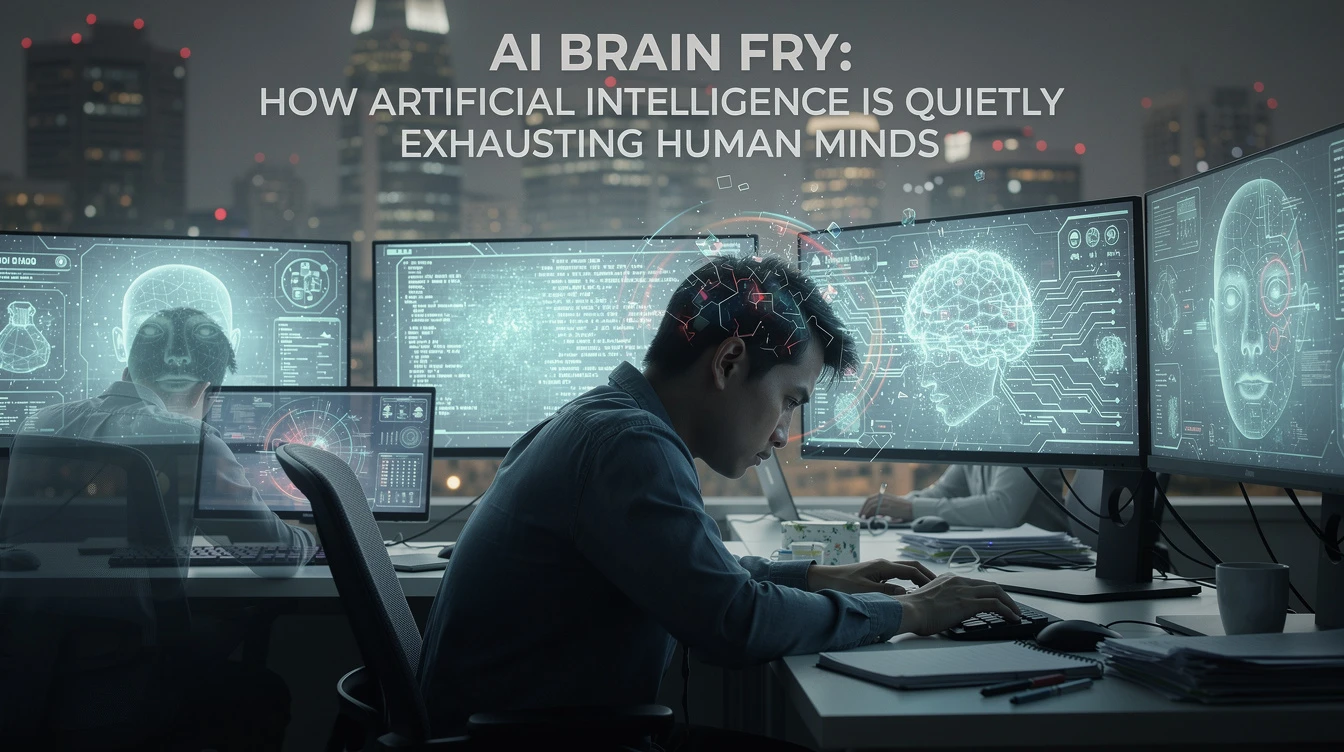
MANILA, Philippines — A troubling new phenomenon has emerged in the age of artificial intelligence, and consultants are calling it "AI brain fry." Boston Consulting Group has coined the term to describe a state of mental exhaustion stemming from the excessive use or supervision of AI tools, pushed beyond our cognitive limits.
What Is AI Brain Fry?
Defining the Phenomenon
The concept represents a novel form of cognitive strain that goes beyond traditional workplace burnout. "It's a brand-new kind of cognitive load," said Ben Wigler, co-founder of LoveMind AI. Unlike ordinary fatigue, AI brain fry specifically targets mental faculties strained by constant interaction with intelligent systems.
The Cognitive Load Debate
Consultants at BCG and industry experts do not view AI brain fry as simple job burnout. The condition appears to stem from the unique demands of managing AI agents and monitoring their outputs. Users are not merely casually dabbling with technology—they are creating entire ecosystems that require vigilant oversight.
Who's Most Affected?
Software Developers Bear the Brunt
For now, brain fry primarily afflicts software developers given that AI agents have rapidly excelled at writing computer code. Tim Norton, founder of the AI integration consultancy nouvreLabs, noted that people experiencing AI burnout are often those managing legions of agents simultaneously.
The Code Review Burden
Programmers find themselves facing unexpected challenges. "The cruel irony is that AI-generated code requires more careful review than human-written code," wrote software engineer Siddhant Khare in a widely-shared blog post. What should save time often consumes more of it.
The Security Implications
Hidden Risks in AI-Generated Code
Adam Mackintosh, a programmer for a Canadian company, described the anxiety of trusting AI-written code. "It is very scary to commit to hundreds of lines of AI-written code because there is a risk of security flaws or simply not understanding the entire codebase," he explained. This constant vigilance drains mental energy faster than conventional coding.
Mental Health Concerns
As AI tools become more prevalent across industries, experts warn that brain fry could spread beyond tech sectors. The relentless pace of AI advancement means workers must continuously adapt, creating sustained cognitive pressure. Mental health professionals urge employers to recognize these new stressors.
Philippine tech workers have not been immune to these effects. Local software companies have reported increased instances of fatigue among employees working with AI-assisted development tools. Industry leaders call for balanced approaches to integrating AI without overwhelming human teams.