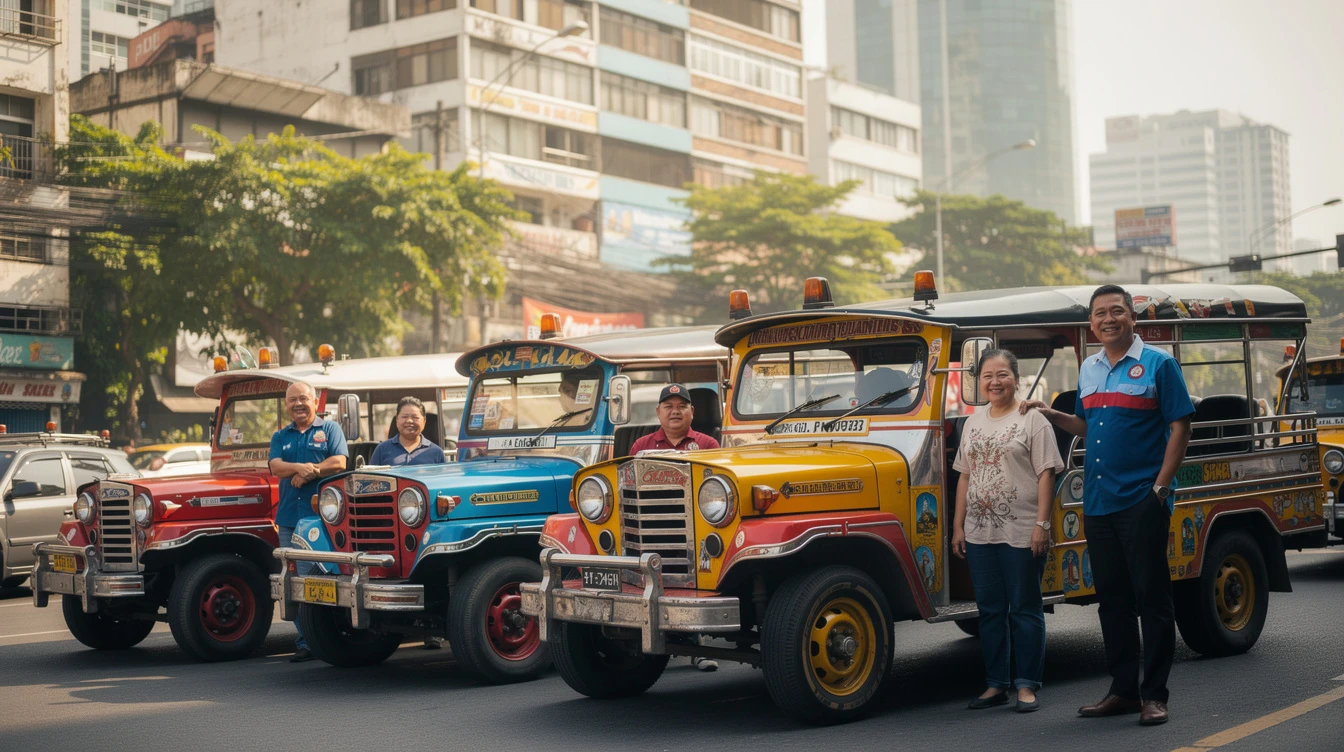
Some jeepney drivers in the Philippines have welcomed the government's service contracting program for public utility vehicles, saying it could help ease their financial burdens. The Land Transportation Franchising and Regulatory Board announced the program this week, offering direct payments to operators.
Under the program, the government will pay jeepneys and UV Express units P30 to P40 per kilometer, while buses will receive P82 to P100 per kilometer traveled. These payments are guaranteed regardless of passenger load, providing operators with stable income.
"This is a big help for us drivers who struggle daily with fluctuating earnings," said Mario Santos, a jeepney operator from Quezon City. "Knowing we have a guaranteed amount per kilometer means we can better plan for maintenance and family expenses."
The service contracting program represents a shift in how public transport is subsidized in the Philippines. Instead of traditional fare subsidies, the government directly compensates operators for providing service on designated routes.
Transportation Secretary Jaime Bautista explained the program aims to improve service reliability. "By ensuring operators receive fair compensation, we expect more consistent operations and better maintenance of vehicles," Bautista stated in a press briefing.
The program comes amid the controversial PUV modernization program that requires operators to phase out old jeepneys. Many drivers have protested the modernization's costs, making this financial support particularly significant.
LTFRB Chairman Teofilo Guadiz III confirmed the program has allocated P3 billion for 2024. "We're starting with high-traffic routes in Metro Manila, Cebu, and Davao," Guadiz said. "The goal is to eventually expand nationwide."
For Filipino commuters, the program could mean more reliable transportation. When operators have guaranteed income, they're less likely to engage in practices like "boundary" systems that pressure drivers to overload vehicles or skip maintenance.
The Philippine government has implemented similar contracting programs during the pandemic through the "Libreng Sakay" initiative. This new program represents a more permanent approach to transport subsidy reform.
Some transport groups remain cautious. "The payments must be timely and sufficient to cover actual costs," warned Obet Martin of PISTON. "We've seen promises before that didn't materialize fully for drivers."
The Department of Transportation has established an online portal for operators to register and submit trip data. Payments will be processed based on GPS-tracked kilometers traveled on approved routes.
This program particularly benefits the families of jeepney drivers, many of whom rely on daily earnings for immediate needs. Stable income could help children stay in school and families plan for longer-term expenses.
For overseas Filipino workers with family members in the transport sector, this program offers reassurance. Remittances often supplement irregular transport income, but guaranteed payments could reduce this financial pressure.
The service contracting approach aligns with international practices in public transport management. Countries like Singapore and Australia use similar models to ensure service quality on less profitable routes.
As the Philippines continues its transport modernization efforts, this financial support program represents a crucial bridge. It acknowledges the economic realities facing traditional operators while moving toward a more sustainable system.
For millions of Filipinos who rely on jeepneys daily, this program matters because it addresses both driver welfare and service reliability. When transport operators have stable livelihoods, the entire commuting public benefits from safer, more dependable service.