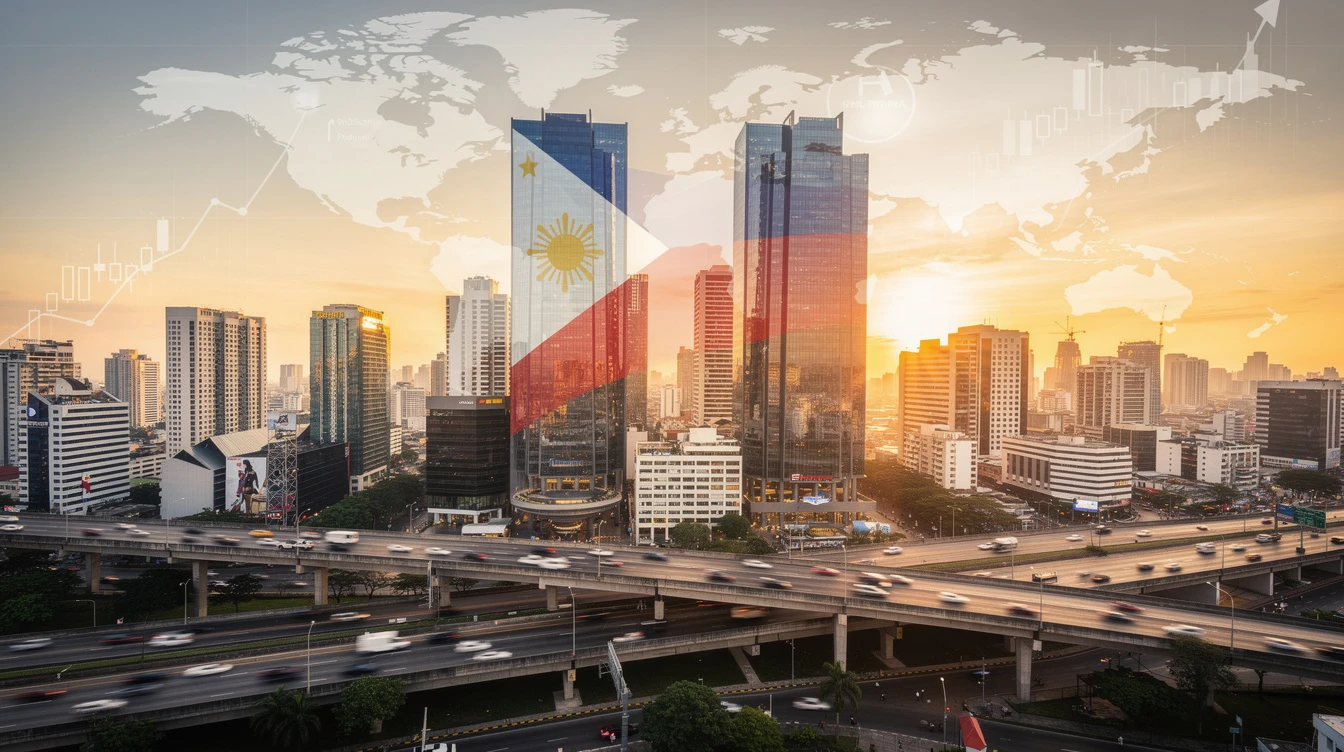
The Department of Economy, Planning and Development (DEPDev) expressed confidence Wednesday that the Philippines will achieve upper-middle income economy status within President Ferdinand Marcos Jr.'s term, despite ongoing global price shocks from the Middle East conflict.
Presidential Communications Undersecretary Claire Castro confirmed the target during a Palace briefing, stating the government remains focused on this economic milestone. The Philippines is currently classified as a lower-middle income economy by the World Bank.
The country's gross national income per capita stood at $3,950 in 2022, placing it within the World Bank's lower-middle-income bracket of $1,136 to $4,465. This threshold was raised from $1,086–$4,255 the previous year.
To achieve upper-middle income status, the Philippines must reach a GNI per capita between $4,466 and $13,845. DEPDev officials believe sustained economic growth and strategic policies can bridge this gap before President Marcos's term ends in 2028.
"Our economic fundamentals remain strong despite external headwinds," Castro stated, referencing the administration's resilience agenda. She emphasized that inflation management and job creation are central to increasing national income per capita.
The confidence comes amid significant challenges, including elevated inflation and geopolitical tensions affecting oil prices. These factors directly impact Filipino households and the cost of living nationwide.
Economic planners point to the country's 5.6% GDP growth in 2023 as evidence of underlying strength. They argue that continued infrastructure spending and foreign investment inflows will drive the necessary per capita income increase.
For Filipino families, achieving UMIC status could mean better access to credit, improved international credit ratings, and potentially more investment in public services. However, economists caution that per capita measurements don't automatically translate to widespread wealth distribution.
The Philippine Statistics Authority is expected to release updated GNI per capita figures later this year. These numbers will provide a clearer picture of progress toward the World Bank threshold.
Marcos's economic team has implemented various measures to boost economic output, including tourism promotions, agricultural modernization, and digital infrastructure development. These sectors are seen as key drivers for income growth.
International observers note that several ASEAN neighbors have already achieved UMIC status, including Thailand and Malaysia. The Philippines aims to join this group to enhance its regional economic standing and attract higher-value investments.
The World Bank updates income classifications annually based on GNI per capita data from the previous year. The next classification update is expected in July 2024, using 2023 data.
For overseas Filipino workers, a stronger Philippine economy could eventually create more domestic opportunities, potentially reducing economic migration pressures. Remittances currently contribute significantly to the country's GNI calculation.
Economic managers acknowledge that reaching UMIC status requires not just growth but inclusive development that benefits all income segments. Poverty reduction remains a parallel government target alongside the income classification goal.
The DEPDev's announcement signals the administration's commitment to a key campaign promise despite global uncertainties. Success would mark a significant milestone in the nation's economic development trajectory.
This economic target matters deeply to Filipinos as it represents tangible progress in national development. Achieving upper-middle income status could improve the country's global competitiveness, potentially leading to better job opportunities, enhanced public services, and greater economic stability for millions of households across the archipelago.