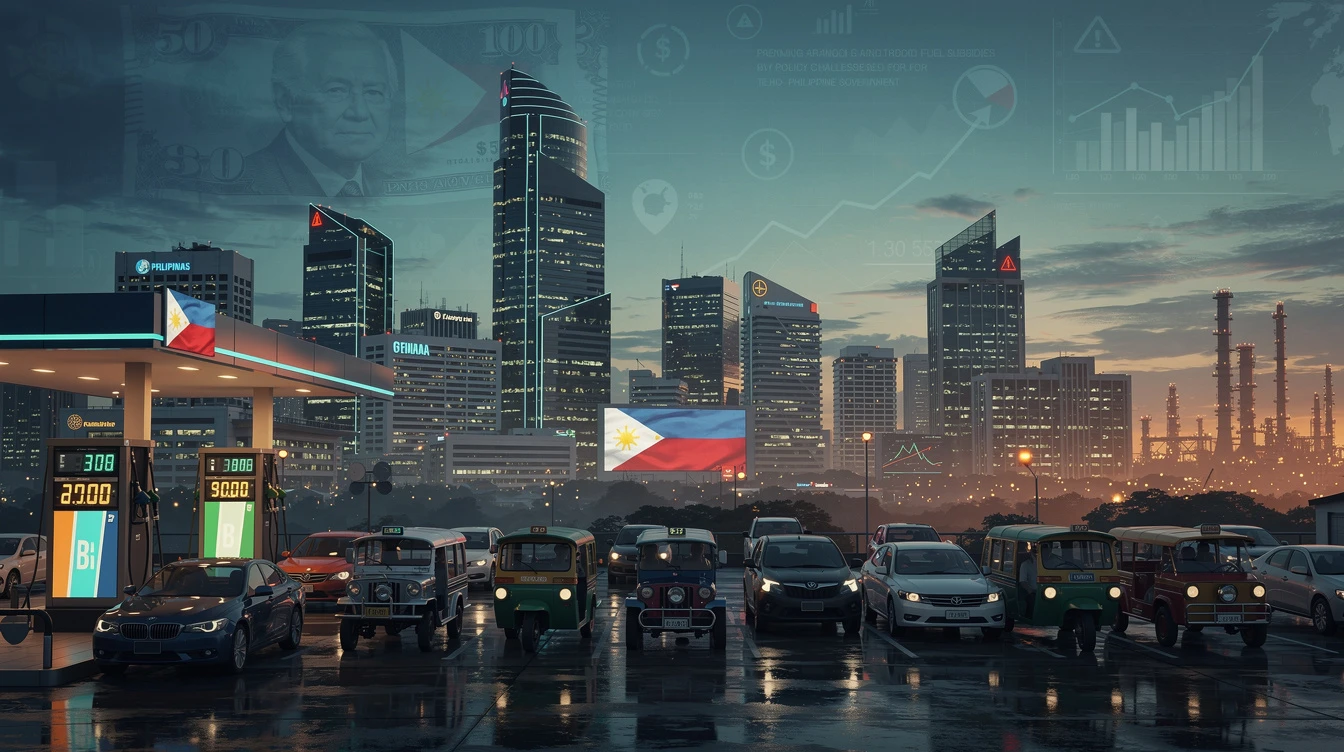
The International Monetary Fund cautioned governments worldwide on Tuesday against implementing broad fuel subsidies to cushion war-driven energy shocks, warning they distort markets and worsen fiscal health. The IMF's position presents a direct policy challenge for the Philippine administration, which has periodically used subsidies to temper volatile oil prices.
In a statement released April 15, the IMF argued that artificially cheapened fuel encourages overconsumption and amplifies the initial shock. "Broad-based subsidies are costly and poorly targeted," the Fund noted, urging countries to consider more direct support for vulnerable households instead. This global guidance comes as many nations, including the Philippines, grapple with the economic fallout from ongoing geopolitical conflicts affecting energy supplies.
The Philippine government, under President Ferdinand Marcos Jr., has previously utilized targeted subsidies for public transport drivers and farmers through programs like the Pantawid Pasada. However, broad calls for more extensive fuel price controls resurface whenever global crude prices spike, putting pressure on the administration. The Department of Finance has historically echoed IMF concerns about the fiscal burden of sweeping subsidies.
Finance Secretary Ralph Recto has consistently emphasized fiscal prudence. An untargeted subsidy program could strain the national budget, potentially affecting other critical spending on infrastructure, education, and healthcare. The National Economic and Development Authority also warns that market distortions can discourage investment in the energy sector.
For Filipino consumers and the millions of OFW families reliant on remittances, high fuel costs translate directly to higher prices for food and transportation. The Philippines imports nearly all of its crude oil, making it acutely vulnerable to global price swings. This vulnerability often triggers public demand for government intervention to stabilize pump prices.
The IMF recommends replacing broad subsidies with targeted cash transfers to the most affected poor families. The Philippines already has mechanisms like the 4Ps (Pantawid Pamilyang Pilipino Program) which could be leveraged for this purpose. This approach aims to protect purchasing power without distorting the energy market or draining state coffers.
Energy Secretary Raphael Lotilla has previously highlighted the need for a balanced approach, acknowledging the social impact of high prices while maintaining fiscal responsibility. The government continues to monitor the Oil Price Stabilization Fund as a potential tool, though its use remains limited.
The IMF's warning is particularly significant for the Philippines as it navigates post-pandemic recovery. Maintaining economic stability is crucial for attracting foreign investment and sustaining growth. A misstep in energy policy could exacerbate inflation, which the Bangko Sentral ng Pilipinas works tirelessly to manage.
This global advice underscores a perennial dilemma for Philippine policymakers: balancing immediate social relief against long-term economic stability. The decision has direct consequences for every Filipino household's budget and the nation's fiscal health.