Major LPG Price Increase Takes Effect This Week
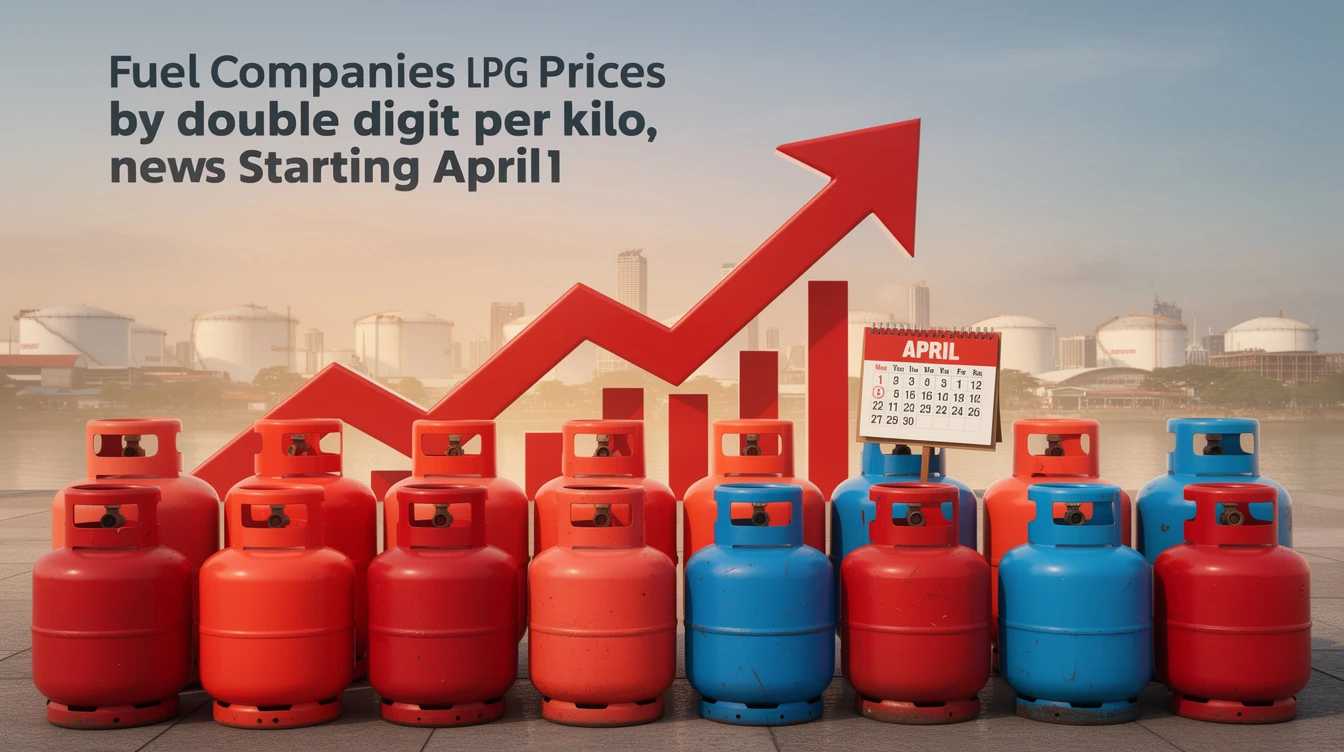
Leading fuel companies in the Philippines announced significant increases in liquefied petroleum gas prices, effective April 1, 2026. The price hikes will add pressure to household budgets already strained by persistent inflation.
Double-Digit Increases Across Major Brands
Major oil companies including Petron, Shell, and Chevron implemented price adjustments ranging from P4.50 to P6.00 per kilogram for their LPG products. This represents a double-digit percentage increase that consumer groups say will severely impact low-income families.
The adjustment follows consecutive months of upward movements in global oil markets. Industry observers note this is among the steepest single-month LPG increases recorded in recent years.
Impact on Household Budgets
For a typical 11-kilogram household cylinder, the new prices translate to an additional P50 to P66 per tank. This comes on top of existing elevated costs for basic necessities, prompting concerns from welfare advocates.
Consumers have until the end of this week to purchase at current prices before the adjustments take full effect across retail outlets nationwide.
Global Oil Market Pressures Drive Local Adjustments
Fuel companies cite rising international crude oil prices and tightening LPG supply as primary factors behind the domestic price movements. The Philippines remains heavily dependent on imported LPG, making local pump prices vulnerable to currency fluctuations and shipping costs.
Regional Variations Expected
Price adjustments may vary slightly across regions due to transportation logistics and local competition. Metropolitan areas might see faster implementation compared to provincial locations.
Industry sources indicate that propane and butane blend prices in the Asian market have climbed steadily over the past quarter, contributing to the current round of adjustments.
Comparison With Previous Adjustments
The April increase follows a P2.00 to P3.50 per kilogram adjustment in March. Combined, Filipino households have absorbed roughly P6.50 to P9.50 per kilogram in additional LPG costs over two months.
Government Response and Consumer Guidance
The Department of Trade and Industry has committed to monitoring retail compliance and investigating reports of premature overpricing. Authorities have called on fuel companies to ensure orderly implementation of the announced increases.
Tips for Managing Higher Cooking Gas Costs
- Compare prices across different brands and retailers before purchasing
- Consider switching to induction cookers where electricity rates are stable
- Report overpricing incidents to DTI through official channels
- Explore government-subsidized LPG programs for qualified beneficiaries
Looking Ahead
Industry analysts remain divided on whether prices will stabilize in the coming months. Some forecasts suggest continued pressure through mid-2026, while others point to potential softening in global demand as a stabilizing factor.
Consumer groups continue urging the government to explore long-term solutions for energy affordability, including expanded domestic production and improved distribution infrastructure.