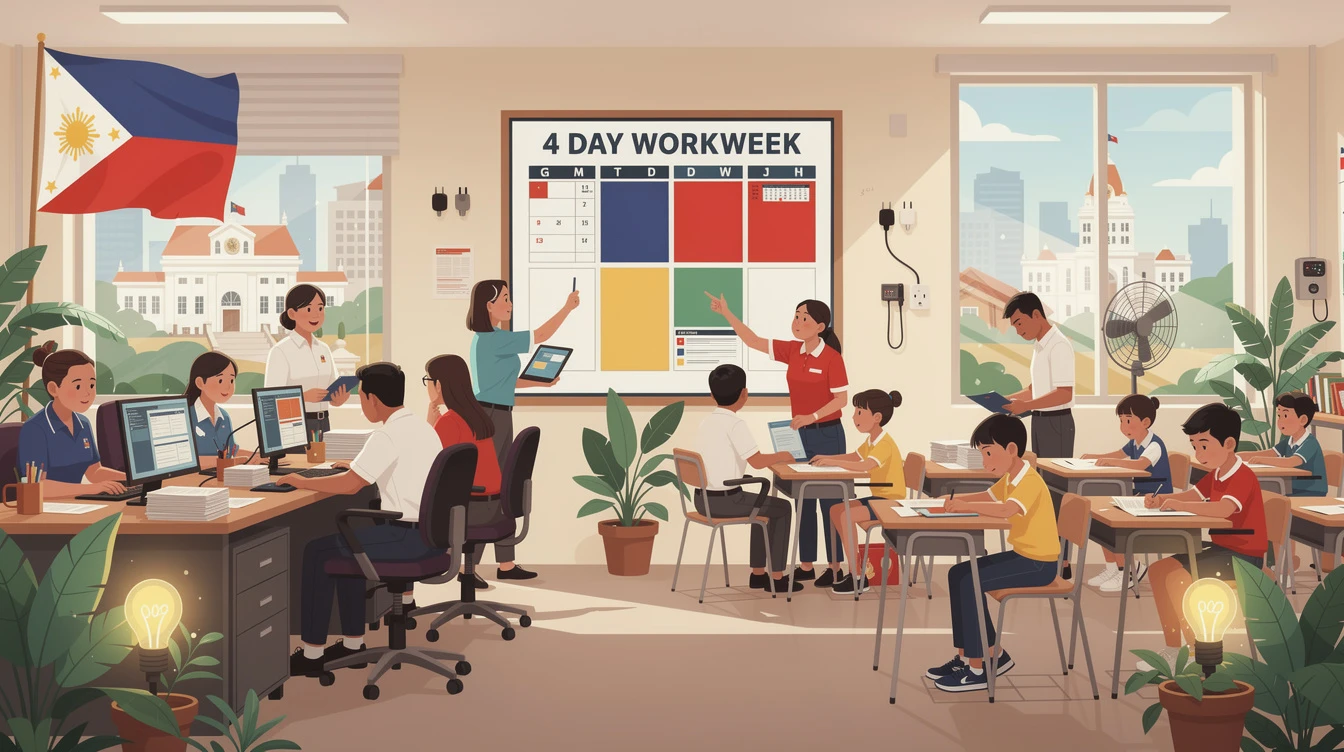
The Department of Education (DepEd) has directed all its offices nationwide to adopt a four-day onsite workweek from Monday to Thursday, effective March 9, 2026. The policy applies to non-teaching personnel as a measure to conserve electricity and fuel.
DepEd Secretary Sara Duterte issued the directive, which will remain until lifted by the Office of the President. The move aligns with the national government's push for energy efficiency amid rising costs.
"This adjustment is our contribution to the broader national effort to manage our energy resources wisely," a DepEd spokesperson stated. The department emphasized that teaching schedules and school operations remain unaffected.
The compressed workweek requires employees to complete their 40-hour obligation within four longer days. Fridays will be designated for remote work or alternative arrangements as approved by supervisors.
This policy directly impacts thousands of administrative staff across DepEd's central, regional, and division offices. It follows similar energy-saving measures in other government agencies.
For the Philippines, where government offices are major energy consumers, the shift aims to reduce operational costs. Savings could potentially be redirected to other educational needs.
The timing is significant as the country faces persistent challenges with power supply and fluctuating fuel prices. The government has been promoting various conservation strategies since 2023.
Filipino families, especially those with members in government service, may see changes in household schedules. Reduced commuting days could ease transportation expenses for affected employees.
However, the directive requires careful implementation to ensure continuous public service. DepEd offices handle crucial functions like processing teacher benefits and distributing learning materials.
The success of this measure could set a precedent for other large government departments. Monitoring its impact on productivity and energy savings will be essential throughout 2026.
For the broader Filipino public, this reflects the government's adaptive policies in response to economic pressures. It demonstrates how administrative adjustments can support national priorities.
This DepEd shift matters to every Filipino because it shows how national energy challenges are being addressed institutionally. The conserved resources could help stabilize education funding.
For OFW families, efficient government spending means better services for their children in public schools. It also represents a structural change in how public administration adapts to global energy trends.
The policy's ultimate test will be whether it achieves meaningful savings without disrupting the education sector's support systems for millions of students.