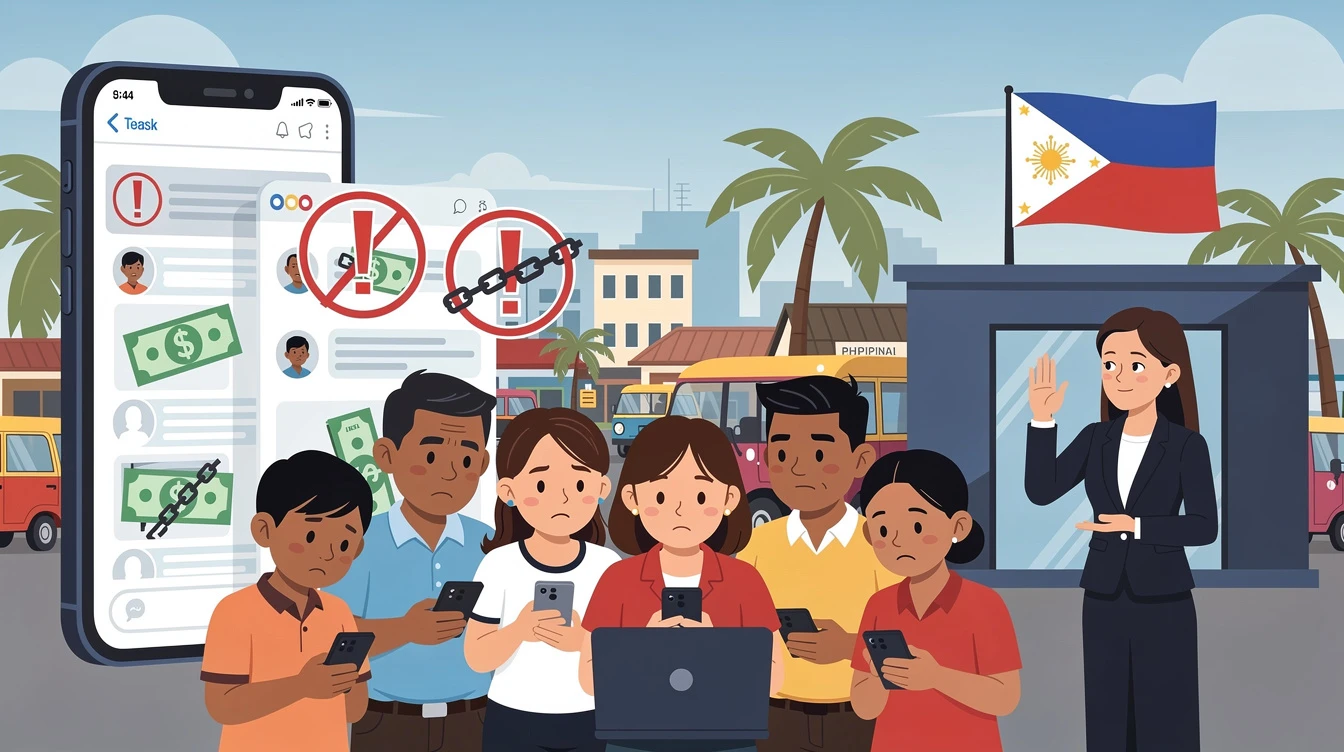
The Department of Social Welfare and Development (DSWD) issued a stern public warning on Monday against fraudulent chat messages and fake social media pages falsely promising cash assistance to Filipinos.
These scams, circulating on popular messaging applications, attempt to harvest personal contact numbers and other sensitive information from unsuspecting citizens.
DSWD officials emphasized that the agency does not solicit personal details through unsolicited messages or unverified social media pages to process aid.
"The public is advised to be vigilant and to only transact through our official channels and verified platforms," a DSWD spokesperson stated in the official advisory.
The department clarified that legitimate cash aid programs, like the Pantawid Pamilyang Pilipino Program (4Ps), follow strict guidelines and validation processes.
This scam alert comes as many Filipino families continue to face economic pressures, making them potential targets for such deceptive schemes.
The DSWD also warned that charges may be filed against individuals who fraudulently claim cash aid benefits they are not qualified to receive.
This includes those who might be deceived by scammers into applying for or accepting assistance under false pretenses.
Authorities are coordinating with relevant cybercrime units to track the source of these fake pages and messages.
The public is urged to report any suspicious communication to the DSWD's official hotlines or through its legitimate website at https://www.dswd.gov.ph.
Official social media accounts of the DSWD are clearly marked with verification badges on platforms like Facebook.
Filipinos, especially overseas Filipino workers (OFWs) managing family affairs remotely, are advised to verify any aid-related information directly with family in the Philippines.
Scammers often exploit times of perceived need or following natural disasters when public anticipation of government support is high.
The DSWD maintains that all announcements regarding new or existing aid programs are released through formal press conferences and official bulletins.
For Filipino citizens, this warning is critically important as falling victim to these scams can lead to financial loss and identity theft.
Protecting personal data is paramount, as information harvested can be used for other illegal activities beyond aid fraud.
This incident underscores the need for continuous public education on digital literacy and cybersecurity within the Philippine context.