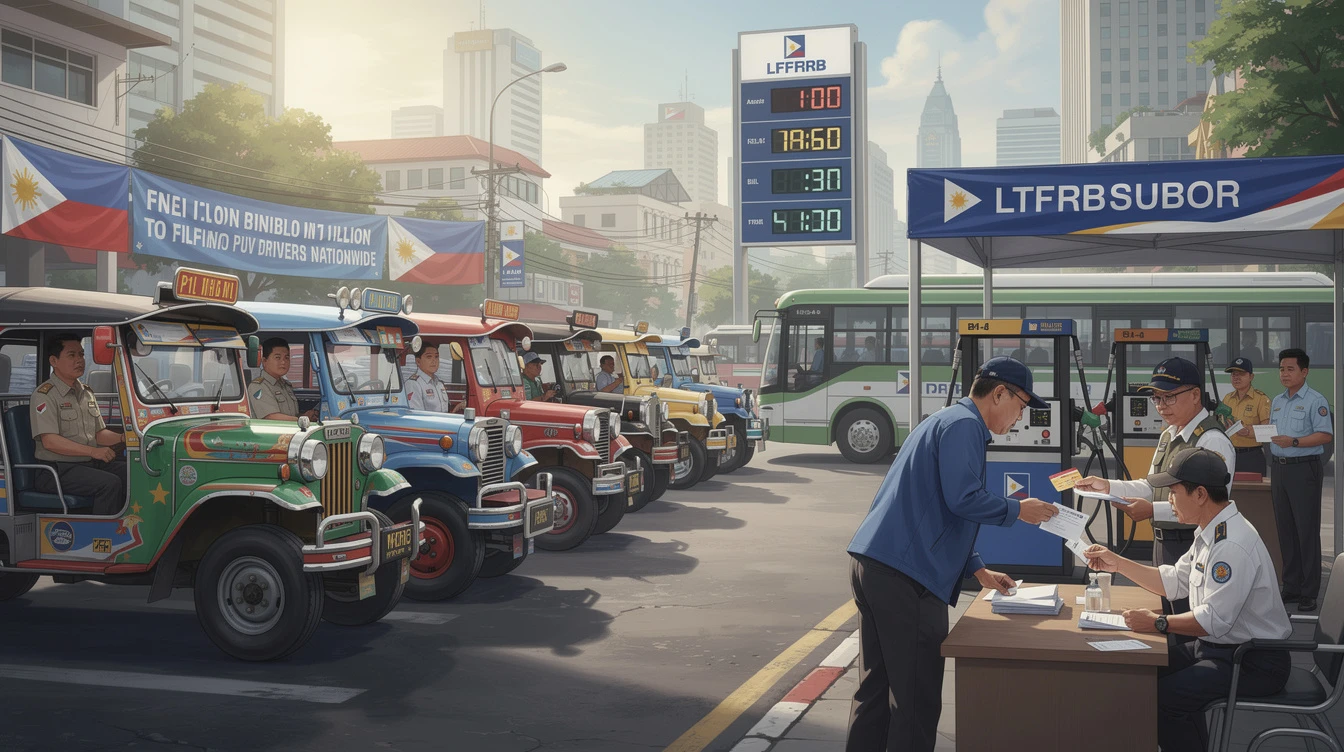
The Land Transportation Franchising and Regulatory Board (LTFRB) announced on March 30 that it has distributed nearly P1 billion in fuel subsidies to public utility vehicle drivers and operators across the Philippines.
Of the total P2.5 billion allocated for the program, over P651 million has already been disbursed directly to beneficiaries. The cash assistance aims to help nearly 178,000 legitimate PUV drivers manage soaring fuel costs.
LTFRB Chairman Teofilo Guadiz III stated the subsidies are crucial for maintaining affordable public transport fares. He emphasized the government's commitment to supporting the transport sector amid economic pressures.
The funds come from the national budget under the Department of Transportation. The program targets drivers of jeepneys, buses, taxis, and other PUVs who hold valid franchises.
Beneficiaries receive the cash assistance through various payout channels, including authorized banks and remittance centers. The LTFRB has urged qualified drivers who haven't received aid to contact their hotline at 1342.
This subsidy program represents a direct government intervention to stabilize the public transportation system. Rising global oil prices have significantly impacted operating costs for Filipino drivers.
The remaining balance of the P2.5 billion fund will continue to be distributed in the coming weeks. Officials are accelerating the process to reach all intended beneficiaries nationwide.
This initiative follows previous fuel subsidy programs implemented during global oil price surges. The current disbursement is among the largest direct cash transfers to the transport sector.
The LTFRB is coordinating with transport cooperatives and operators to ensure efficient distribution. They are also validating beneficiary lists to prevent duplication and fraud.
For Filipino commuters, these subsidies help prevent fare hikes that would burden millions of daily passengers. Stable transport costs are particularly important for low-income households.
The program also supports the livelihoods of hundreds of thousands of driver families nationwide. Many PUV drivers have reported struggling with thin profit margins due to fuel expenses.
With the ongoing modernization program for PUVs, these subsidies provide temporary relief during the transition period. The government is balancing immediate assistance with long-term transport reforms.
This news matters significantly to Filipino readers as it directly affects both transportation providers and commuters. The nearly P1 billion in distributed aid helps maintain affordable daily travel for millions.
For OFW families, stable transport costs mean their relatives in the Philippines can manage daily expenses better. The subsidies contribute to overall economic stability at the household level.
The continued distribution of fuel assistance demonstrates the government's recognition of the transport sector's vital role. Keeping PUVs operational is essential for Philippine economic activity.