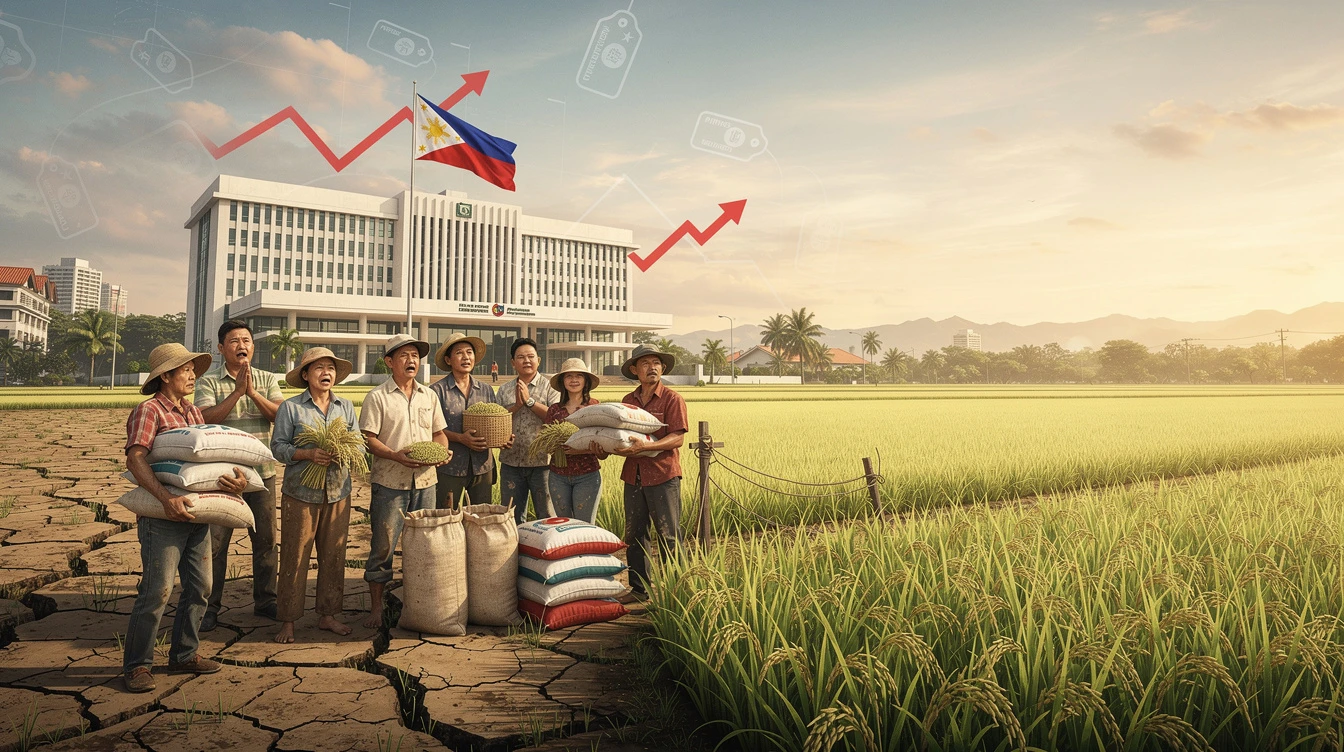
The Department of Agriculture (DA) on Saturday appealed to the national government for an additional P30 billion to provide fertilizers and cash assistance to Filipino farmers, according to a report from GMA News . The funding request aims to cushion the impact of rising input costs on agricultural productivity, particularly for rice farmers who are grappling with higher prices of urea and other essential farm inputs.
The DA announced the appeal during a press briefing in Quezon City, emphasizing that the funds are urgently needed to support the country’s 1.6 million rice farmer beneficiaries under the Rice Farmers Financial Assistance program. Each qualified farmer could receive P5,000 in cash aid, as earlier demanded by farmer groups from the DA and Landbank. "We demand the DA and Landbank to immediately release the P5,000 cash aid for 1.6 million farmer-beneficiaries," said a representative from the Iloilo Metro Times Facebook page, citing ongoing delays in disbursement.
Appeals
Agriculture Secretary Francisco Tiu Laurel Jr. confirmed the request, noting that the additional funding would cover subsidies for fertilizers, seeds, and other production support. The DA earlier allocated P10 billion for the program, but rising costs have eroded its purchasing power. According to the Philippine Statistics Authority, fertilizer prices surged by 23% in the first quarter of 2026, squeezing farmers’ margins. For more on the government’s response, see Philippine Politics on PinoyPulse.
The appeal comes as the DA faces mounting pressure from lawmakers and farmer groups to address the financial strain on the agriculture sector. Senator Cynthia Villar, chair of the Senate Agriculture Committee, said the funding is critical to prevent a drop in rice production, which could worsen food inflation. "Without this support, our farmers will struggle to plant the next crop, and that means higher rice prices for consumers," she warned. Read more about related developments in Philippine Business .
In the United States, a parallel initiative is being pursued by Agriculture Secretary Brooke Rollins, who is pushing Congress to raise the Commodity Credit Corporation ’s (CCC) borrowing limit by $30 billion, as reported by Farm Progress America. Rollins told the House Ag Appropriations Subcommittee last Thursday that the CCC’s three-decade-old cap no longer meets modern demands for disaster aid, conservation, and export promotion. While the U.S. case is different, it highlights the global trend of governments seeking bigger budgets to support farmers amid climate and market volatility.
Additional
The DA’s request is also tied to the government’s National Rice Program , which aims to achieve self-sufficiency in rice production by 2027. However, farmers have repeatedly complained about delayed disbursement of promised aid, with some claiming they have not received any assistance since the program started in 2020. The DA said it will expedite the release once the additional funding is approved by the Department of Budget and Management. Stay updated with Local News on PinoyPulse.
The P30 billion plan includes a fertilizer subsidy program that will provide discounted fertilizers to small-scale farmers. The DA estimated that the subsidy could reduce production costs by 15% per hectare, helping farmers improve yields. Meanwhile, the cash aid component aims to help farmers pay for labor, transportation, and other immediate needs. "This is not just about agriculture; it’s about the livelihoods of millions of Filipino families," said Agriculture Undersecretary Roger Navarro . Explore more insights in World News .
Critics, however, argue the DA’s request may not reach all intended beneficiaries due to corruption and inefficiency in the distribution system. A 2025 report by the Commission on Audit found irregularities in the distribution of agricultural subsidies, with some funds ending up with non-farmers. The DA has since implemented stricter monitoring using a digital wallet system, but farmer groups remain skeptical. The Kilusang Magbubukid ng Pilipinas urged the government to ensure transparency in the allocation of the P30 billion.
The funding request also coincides with the planting season for the main rice crop, which typically runs from June to August. Delays in approval could affect the fourth-quarter harvest, which accounts for about 40% of the annual rice output. The DA is confident that Congress will act swiftly, given the urgency of food security. President Ferdinand Marcos Jr. earlier directed the DA to prioritize support for farmers, as part of his administration’s broader economic agenda. For related updates, see Philippine Business .
In terms of economic impact, the P30 billion represents about 0.1% of the country’s GDP, but its multiplier effect on the agriculture sector could be significant. A study by the Philippine Institute for Development Studies shows that every peso spent on agricultural subsidies generates P1.50 in economic output through increased farm productivity and reduced imports. The DA argued that the funding is a cost-effective way to stabilize food prices and reduce the country’s reliance on imported rice, which reached 3.2 million metric tons in 2025.
The appeal has drawn mixed reactions from lawmakers. House Speaker Martin Romualdez said the chamber will prioritize the request, but cautioned that the government must ensure it does not add to the fiscal deficit. "We are committed to helping our farmers, but we must also balance the budget," Romualdez said. Meanwhile, Minority Leader Marcelino Libanan called for a complete review of the DA’s spending, suggesting that the P30 billion may not be enough if wastage continues.
International groups have also weighed in. The Food and Agriculture Organization (FAO) commended the Philippine government’s efforts but urged them to include climate-resilient farming practices in the program. Rising global temperatures and extreme weather events, such as the recent El Niño, have made farming riskier in many parts of the Philippines. The DA said it plans to allocate a portion of the P30 billion for climate adaptation measures, including drought-resistant seeds and irrigation systems.
Billion
The DA’s appeal is significant for every Filipino because the cost of rice directly influences household budgets and inflation. Rice is a staple food for over 110 million Filipinos, and price spikes can push vulnerable families into poverty. If the P30 billion is approved, it could help stabilize rice prices and ensure that farmers continue planting, securing the nation’s food supply. A failure to act, however, could lead to higher prices and greater dependence on imports.
For regular updates on Philippine agriculture and its impact on your daily life, follow Local News and Philippine Business on PinoyPulse. The DA’s plea underscores a critical moment for the nation’s food security — one that requires swift and transparent action from all stakeholders.