The Philippines has formally rejected China's renewed territorial claims in the South China Sea, deepening a diplomatic standoff that has intensified in 2026. Manila insists it will not acknowledge Beijing's sweeping assertions, maintaining that international law, not historical claims, must govern the contested waters.
Philippines Dismisses China's Fresh South China Sea Claims
Diplomatic Standoff Intensifies
Foreign affairs officials emphasize the Philippines remains steadfast in defending its sovereign rights. The government will continue asserting jurisdiction over areas within its exclusive economic zone as recognized under UNCLOS. The rejection comes amid heightened friction as both nations navigate an increasingly volatile maritime relationship.
2016 Arbitration Ruling as Foundation
In 2016, the Permanent Court of Arbitration delivered a landmark ruling finding China's claims had no legal basis under UNCLOS. The tribunal determined Beijing's "nine-dash line" doctrine exceeded what international maritime law permits. The Philippines initiated the arbitration in 2013.
Beijing's Continued Rejection
China has consistently rejected the ruling, asserting historical rights dating back centuries. Beijing refused to participate in the arbitration, arguing the tribunal lacked jurisdiction over sovereignty disputes. Western allies frequently cite the ruling to argue China has failed to abide by international legal norms.
Scarborough Shoal: The Central Flashpoint
Strategic Importance
Scarborough Shoal has emerged as the most volatile point in the dispute. Located roughly 120 nautical miles from the Philippine coast, the feature reinforces Beijing's broader claims. Chinese coast guard vessels effectively control access to surrounding waters.
Operational Friction
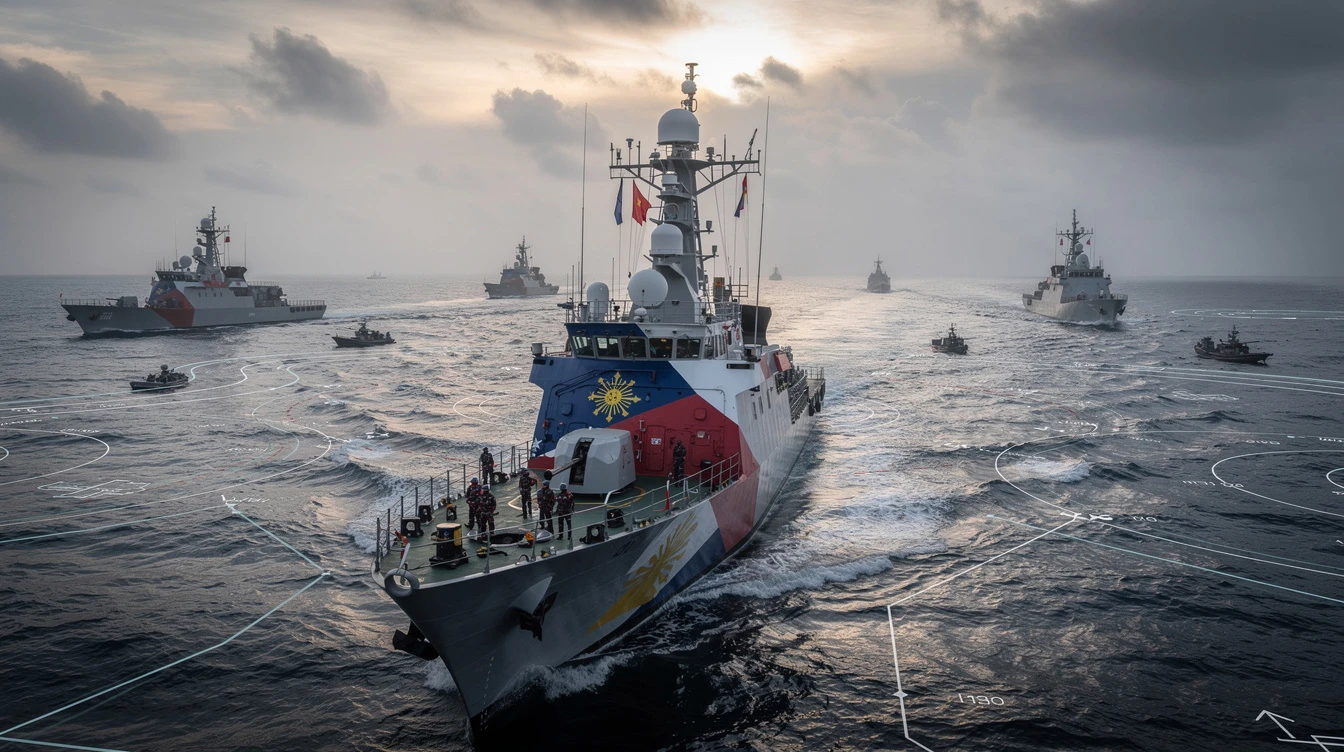
Chinese vessels routinely block Philippine fishermen from traditional fishing grounds. Repeated confrontations include water cannon incidents and aggressive interference with resupply missions. These incidents highlight how quickly tensions can escalate from diplomatic rhetoric to dangerous operational friction.
2026 Outlook: Heightened Tensions Expected
Philippine Navy's Warning
The Philippine Navy warns China's aggressive actions will continue throughout 2026. Military analysts note Beijing appears determined to consolidate control over contested features regardless of international pressure. Naval commanders emphasize the need for enhanced capabilities and closer coordination with allied forces.
ASEAN Code of Conduct Complications
Negotiations toward an ASEAN code of conduct face significant obstacles. Chinese analyst Wu Shicun warns a meaningful agreement is "simply not achievable" while the Philippines holds the rotating ASEAN chair. Wu states Manila would inevitably push to reference the 2016 ruling, which Beijing refuses to acknowledge. The deadlock underscores the challenge of achieving regional consensus when fundamental disagreements over legal frameworks remain unresolved.