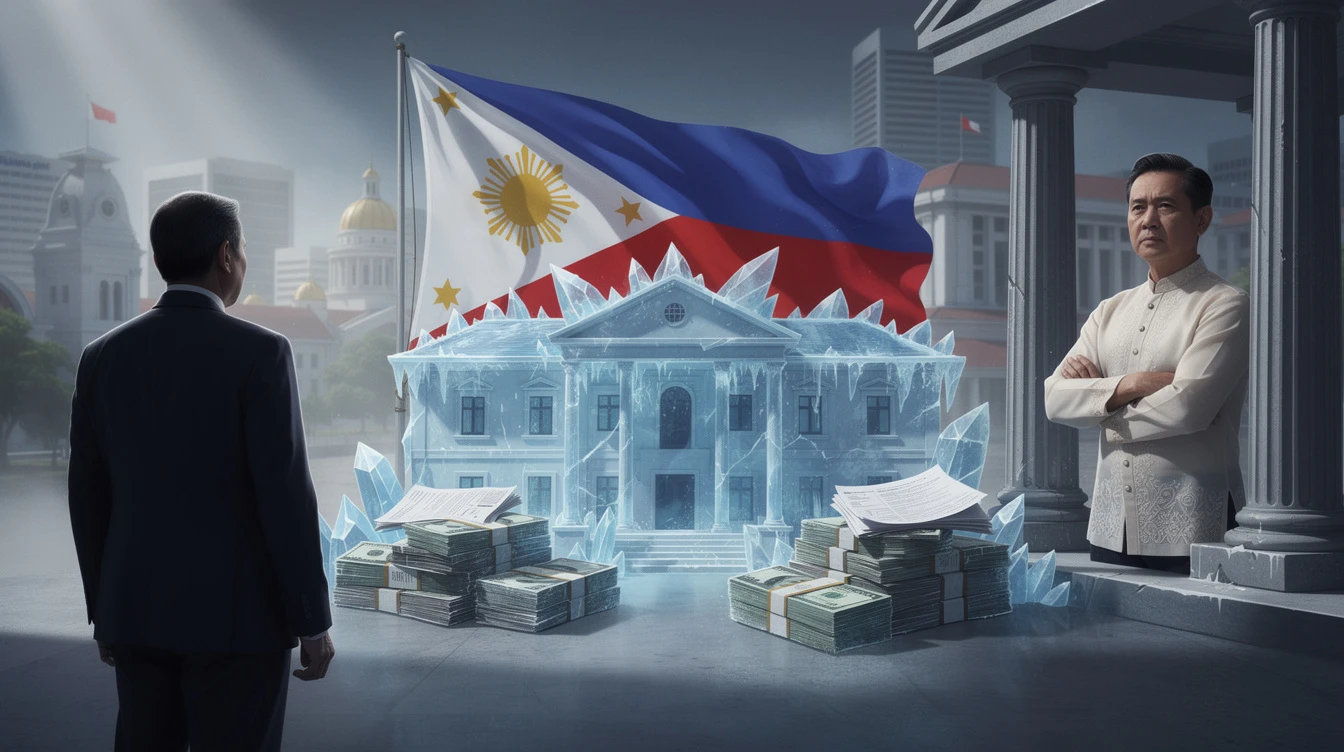
MANILA, Philippines — The Court of Appeals has issued a 20-day freeze order on a luxury property in Makati City and 35 bank accounts linked to former House Speaker Martin Romualdez , Ombudsman Jesus Crispin Remulla confirmed on Saturday, April 25, 2026. The order is part of an escalating probe into alleged corruption tied to public infrastructure spending, according to officials.
Ombudsman Remulla announced the development during a radio program, stating that the Court of Appeals acted on a complaint endorsed by the Office of the Ombudsman to the Anti-Money Laundering Council (AMLC). The freeze targets assets Romualdez allegedly acquired through anomalous government contracts, per the Ombudsman's statement.
Orders
The freeze covers a luxury property at a posh subdivision in Makati City, previously owned by shipping executive Doris Magsaysay-Ho , and 35 bank accounts across major financial institutions. Some accounts are jointly held with family members, according to the Court of Appeals order obtained by media outlets.
The Court of Appeals said a summary hearing will be conducted before the 20-day period lapses to determine whether the freeze order should be extended or lifted. This ensures due process while the investigation continues, legal experts told reporters covering the case.
Romualdez, a Leyte representative and cousin of President Ferdinand "Bongbong" Marcos Jr., has publicly denied any wrongdoing. His camp has yet to issue a formal statement as of press time, though sources close to the former speaker say he plans to challenge the freeze order in court.
Freeze
For Philippine political observers, the freeze order marks a significant escalation in the government's anti-corruption drive. The Ombudsman's office has been under pressure to act swiftly on complaints involving high-ranking officials, especially those tied to public works spending, according to Philippine Politics analysts.
The Manila Times earlier reported that the freeze order was issued following months of investigation by the AMLC. The agency flagged suspicious transactions involving Romualdez's accounts and the Makati property, sources said.
Doris Magsaysay-Ho, a prominent shipping executive and former president of the Philippine Shipowners Association , transferred ownership of the Makati property to Romualdez in 2024, property records show. The transaction has drawn scrutiny from investigators probing the property's acquisition.
The 35 bank accounts span at least six major banks, including BDO Unibank , Bank of the Philippine Islands , and Metropolitan Bank and Trust Company , according to the Court of Appeals order. Some accounts were allegedly used to receive kickbacks from infrastructure contractors, the Ombudsman's complaint alleges.
Public infrastructure spending under Romualdez's speakership (2023-2026) reached record levels, with billions allocated for roads, bridges, and flood control projects. Critics have long alleged irregularities in bidding processes, though no formal charges were filed until recently.
Ombudsman Remulla said the freeze is a "precautionary measure" to prevent asset dissipation while the investigation proceeds. He emphasized that the order does not assume guilt but is standard procedure in corruption probes, as explained in World legal frameworks.
The Philippine Supreme Court has previously upheld asset freeze orders as constitutional, provided they are temporary and subject to judicial review. The Court of Appeals' summary hearing mechanism aligns with this doctrine, legal scholars noted.
Romualdez's political allies have criticized the freeze as a "political persecution" ahead of the 2027 midterm elections. However, Ombudsman Remulla dismissed such claims, stating that the office acts independently and based on evidence, not politics.
The freeze order has sent shockwaves through the Philippine business community, as Romualdez is a prominent figure in both politics and commerce. He serves as chairman of several companies, including Leyte Agro-Industrial Corp. and Romualdez Realty Holdings .
If the freeze is extended beyond 20 days, it could disrupt Romualdez's business operations and potentially affect his liquidity. Business groups are closely monitoring the case for its implications on investment climate and rule of law, according to business analysts.
The Ombudsman's office has not disclosed the exact amount frozen, but sources estimate the total value of the assets at over PHP 500 million . The Makati property alone is valued at approximately PHP 150 million based on recent tax declarations.
The investigation originated from a whistleblower complaint filed in 2025 by a former contractor who alleged that Romualdez demanded kickbacks in exchange for infrastructure contracts. The complaint prompted the Ombudsman to launch a preliminary probe.
The AMLC, which monitored Romualdez's accounts for six months before filing for the freeze order, found evidence of unusual cash deposits and transfers to offshore accounts, according to documents seen by reporters. These transactions are now under scrutiny.
For the average Filipino, the freeze order underscores ongoing efforts to hold powerful officials accountable for alleged corruption. However, many remain skeptical given past cases where high-profile probes stalled or resulted in acquittals, as highlighted in Local news reports.
The case also highlights the role of the Court of Appeals in checking executive power. By issuing the freeze order independently, the court demonstrated its willingness to act against a politically connected figure, legal experts said.
As the 20-day period unfolds, all eyes will be on the summary hearing, where Romualdez's legal team will argue to lift the freeze. The outcome could set a precedent for how asset freeze cases are handled in Philippines moving forward.
Romualdez
The Office of the Ombudsman has vowed to pursue the case vigorously, with Remulla stating that "no one is above the law." This is the first time such a freeze order has been issued against a former House speaker in recent Philippine history, making it a landmark case.
For Filipino readers, this development matters because it signals a potential shift in anti-corruption enforcement, directly affecting public trust in government institutions. Whether the freeze leads to formal charges or is lifted without prosecution will determine the credibility of the Ombudsman's office and the broader justice system.