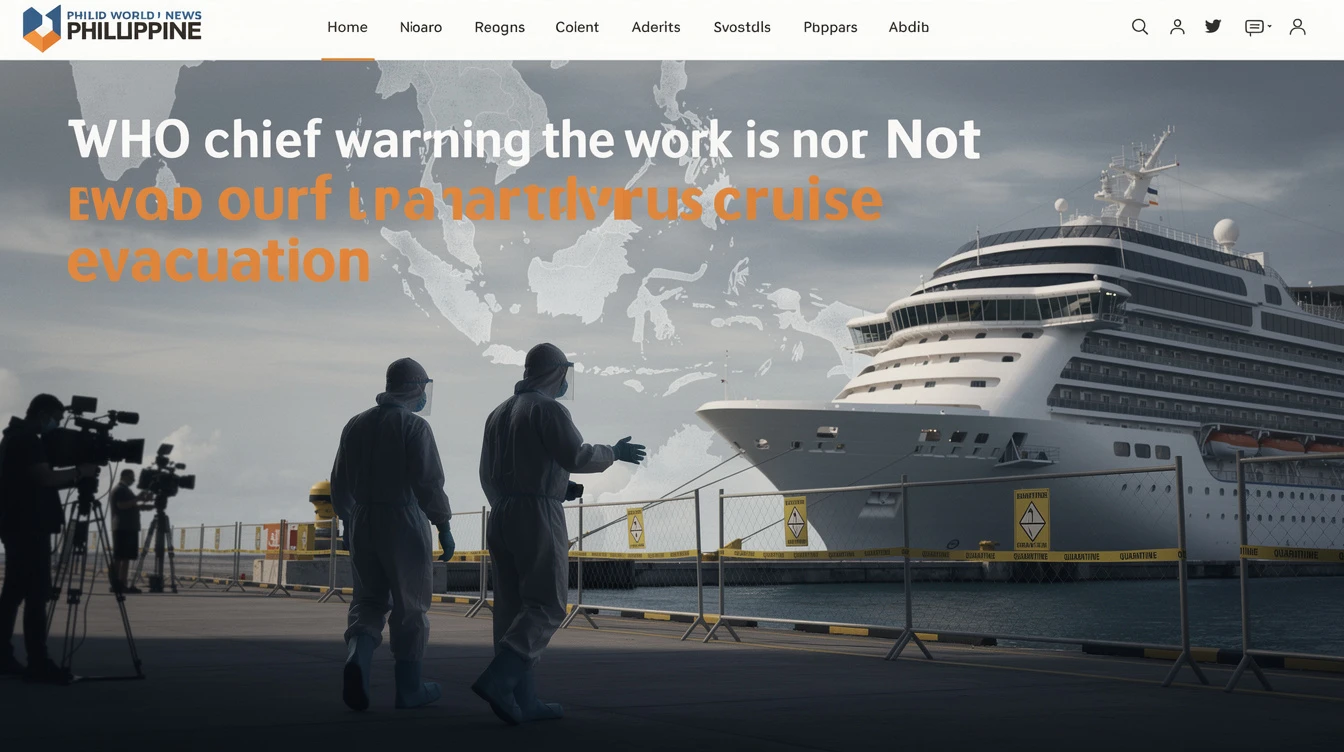
Madrid – World Health Organization (WHO) Director-General Tedros Adhanom Ghebreyesus said Tuesday that "our work is not over" to contain hantavirus after a deadly outbreak on a cruise ship forced the evacuation of more than 120 passengers and crew in Spain's Canary Islands.
Speaking at a joint news conference in Madrid with Spanish Prime Minister Pedro Sanchez, Tedros said there is no evidence yet of a larger outbreak. "There is no sign that we are seeing the start of a larger outbreak," Tedros told reporters.
Evacuation of MV Hondius
The affected vessel, the MV Hondius, had been docked near Tenerife after reports of hantavirus infections among its passengers and crew. On Sunday and Monday, more than 120 people were flown out from the Canary Islands, with countries implementing different health protocols for returning evacuees.
Photographs from the scene showed passengers leaving the ship by military bus on May 11, 2026. The ship later departed Tenerife after the evacuation.
Hantavirus is a severe and sometimes fatal respiratory disease transmitted through contact with infected rodents, their urine, or droppings. Person-to-person transmission is rare but has been documented in some cases.
Global Response Underway
Tedros underscored that international coordination remains critical. "Our work is not over," he said at the joint press appearance with Sanchez. The Spanish government has been working with the WHO and other countries to monitor the health of evacuees and prevent any wider spread.
Sanchez expressed confidence in the measures taken but stressed the need for continued vigilance. No specific breakdown of evacuees by nationality was provided at the briefing.
Bay Area Health Officials Confirm Exposure
On the same day, health officials in the San Francisco Bay Area confirmed that a resident had been exposed to hantavirus while on the MV Hondius. The announcement came as local health departments in the United States began reaching out to travelers returning from the cruise.
The California Department of Public Health said the individual is under medical observation and asymptomatic so far. Officials said they are working with the U.S. Centers for Disease Control and Prevention (CDC) to track all American passengers on the ship.
"We are taking this seriously," a Bay Area health official told CBS News. "The risk to the general public remains low, but we are monitoring the situation closely."
Hantavirus: What We Know
Hantavirus pulmonary syndrome (HPS) has a mortality rate of about 38% according to the CDC. Symptoms include fever, muscle aches, fatigue, and shortness of breath, often progressing rapidly to respiratory failure.
The virus is typically transmitted when people inhale aerosolized particles from infected rodent urine or droppings. The outbreak on the MV Hondius is believed to have originated from onboard rodent activity, although the exact source remains under investigation.
Spanish health authorities have conducted a thorough disinfection of the ship and the port area. Quarantine protocols were enforced before evacuees were cleared to travel to their home countries.
International Health Measures Vary
Countries have taken different approaches to returning evacuees. Some nations require a mandatory 14-day home quarantine, while others have imposed testing and health monitoring requirements. The WHO has not recommended any blanket travel restrictions but has advised countries to maintain surveillance.
Tedros emphasized that the WHO will continue to provide technical assistance and coordinate information sharing. "We have the systems in place to detect and respond to these kinds of events," he said. "But we must stay alert."
Looking Ahead
No new cases have been reported among the evacuees as of Tuesday. Health authorities in Spain and partner countries are maintaining contact tracing and symptom monitoring for at least three weeks, the typical incubation period for hantavirus.
The WHO is expected to issue updated guidance on cruise ship sanitation and rodent control measures in the coming weeks. For now, Tedros urged governments and the public to remain informed but not alarmed. "We are on top of this," he said. "But complacency is not an option."