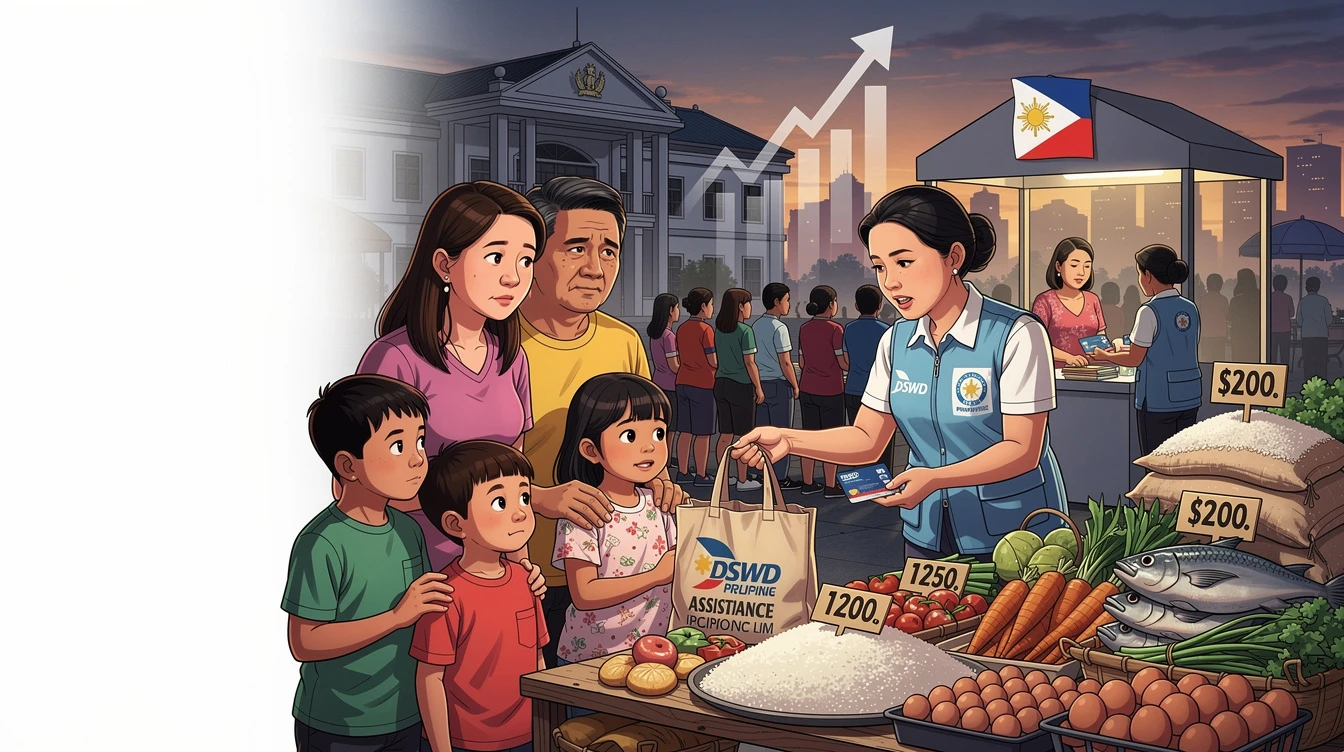
The Department of Social Welfare and Development (DSWD) on Monday, April 14, 2026, assured that beneficiaries of its Walang Gutom Program will continue receiving free meals despite escalating food costs linked to global and regional pressures.
DSWD Secretary Rex Gatchalian confirmed the government's commitment to the program, which directly provides nutritious meals to vulnerable Filipino families facing food insecurity.
"We assure our beneficiaries that support under the Walang Gutom Program continues," Gatchalian stated, addressing concerns that inflation might affect the initiative's reach.
The assurance comes as the Philippines grapples with rising prices for rice, vegetables, and other staples, straining the budgets of millions of low-income households.
The program's latest innovation, the Walang Gutom Kitchen, plays a key role by addressing involuntary hunger while simultaneously reducing food wastage.
These community kitchens repurpose surplus food into nutritious meals, creating a sustainable model for food assistance.
For many Filipino families, especially those with children and elderly members, the program is a critical buffer against malnutrition.
"Access to adequate and nutritious food remains our priority despite these economic challenges," a DSWD spokesperson emphasized in the official statement.
The program's continuity is vital as the Philippine Statistics Authority reports persistent inflation in the food basket.
This inflation disproportionately affects daily wage earners and those in the informal sector, who form a significant portion of the program's beneficiaries.
Secretary Gatchalian highlighted that the program is part of the Marcos administration's broader strategy to ensure food security.
It operates alongside other DSWD initiatives like the Pantawid Pamilyang Pilipino Program (4Ps) to provide a social safety net.
The Walang Gutom Program specifically targets areas with high incidence of hunger, as identified through government family assessments.
Its operations are funded through the annual General Appropriations Act, providing a degree of insulation from short-term market fluctuations.
However, the DSWD acknowledged that sustained high food prices could pressure the program's operational costs in the long term.
The department is coordinating with the Department of Agriculture and other agencies to manage supply chain issues contributing to price hikes.
For overseas Filipino workers (OFWs), the program's stability offers reassurance that their families back home have access to essential support.
Economic managers view such social protection programs as crucial for maintaining household consumption and overall economic stability.
The DSWD's announcement aims to prevent panic-buying or hoarding by assuring the public of continued government intervention in the food sector.
Community leaders in beneficiary areas have welcomed the confirmation, noting the program's role in keeping children in school and healthy.
As global food market volatility continues due to conflicts and climate events, the Philippine government's commitment to domestic food aid remains a key policy.
The Walang Gutom Program's model of using community kitchens is also being studied as a potential template for local government units to adopt independently.
This development is significant for Filipino readers as it directly impacts household food security during an economically challenging period.
The assurance provides stability for vulnerable sectors, ensuring that basic nutritional needs are met despite external inflationary pressures.
It also reflects the government's use of social welfare programs as a primary tool to mitigate the domestic impact of global economic shocks.