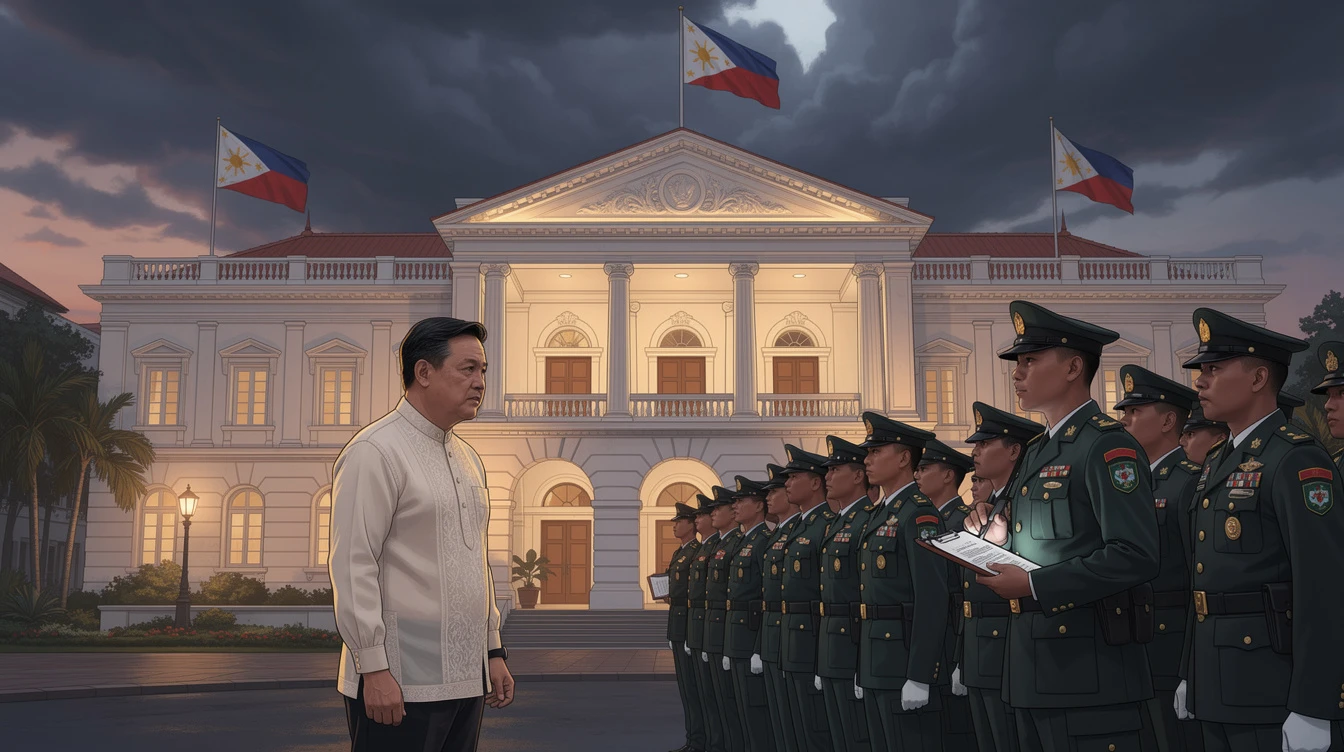
Malacañang Palace has formally labeled comments by Cavite 4th District Representative Kiko Barzaga calling for the ouster of President Ferdinand Marcos Jr. as 'seditious,' marking a significant escalation in political tensions. The Philippine Army simultaneously removed Barzaga from its reserve force over social media posts deemed offensive and seditious, including one where he appeared in military attire.
Barzaga, who recently left the National Unity Party (NUP), confirmed his departure but vehemently denied involvement in any ouster plot against the President. He claimed the House of Representatives suspended him primarily for being a vocal critic of the administration, not for seditious activities. The lawmaker has vowed to continue his calls for Marcos's removal despite the filing of inciting to sedition charges.
Presidential Communications Office Secretary Cheloy Garafil stated, 'Any call for the ouster of a sitting President involving the Armed Forces of the Philippines is not only irresponsible but seditious.' She emphasized that such statements undermine national stability and the constitutional order, which is particularly sensitive given the Philippines' history of political unrest.
The Philippine Army, in a separate statement, said Barzaga's dismissal from the reserve force was due to 'conduct unbecoming of an officer.' His social media activity, which included discussions of military involvement in political change, violated military regulations and the principle of civilian supremacy over the armed forces. This action reinforces the AFP's stance of remaining apolitical.
This incident occurs amid broader concerns about political cohesion within the House of Representatives and the ruling coalition. Barzaga's exit from the NUP, a key ally of the administration, hints at possible fractures that could affect legislative support for Marcos's priority bills. Political analysts note that such public disputes test the strength of the 'Super Majority' in Congress.
For Filipino citizens, the labeling of a congressman's speech as seditious raises immediate questions about the boundaries of political dissent. The 1987 Constitution guarantees free speech, but laws against sedition and rebellion place limits, especially regarding statements that allegedly incite violence or coup attempts. Legal experts anticipate debates on where criticism ends and sedition begins.
The case also highlights the precarious position of military reservists in political discourse. Their dual status as civilians and part of the military institution subjects them to stricter codes of conduct. The Army's swift action serves as a clear warning to all personnel against engaging in partisan political activities that could compromise institutional neutrality.
For the estimated 1.8 million Filipinos working abroad, political instability at home remains a primary concern. OFW families rely on a predictable and peaceful political environment to ensure the security of their investments and loved ones. News of sedition probes and political infighting can cause anxiety about the nation's direction and economic prospects.
The Marcos administration is likely to use this case to reinforce a message of zero tolerance for what it perceives as threats to democratic stability. However, opposition figures may frame it as an attempt to stifle legitimate criticism. The coming weeks will reveal how the judiciary handles the sedition complaint and whether other lawmakers align with or distance themselves from Barzaga.
Ultimately, this confrontation matters to every Filipino because it strikes at the core of democratic governance: balancing free expression with national security. In a nation with a complex history of political upheaval, the government's response to perceived sedition sets a precedent for how future dissent is managed, impacting the political climate for years to come.