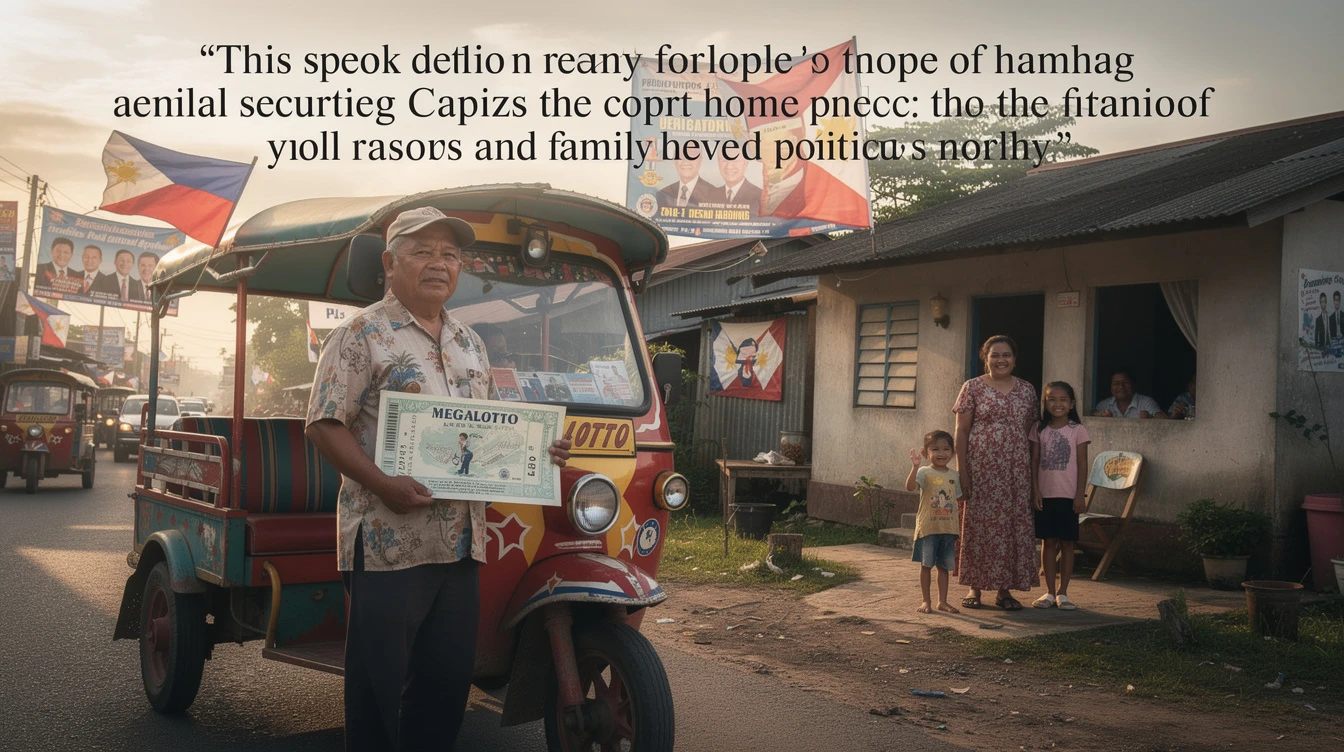
A tricycle driver from Roxas City, Capiz won the P15 million jackpot in the Philippine Charity Sweepstakes Office's Megalotto 6/45 draw on Wednesday, March 25. The winning combination was 17-24-15-29-10-05, making the bettor an instant multi-millionaire overnight.
The PCSO confirmed the win in an official announcement from its Manila headquarters. The agency stated the winning ticket was purchased at a lottery outlet in Capiz, a province in the Western Visayas region.
"We congratulate the winner from Capiz. This is a life-changing event for one Filipino family," a PCSO spokesperson said. The winner has one year from the draw date to claim the prize at the PCSO main office in Mandaluyong.
The jackpot prize of P15,000,000.00 is subject to a 20% final tax, as mandated by the Bureau of Internal Revenue. This leaves the winner with a net amount of approximately P12 million before any agent fees or donations.
Lottery wins are particularly significant in provinces like Capiz, where average incomes are lower than in Metro Manila. A windfall of this size can transform the economic standing of an entire extended family.
For the estimated 400,000 tricycle drivers nationwide, this win represents a powerful dream. Many drivers rely on daily earnings to support their families, making a lottery jackpot a symbol of hope and escape from financial strain.
The win has ignited renewed interest in PCSO games across Panay Island. Local lottery outlets reported increased ticket sales as news of the Capiz winner spread through community networks and social media.
This is not the first major lottery win for the Visayas region this year. The PCSO has recorded several multi-million peso winners from provincial areas, highlighting nationwide participation in the games.
The PCSO reminds winners to sign the back of their tickets immediately and secure them in a safe place. They must also bring two valid IDs and the winning ticket to claim their prize.
Proceeds from PCSO lottery games fund critical health programs, charity services, and medical assistance for indigent patients across the Philippines. Every ticket purchase contributes to this national charitable mandate.
For millions of Filipinos, especially overseas workers who send remittances home, buying a lottery ticket represents a small investment in a dream of financial security. This win reinforces the narrative that anyone, even a provincial tricycle driver, can get lucky.
The story of the Capiz winner matters deeply to Filipino readers because it embodies a common aspiration. In a country where economic mobility can be challenging, lottery wins provide a culturally resonant story of sudden fortune and family upliftment.
It highlights how a single event can alter the trajectory of a working-class family, offering a tangible example of hope that resonates with millions who participate in the PCSO's games of chance.