Ukraine War Enters Year 3 as Fighting Persists in Donetsk, Luhansk Fronts
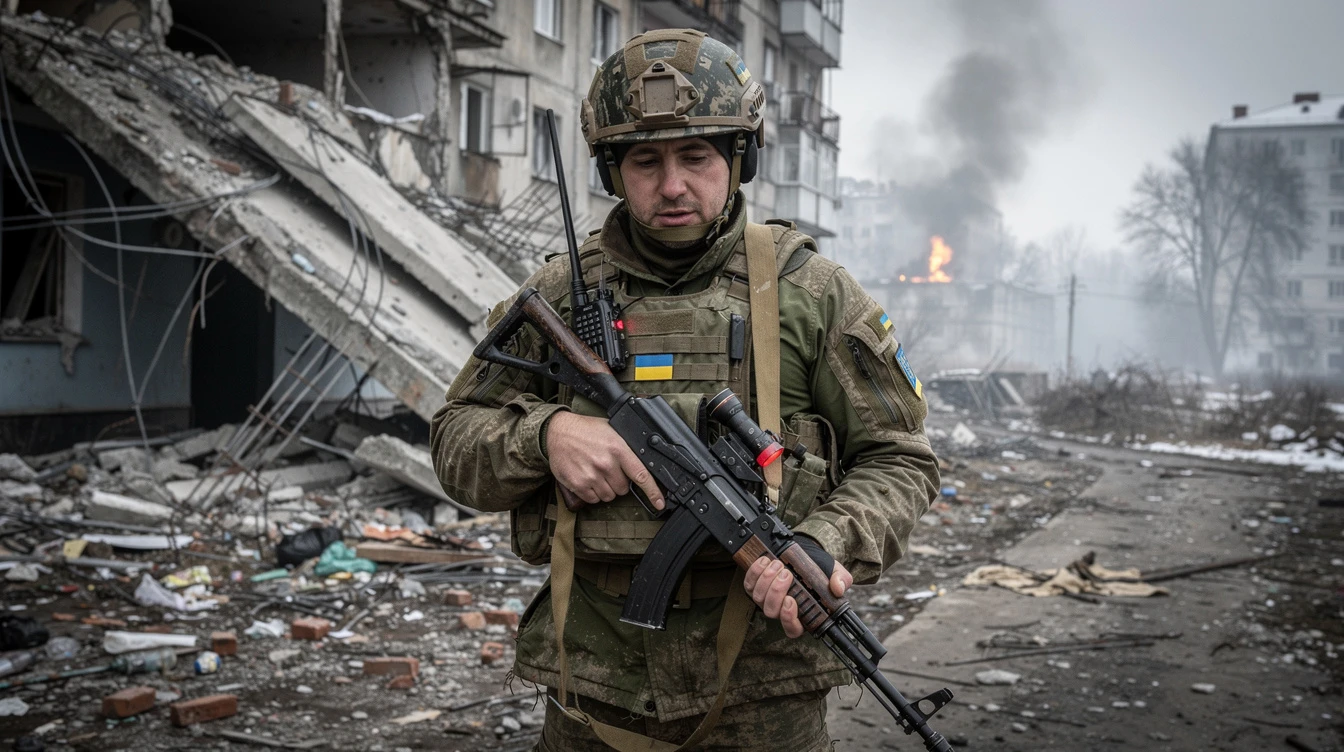
The grinding attritional warfare continues along heavily fortified front lines in eastern Ukraine, particularly in the Donetsk and Luhansk regions, where Russian forces maintain offensive operations while Ukrainian defenders hold their positions.
The conflict has entered its third year since Russia's full-scale invasion began on February 24, 2022, evolving into the largest conventional military confrontation in Europe since World War II. Both sides continue to suffer casualties as diplomacy stalls.
"The situation on the front remains extremely difficult," Ukrainian President Volodymyr Zelenskyy said in a recent address. "Our soldiers are showing extraordinary courage against overwhelming firepower."
Russia has formally annexed four Ukrainian regions following referendums condemned by the international community. Russian officials maintain that their military operation aims to protect Russian-speaking populations and address NATO expansion they describe as threatening Russian security interests.
"The special military operation is proceeding according to plan," Russian Foreign Minister Sergei Lavrov stated. "All objectives will be achieved."
Ukraine insists on complete restoration of its territorial integrity, including the return of Crimea, which Russia annexed in 2014. The government in Kyiv has refused to negotiate any settlement that would cede occupied territory.
"We will not accept any frozen conflict," Ukrainian Defense Minister Rustem Umerov declared. "Ukraine's sovereignty and territorial integrity must be fully respected."
The humanitarian toll continues to worsen. United Nations estimates indicate that civilian casualties have mounted, with over 10,000 confirmed civilian deaths since the invasion began. Approximately 6 million Ukrainians have been internally displaced, with another 3.4 million registered as refugees in European Union countries.
Western military assistance to Ukraine has been substantial. The United States has committed over $75 billion in aid since the conflict began, while the European Union has pledged approximately 67 billion euros in combined military, financial, and humanitarian support.
Global economic disruption from the conflict has been significant. Energy prices spiked dramatically in 2022, while food security concerns emerged due to disrupted grain exports from both Ukraine and Russia. International sanctions have targeted Russian financial institutions, oligarchs, and the energy sector.
More than 50 countries have imposed sanctions on Russia. The United Nations General Assembly has passed multiple resolutions demanding Russian withdrawal, with 141 nations voting in favor of one such resolution.
The conflict has reshaped European security architecture. Finland and Sweden, traditionally neutral, applied for NATO membership in response to Russian aggression. Finland formally joined the alliance in April 2023, representing the most significant expansion of the alliance in decades.
Russian officials have warned of consequences from NATO expansion. Moscow has strengthened military ties with China and other nations as Western isolation deepens. Diplomatic efforts to broker a ceasefire have so far proven unsuccessful.
Analysts warn that the conflict shows no signs of abating. Both sides have shown no willingness to compromise on fundamental territorial issues. International mediators continue to seek pathways toward negotiation, though prospects for breakthrough remain dim.
Regional security implications extend beyond Europe. Philippines officials have expressed concern about the broader implications for international law and territorial boundaries, drawing parallels to disputes in the South China Sea.
Further diplomatic talks are expected in the coming months. The international community continues to call for dialogue while maintaining support for Ukraine's defense. Officials said a lasting resolution will require compromise from both Moscow and Kyiv.