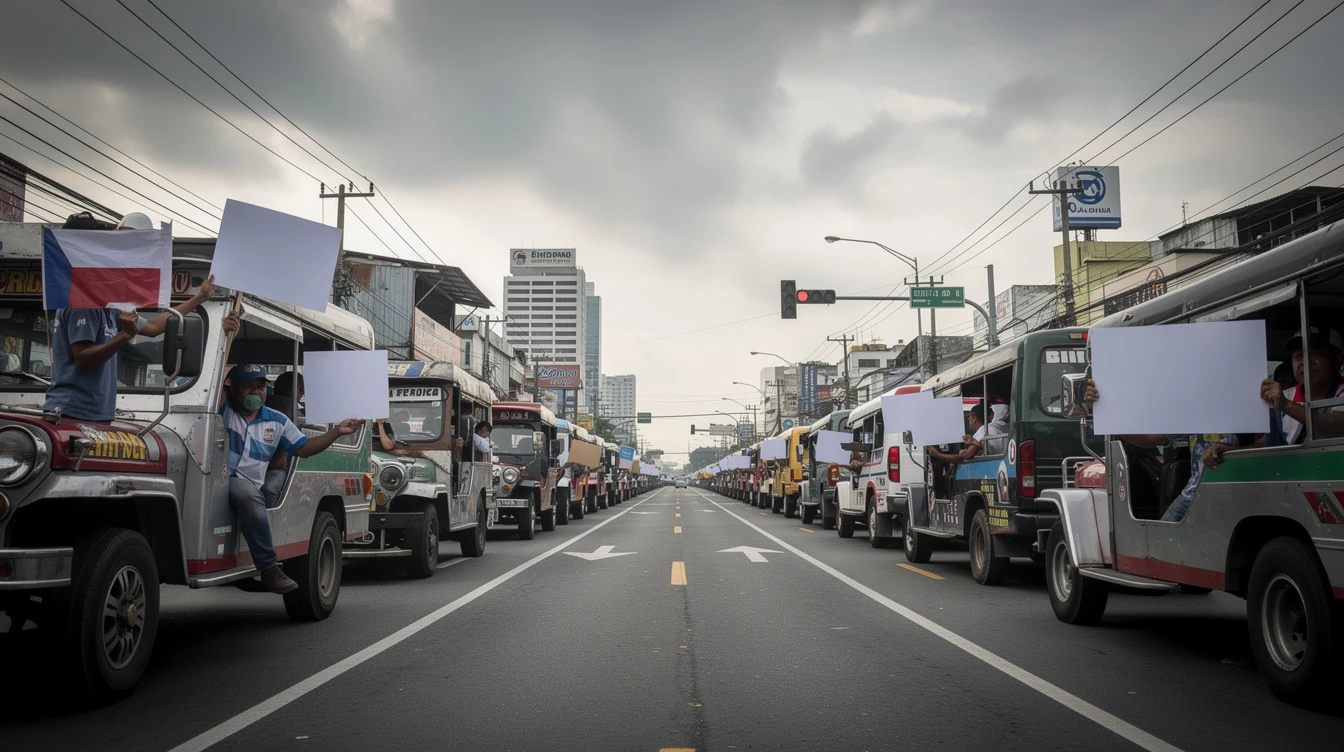
Major Philippine transport groups launched a three-day nationwide strike Wednesday demanding an immediate P55 per liter rollback in diesel prices, citing unsustainable operating costs.
The strike, led by an alliance of transport organizations, directly pressures the Marcos administration to intervene in fuel pricing as pump rates remain elevated.
"We cannot survive with current diesel prices," stated a transport leader during a press conference in Quezon City.
The demand for a P55 rollback represents one of the most aggressive price reduction calls from the sector in recent years.
Transport groups argue that without substantial relief, fare increases become inevitable, burdening millions of daily commuters.
This strike affects key routes in Metro Manila, Central Luzon, and Southern Tagalog, potentially stranding thousands of passengers.
The Land Transportation Franchising and Regulatory Board (LTFRB) has deployed libreng sakay vehicles to mitigate the strike's impact.
However, many commuters, especially students and daily wage earners, still face significant disruption to their routines.
The Philippine context is critical: high fuel prices directly increase costs for the 450,000 public utility vehicle drivers nationwide.
These costs ripple through the economy, affecting food prices and the budgets of millions of Filipino households.
For OFW families, remittances stretch less far when local transportation and commodity costs rise sharply.
Malacañang has acknowledged the strike but reiterated its commitment to existing fuel subsidy programs.
The Department of Energy monitors global oil markets but maintains that local pricing follows international trends.
Transport leaders counter that government must exercise its regulatory powers to shield the public from volatile prices.
Past administrations have occasionally used price stabilization funds, but current mechanisms rely heavily on targeted subsidies.
The strike's timing is significant, occurring as inflation remains a top concern for Filipino consumers and policymakers.
Agriculture and logistics sectors also feel diesel price pressures, threatening broader economic stability.
Small business owners who rely on delivery services express solidarity with drivers' financial struggles.
"Every peso increase in diesel hurts our bottom line," shared a Laguna-based trucking operator.
The transport sector's demand goes beyond temporary subsidies, seeking structural changes in fuel pricing.
Analysts note that a P55 rollback would require substantial government intervention or a dramatic global price drop.
Negotiations between transport groups and the LTFRB are expected to continue throughout the strike period.
The outcome will set a precedent for how the Marcos administration handles similar economic pressures.
For the average Filipino, this strike highlights the fragile balance between livelihood preservation and economic policy.
Commuters face a dilemma: support drivers' demands while coping with immediate transportation shortages.
The Philippine economy's recovery from pandemic losses remains vulnerable to such transport disruptions.
Long-term solutions must address both drivers' incomes and commuters' fare affordability, a complex policy challenge.
This strike underscores how global oil market fluctuations translate directly into Filipino daily life struggles.
The transport sector's mobilization demonstrates its continued political influence in national policy debates.
Resolution requires balancing fiscal responsibility with urgent social protection for vulnerable workers.
For Filipino readers, this issue matters deeply as it affects commute costs, goods prices, and overall economic confidence.
OFW families abroad watch closely, knowing their loved ones' transportation expenses impact household budgets.
The strike's resolution will signal the government's priority: market-driven pricing or direct consumer protection.
Ultimately, sustainable transportation requires policies that shield both drivers and commuters from external shocks.