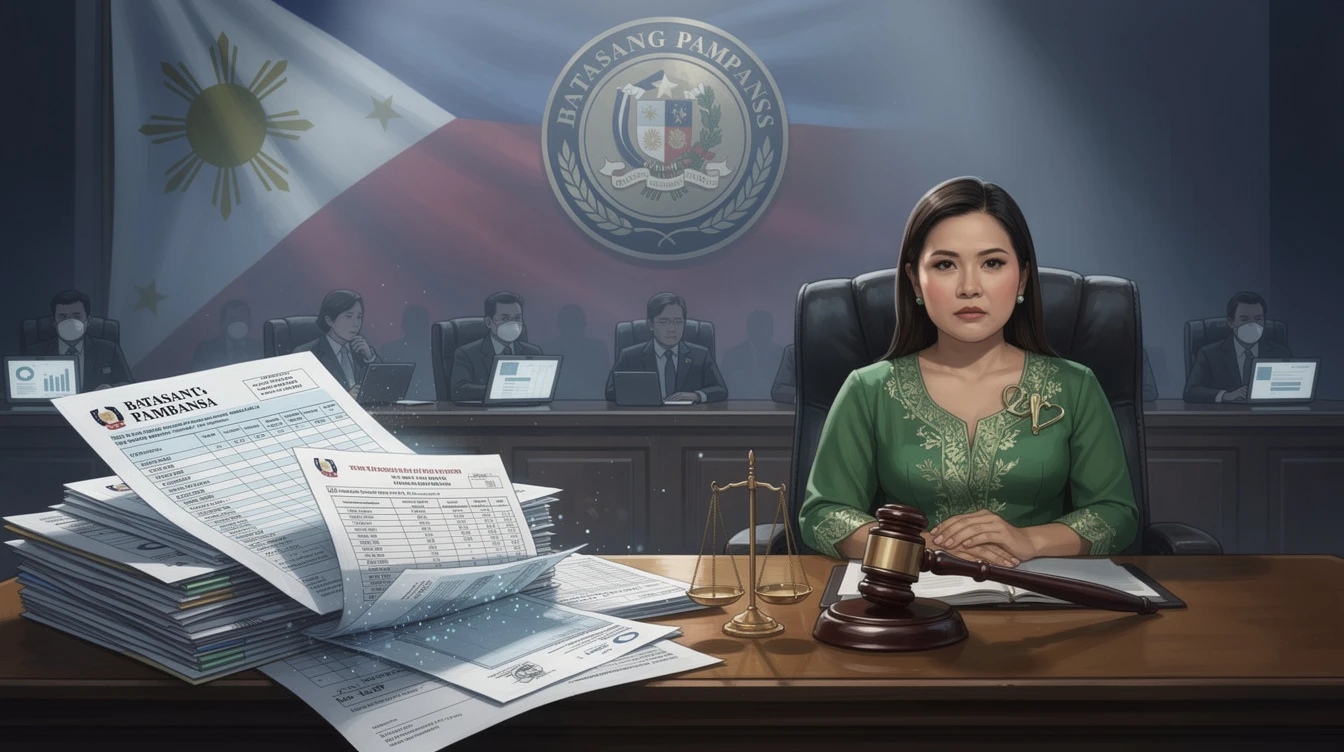
The House Committee on Justice will investigate allegations of unexplained wealth against Vice President Sara Duterte using bank transaction records at its next hearing. The panel will examine documents concerning suspicious financial activities linked to Duterte and her husband, lawyer Manases Carpio.
This formal inquiry represents a significant escalation in legislative scrutiny of the Vice President's finances. Lawmakers plan to directly analyze banking data to verify the origins of substantial funds.
Committee chairperson and Leyte 1st District Rep. Martin Romualdez confirmed the hearing's agenda. "The panel has a duty to examine these serious allegations with transparency," a committee statement noted.
The probe follows months of political tension between the Duterte camp and the administration of President Ferdinand Marcos Jr. Analysts view this as a deepening rift within the ruling coalition.
For Filipino citizens, this investigation touches on core issues of governance and accountability. Public trust in officials' integrity remains a persistent concern nationwide.
The use of bank records as primary evidence marks a more forensic approach to corruption allegations. Previous wealth probes often relied on lifestyle checks and asset declarations.
Vice President Duterte, who also serves as Secretary of Education, has consistently denied any wrongdoing. Her office has previously dismissed allegations as politically motivated.
This hearing could set a precedent for how Congress investigates high-ranking officials' wealth. The outcome may influence future anti-corruption legislation and enforcement mechanisms.
The Philippine context is crucial, as similar probes have historically polarized the nation. Past investigations have led to major political realignments and public demonstrations.
For overseas Filipino workers, who remit billions annually, official corruption directly impacts national development. Their hard-earned money supports an economy where transparent governance is essential.
The committee's findings could affect the political landscape ahead of the 2025 midterm elections. Several key alliances may be tested depending on the investigation's direction.
Constitutional experts note the House justice panel has subpoena powers to compel document production. However, legal battles over privacy and executive privilege may arise.
The Philippine National Police and other agencies might be called to provide security or additional evidence. Such probes often involve multiple government bodies.
This development matters profoundly to Filipino readers as it tests the country's institutions against powerful political families. The probe's fairness will be watched internationally.
A transparent process could strengthen democratic accountability, while a perceived witch hunt might further erode public trust. The nation's anti-corruption framework faces a practical examination.
Ultimately, this investigation into Vice President Duterte's alleged wealth is more than a political spectacle. It represents an ongoing struggle for ethical governance that affects every Filipino's future.