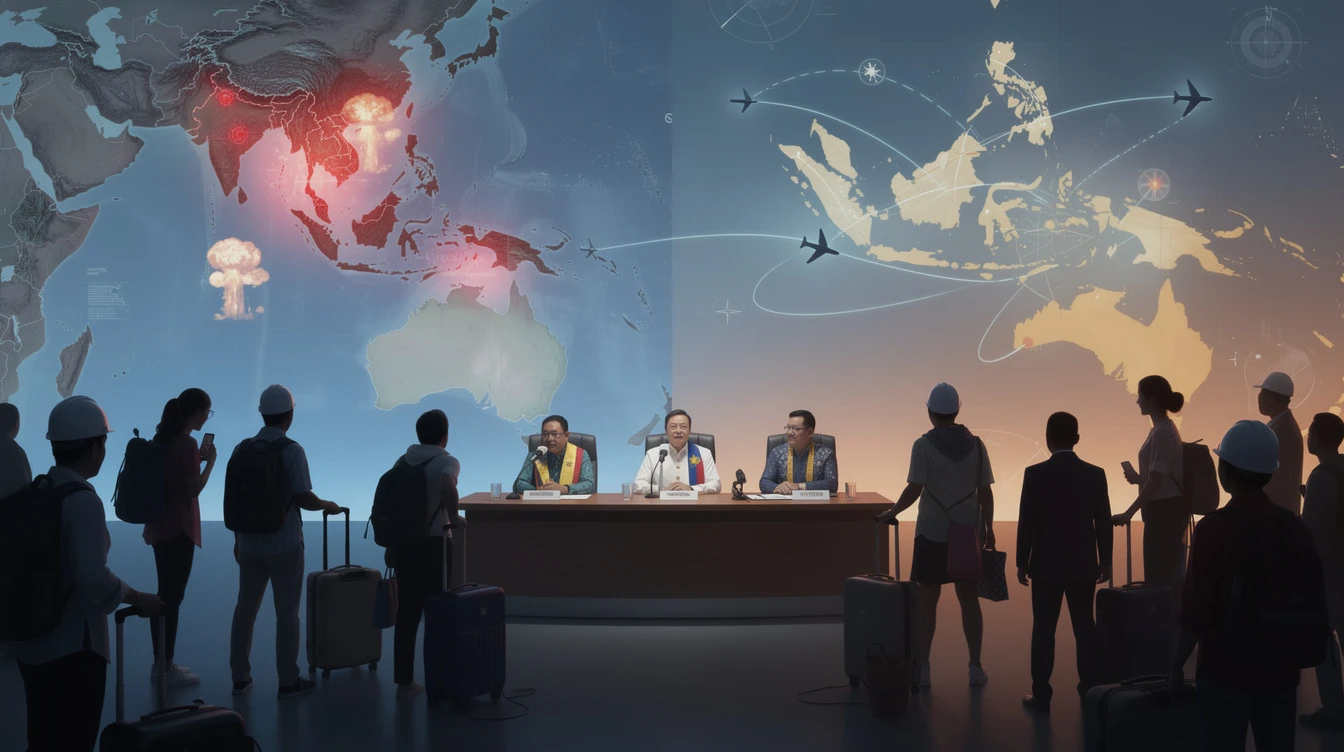
Intensifying Middle East conflict has triggered Philippine government emergency protocols for approximately 1.2 million Overseas Filipino Workers across the region as of April 16, 2026. The Department of Foreign Affairs confirmed activation of contingency plans following US enforcement of a Strait of Hormuz blockade and continued Israel-Iran hostilities.
Foreign Affairs Secretary Enrique Manalo stated the DFA's Middle East Preparedness Team is now on 24-hour alert status. "We are closely monitoring developments that directly impact Filipino communities," Manalo said in a Manila briefing. "Our embassies in Tel Aviv, Beirut, and Tehran maintain constant communication with local authorities."
The crisis escalated after US-Iran negotiations collapsed in Islamabad, prompting President Trump to order CENTCOM to enforce a Hormuz blockade starting Monday. This strategic waterway is crucial for global oil shipments, with potential ripple effects on Philippine energy imports and OFW remittance routes.
Israeli Prime Minister Benjamin Netanyahu declared Israel's war with Iran "not over yet" despite recent ceasefire announcements. The conflict has already claimed twelve IDF soldiers and 23 Israeli civilians, with over 7,656 injured in ballistic missile attacks since February 28.
Philippine Ambassador to Israel Pedro Laylo Jr. reported that approximately 30,000 Filipinos remain in Israel, primarily caregivers and hotel workers. "We have established emergency shelters in Tel Aviv and Haifa," Laylo confirmed. "All Filipinos are accounted for and advised to avoid border areas."
In Lebanon, where 15,000 OFWs reside mostly as domestic workers, embassy personnel are preparing evacuation routes. Israel's expanded military operations in southern Lebanon aim to push Hezbollah forces northward, creating potential danger zones near Filipino concentrations.
The economic implications for the Philippines are substantial. OFW remittances from the Middle East totaled $9.8 billion in 2025, representing 23% of total remittances. Any disruption to employment or transfer channels could affect millions of Filipino families dependent on these funds.
Energy security concerns have emerged alongside humanitarian ones. The Philippines imports over 60% of its crude oil from Middle Eastern suppliers. Department of Energy Assistant Secretary Leonido Pulido noted "contingency plans are being reviewed" should Hormuz disruptions affect supply chains.
Migrant Workers Secretary Maria Esperanza Santos announced the OWWA emergency hotline (1348) has extended operations. "Families seeking information about loved ones in conflict zones should use this dedicated line," Santos emphasized during a press conference at the Ninoy Aquino International Airport.
The Philippine Coast Guard has been placed on standby for potential maritime evacuation operations similar to 2006 Lebanon evacuations. PCG Commandant Admiral Jorge Duran confirmed coordination with commercial shipping companies for contingency plans.
For Filipino readers, this distant conflict carries immediate personal and economic consequences. The safety of over one million kababayans remains the government's priority, while families nationwide monitor news for updates on loved ones. Remittance-dependent households should prepare for possible transfer delays as regional banking systems experience strain. The Philippines' energy security now intertwines with Middle Eastern stability, making this geopolitical crisis directly relevant to every Filipino consumer and taxpayer.