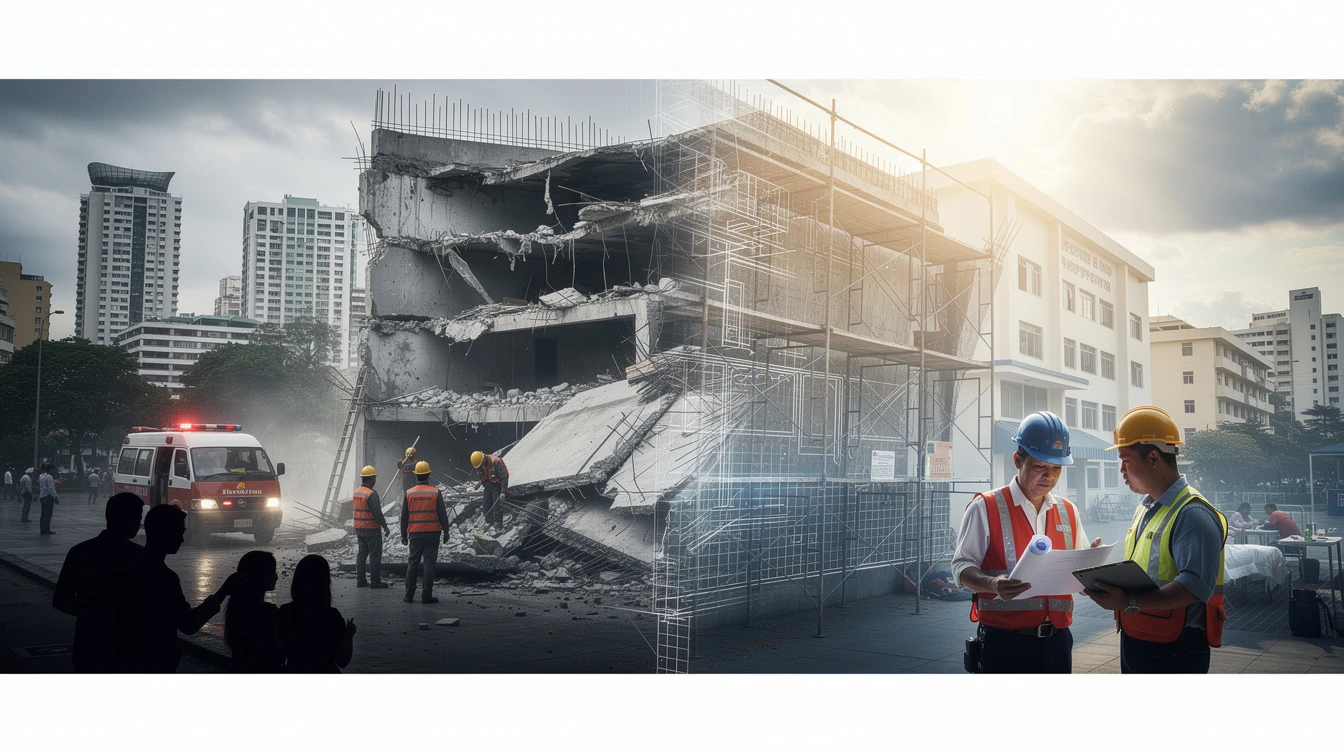
A devastating wall collapse in Bengaluru, India, has claimed seven lives, including three children. The accident occurred near Bowring and Lady Curzon Hospital on Wednesday, April 29, 2026, during intense monsoon rains.
This tragedy carries urgent lessons for the Philippines. Our cities face similar risks from aging infrastructure, heavy rainfall, and high urban density.
What Happened in Bengaluru
Heavy rains lasting only a few hours caused a compound wall to collapse near the hospital in Shivajinagar. The wall, located in a densely packed area next to a bus depot and market, killed street vendors and passersby.
Deputy Chief Minister DK Shivakumar confirmed the deaths.Chief Minister Siddaramaiah visited the site and announced Rs 5 lakh (roughly PHP 330,000) compensation per family.
Among the victims were four street vendors and two people from Kerala. Three women had also died in a separate road accident near Devanahalli just weeks earlier.
Philippine Parallels: Aging Walls, Deadly Rains
Metro Manila and other Philippine cities also have old compound walls near hospitals, schools, and markets. Many are cracked, poorly maintained, or not load-bearing for surrounding conditions.
In 2023 alone,at least four wall collapse incidents were reported in Metro Manila during typhoons. One wall near Manila Doctors Hospital collapsed, injuring a tricycle driver.
Urban planner Dr. Ma. Lourdes Sanchez told PinoyPulse: "Walls near busy pedestrian areas should be redesigned as barriers, not just boundaries. The Bengaluru tragedy shows what happens when we ignore that."
Why This Happens: Root Causes
Experts point to three main factors:poor drainage,lack of regular inspections, and unregulated street vending near hazardous structures.
In Bengaluru, the wall sat next to a hospital but also a bus terminal and a market. Heavy rain softened the ground. The wall, likely never designed as a retaining structure, gave way.
Philippine cities have similar setups.Quiapo and Divisoria in Manila, and Baclaran in Parañaque, all have crowded areas where walls abut sidewalks and vendor stalls.
Climate Change Worsens Risks
The Philippines and India face intensifying monsoon patterns. The Bengaluru downpour lasted only two hours but triggered multiple tree falls, wall collapses, and traffic jams.
Even key roads to Kempegowda International Airport were clogged. In Manila, similar rain events — like the July 2024 monsoon — submerged streets and destabilized old structures.
Meteorologist Dr. Juan dela Cruz explains: "Short-duration, high-intensity rainfall is becoming more common. Structures must be inspected with that in mind, not just for typhoons."
Immediate Responses: What India Did
Bengaluru officials acted fast. The police commissioner, hospital administrators, and deputy CM arrived within hours.Compensation of Rs 5 lakh was announced.
However, critics say prevention is better than payout.Local journalist Sunil Rao noted: "Every monsoon, similar walls collapse. We need a citywide audit of all boundary walls near public spaces."
The Philippines also has a National Building Code requiring structural inspections. But enforcement remains weak. Many walls near schools and hospitals have never been checked for stability.
Lessons for Philippine Policy Makers
There are concrete steps the Philippines can take:
- Audit all compound walls near hospitals, parks, schools, and markets in flood-prone areas.
- Retrofit or demolish walls showing cracks, leaning, or signs of water damage.
- Relocate or protect street vendors from standing directly against wall structures.
- Integrate wall safety into the Barangay Disaster Risk Reduction Plan.
The Department of Public Works and Highways (DPWH) already inspects national roads. But local government units (LGUs) must also inspect community walls.
Real-World Impact: Who Pays When Walls Collapse?
In Bengaluru, seven families now mourn. Street vendors lost their livelihood — and their lives — in seconds.
In the Philippines, similar tragedies happen under the radar. A wall collapse in Pasay City in 2024 killed a construction worker. Another in Caloocan injured a student waiting for a jeepney.
Without systemic change, more lives will be at risk during the next monsoon season.
For a deeper look at infrastructure safety, read aboutPhilippine infrastructure challenges and ourmission for safer urban spaces.
FAQ Section
What caused the Bengaluru wall collapse?
Intense monsoon rains in Bengaluru caused a hospital compound wall to collapse, killing seven people, including three children and four street vendors.
Could this happen in the Philippines?
Yes. Philippine cities have similar aging walls near crowded areas. The National Building Code exists but enforcement is weak, especially for walls on private property.
What compensation did victims' families receive?
The Karnataka government announced Rs 5 lakh (about PHP 330,000) for each family. Philippine laws provide PHP 25,000–100,000 under the Disaster Compensation Act, but only for declared calamities.
How can LGUs prevent wall collapses?
LGUs should conduct annual wall inspections, especially before rainy season. Relocate street vendors away from walls. Enforce the Building Code strictly.
Conclusion
The Bengaluru wall collapse is a wake-up call for fast-growing Asian cities. The Philippines, with its similar urban density and monsoon climate, must act now.
Every wall near a hospital, school, or market must be audited. Street vendors must be offered safe spaces away from hazardous structures.
As climate change intensifies rainfall, the question is notif another collapse will happen — butwhen. Let this tragedy push real action in the Philippines. Read more about urban safety in ourdisaster preparedness guide.