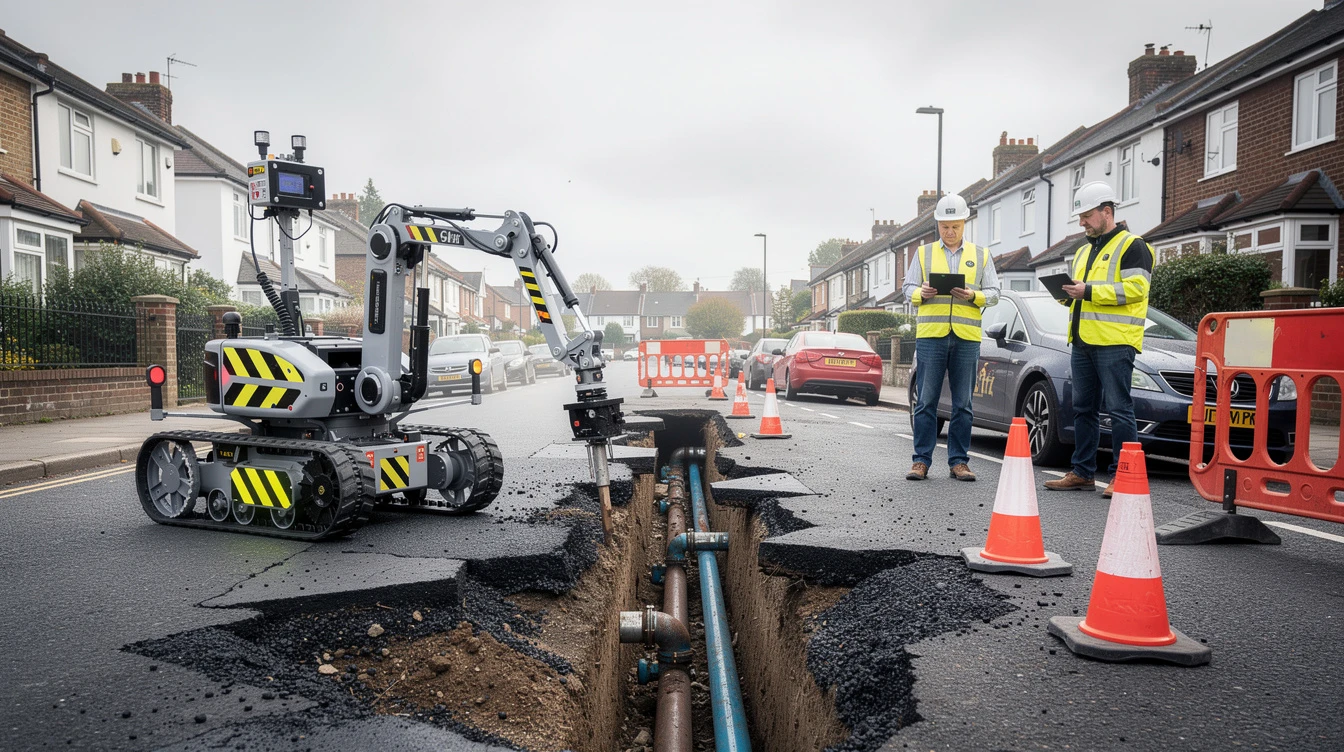
ULC Technologies has launched field trials in Epsom, Surrey, for its Robotic Roadworks and Excavation System (RRES), a robotic solution designed to transform traditional excavation for gas networks. The system aims to replace daily conventional digging on transmission and distribution mains, targeting reduced public disruption and improved safety for utility crews.
The company brings over 20 years of experience in live gas main inspection, having sealed more than 66,000 cast iron gas main joints since 2010. This work supports both planned capital projects and reactive leak response operations across the United Kingdom and other markets.
"Our teams deploy bespoke live gas main inspection camera and crawler systems to solve problems in the field," stated a company representative. This technology reduces guesswork by providing critical in-pipe intelligence for mains ranging from 2-inch to 48-inch diameters.
ULC Technologies works with leading utility and energy companies to develop robotic and inspection systems. The integration of machine learning and other technologies seeks to minimize environmental impact while maintaining infrastructure safety and reliability.
The RRES trial represents a significant shift in underground infrastructure maintenance. Traditional excavation often requires extensive road closures, traffic management, and manual labor in potentially hazardous conditions.
Field technicians, who are operator-qualified, currently use robotic crawlers to inspect live polyethylene, steel, and cast iron gas mains. These inspections aid in diagnosing water intrusion outages, identifying pipe features, and preventing damage during excavation projects.
Parallel technological advancements in archaeology demonstrate robotics' broader transformative potential. Researchers note robots can explore inaccessible areas and map challenging sites with accuracy and speed, preserving cultural heritage.
At sites like Pompeii, robotic integration has proven effective for archaeological research, conservation, and site management. This parallels the utility sector's need for precise, non-invasive examination of critical underground assets.
The connection of robotics with field work attempts to overcome traditional method limitations. In utilities, this means accessing subterranean infrastructure without large-scale excavation, thereby reducing community disruption.
Experts like A. Ziparo have documented robots for exploration and digital preservation. This research foundation supports industrial applications where detailed study and minimal intrusion are equally vital.
For UK gas networks, the successful deployment of RRES could modernize a century-old excavation paradigm. The Epsom trial will provide real-world data on the system's efficacy in live utility environments.
Technological convergence, including AI and 3D visualization, promises to revolutionize excavation across sectors. ULC's system is a practical step toward that future, moving from inspection to robotic execution of roadworks.
The company's two decades of expertise in internal inspection directly informs the RRES development. This experience ensures the robotic system addresses genuine field challenges faced by network operators daily.