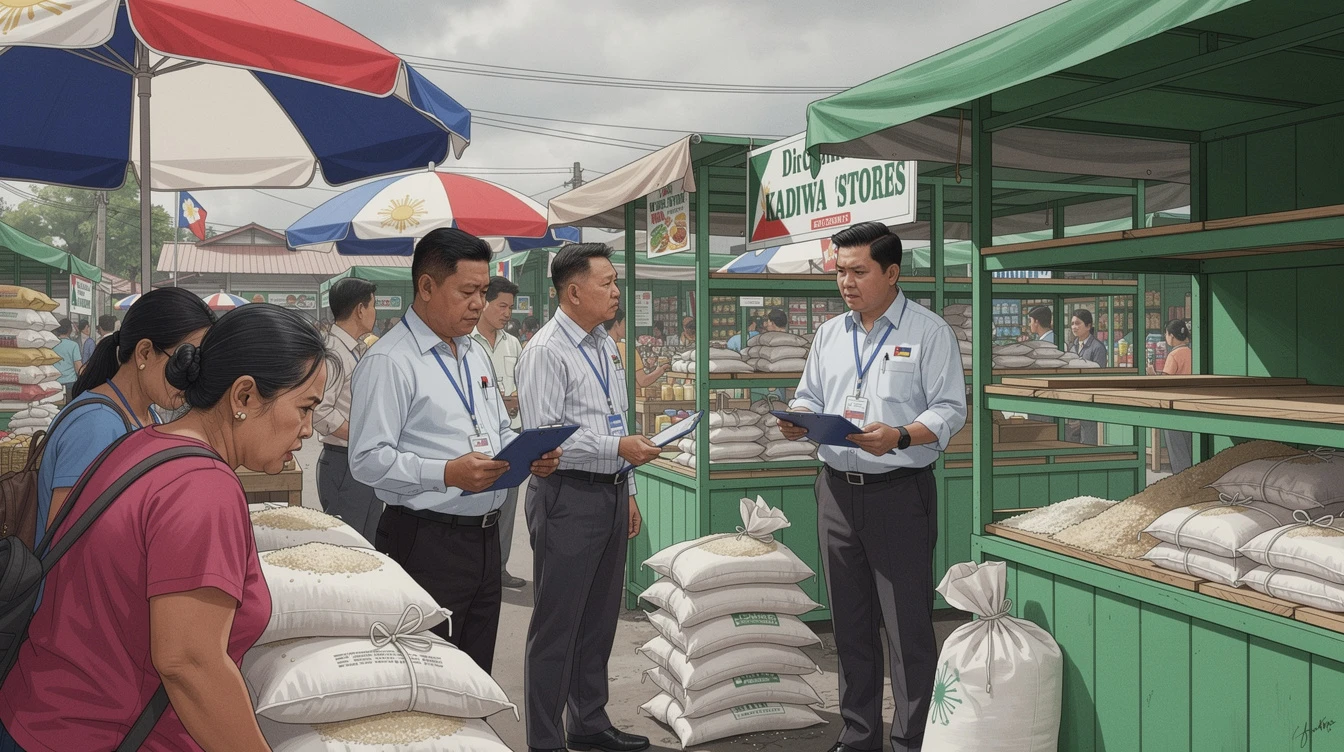
The Department of Agriculture (DA) announced on Tuesday it will investigate reports that some Kadiwa stores lack rice supplies, while maintaining that rice sold through the program undergoes rigorous testing. This follows concerns from consumers and lawmakers about the availability of the subsidized P20-per-kilo rice.
"We are checking the incident, but the rice sold in Kadiwa undergoes testing," a DA official stated, addressing the supply concerns directly. The department emphasized its commitment to the program's integrity despite the reported logistical challenges.
As of May 14, the DA confirmed the P20 rice remains available at key locations including its Central Office in Quezon City and Barangay San Isidro. The agency provided a short list of operational outlets to reassure the public of ongoing distribution.
The investigation comes amid criticism from some sectors regarding the DA's engagement on rice pricing. Certain groups have cited the department's apparent lack of interest in meeting to discuss proposals for reducing market rice prices more broadly.
Rice prices have remained stubbornly high since the start of 2023, according to the DA's own monitoring data. On January 2, prices for local special rice varieties were recorded at elevated levels, setting a trend for the year.
The Kadiwa program is a flagship initiative intended to provide affordable staple goods directly from farmers to consumers. Its reported supply issues highlight the difficulties in stabilizing the rice market through government intervention.
Agriculture officials stress that the quality control measures for Kadiwa rice are stringent, involving multiple checkpoints from farm to store. This system is designed to ensure food safety while supporting local producers.
Market observers note that the Philippines continues to grapple with rice inflation, driven by both local production challenges and global market pressures. The DA's response to Kadiwa shortages will be closely watched as an indicator of program effectiveness.
The department has not specified a timeline for completing its investigation into the supply chain disruptions. However, it has promised transparency in addressing any operational deficiencies found within the Kadiwa network.
Consumer groups have welcomed the promised probe but urge faster action to replenish stocks. They emphasize that the program's credibility depends on reliable availability of its promised affordable commodities.
Meanwhile, the broader rice price situation remains a pressing economic concern. The DA's monitoring shows consistent price levels that have not reflected the downward movement anticipated by some policymakers.
The outcome of the Kadiwa investigation may influence future adjustments to the government's food security strategy. Officials acknowledge that balancing supply, affordability, and quality requires continuous program evaluation.