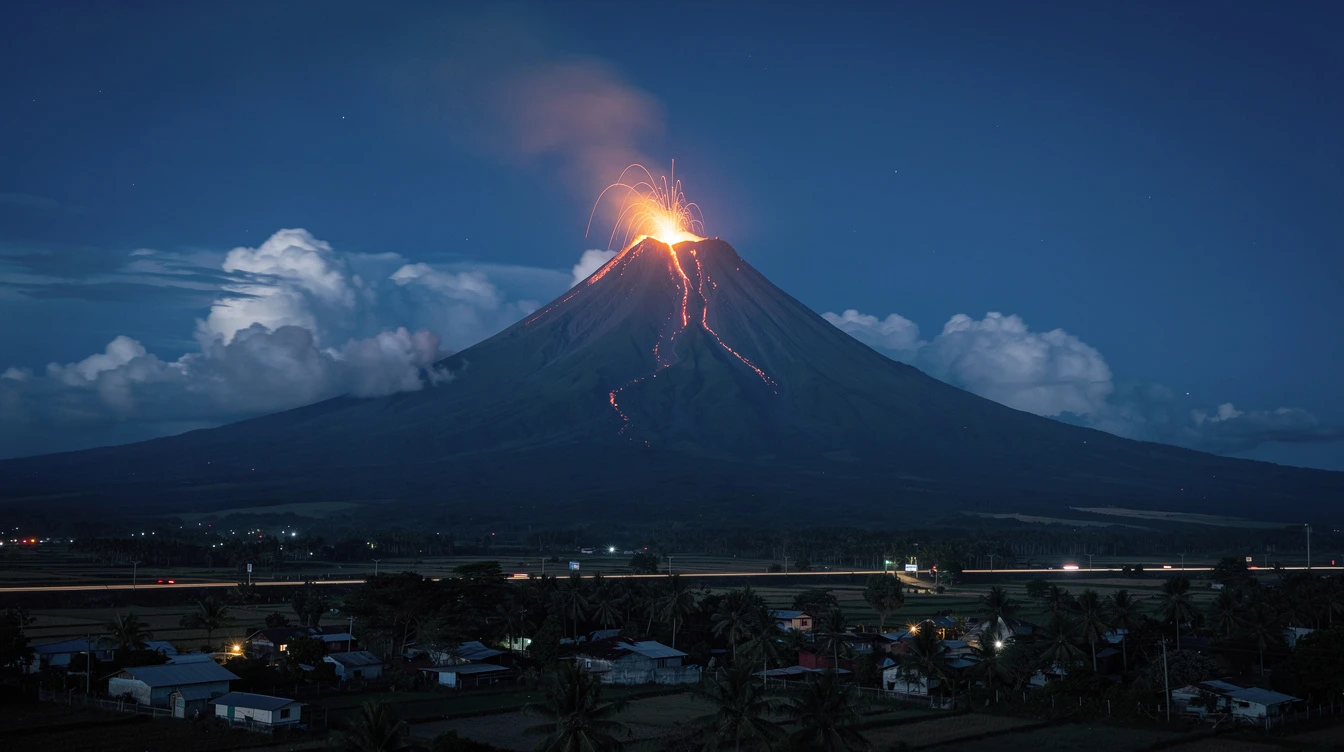
The Philippine Institute of Volcanology and Seismology recorded minor strombolian activity at Mayon Volcano's summit crater at 6:53 p.m. on Monday, April 13, marking the 100th day of its ongoing effusive eruption that began in early 2025.
PHIVOLCS reported the event involved short-lived lava fountaining, a characteristic strombolian explosion where gas bubbles burst at the surface. The activity was captured by the agency's monitoring network in Albay province.
State volcanologists maintained Alert Level 3 over the volcano, indicating it is at a "critical level" with increased tendency towards hazardous eruption. The six-kilometer radius Permanent Danger Zone remains strictly off-limits.
"Lava effusion from the summit crater continues to feed flows advancing on the Mi-isi and Bonga Gullies," PHIVOLCS stated in its latest bulletin. The lava flows have now extended approximately 3.4 kilometers from the crater.
Authorities confirm that over 18,000 residents from Albay's cities and municipalities remain in evacuation centers. The prolonged displacement affects agriculture and livelihoods across the province.
The National Disaster Risk Reduction and Management Council reports that the eruption has impacted more than 40,000 individuals total since activity escalated. Disaster response operations continue.
Mayon's current eruptive phase began in January 2025 with steady lava extrusion. The strombolian events represent periodic explosive releases of volcanic gases, creating incandescent jets above the crater.
PHIVOLCS Director Dr. Teresito Bacolcol emphasized that while the strombolian activity is minor, it indicates continued magma movement. "The volcano remains restive," Bacolcol told Philippine media outlets.
Civil aviation authorities maintain a flight ban over Mayon's airspace due to ash and ballistic projectile hazards. Airlines have adjusted routes serving Legazpi City's airport.
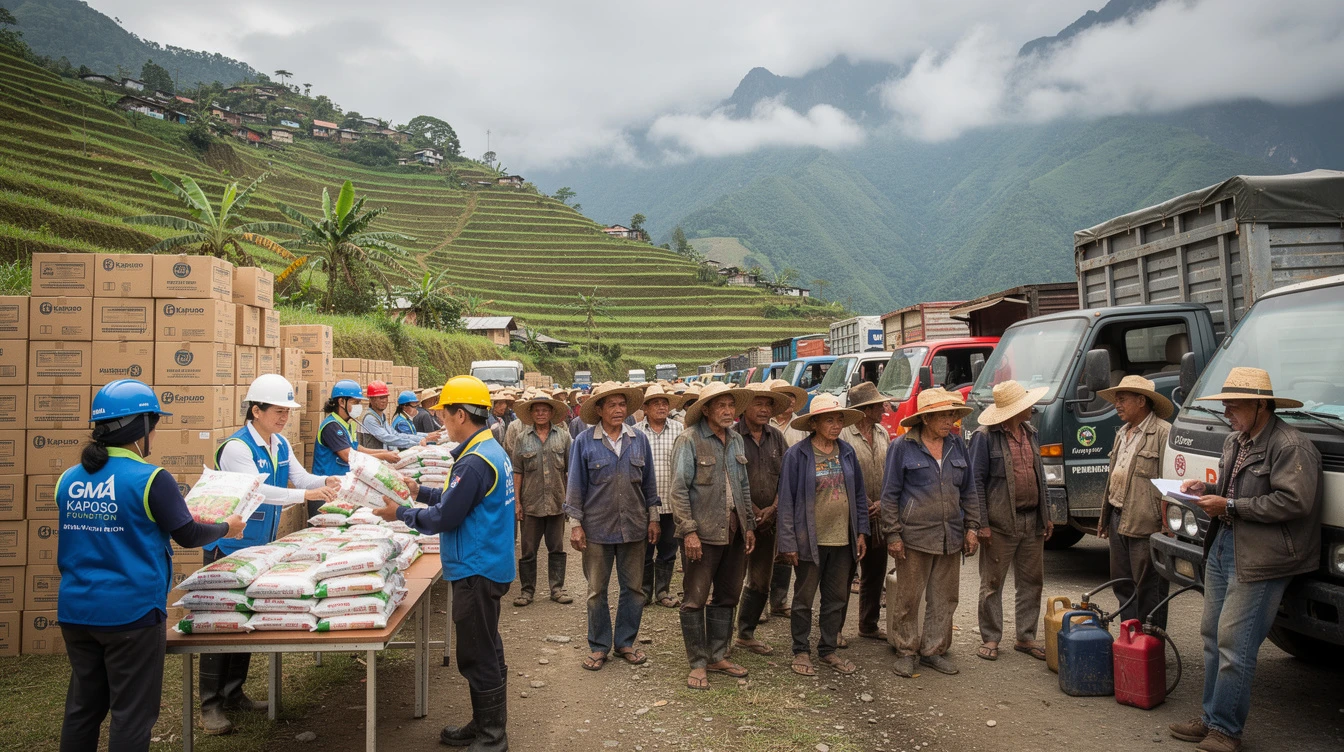
The Department of Social Welfare and Development continues providing food and non-food items to evacuees. The prolonged eruption has strained local government resources in Bicol Region.
Albay Governor Edcel Grex Lagman appealed for sustained national government support. "Our communities have shown resilience, but this extended event challenges our capacity," Lagman stated.
PHIVOLCS monitoring shows ongoing moderate volcanic earthquakes and sustained sulfur dioxide emissions averaging 1,200 tonnes daily. Ground deformation indicates continued magma supply.
The Philippine Atmospheric, Geophysical and Astronomical Services Administration forecasts rain showers that could generate lahar in channels draining the volcano. Residents near river valleys remain on alert.
For Filipino families nationwide, Mayon's activity represents both a regional disaster and a national concern. Many OFWs from Bicol monitor the situation closely, worrying about relatives and properties.
The volcano's extended eruption impacts the Philippine economy through agricultural losses in coconut and abaca plantations. Tourism in Legazpi and surrounding areas has significantly declined.
Mayon's continued unrest underscores the Philippines' vulnerability as part of the Pacific Ring of Fire. The country hosts 24 active volcanoes monitored by PHIVOLCS around the clock.
This event highlights the critical importance of heeding government warnings and maintaining evacuation protocols. Volcanic crises in the Philippines can extend for months, requiring sustained preparedness.
The significance for Filipino readers lies in understanding both the immediate humanitarian needs in Albay and the broader lesson in disaster resilience. Mayon's behavior demonstrates how Philippine volcanoes can maintain prolonged activity.
Families with members in Bicol should maintain communication and support networks. The event reminds all citizens of the geological forces shaping the archipelago and the need for community preparedness.