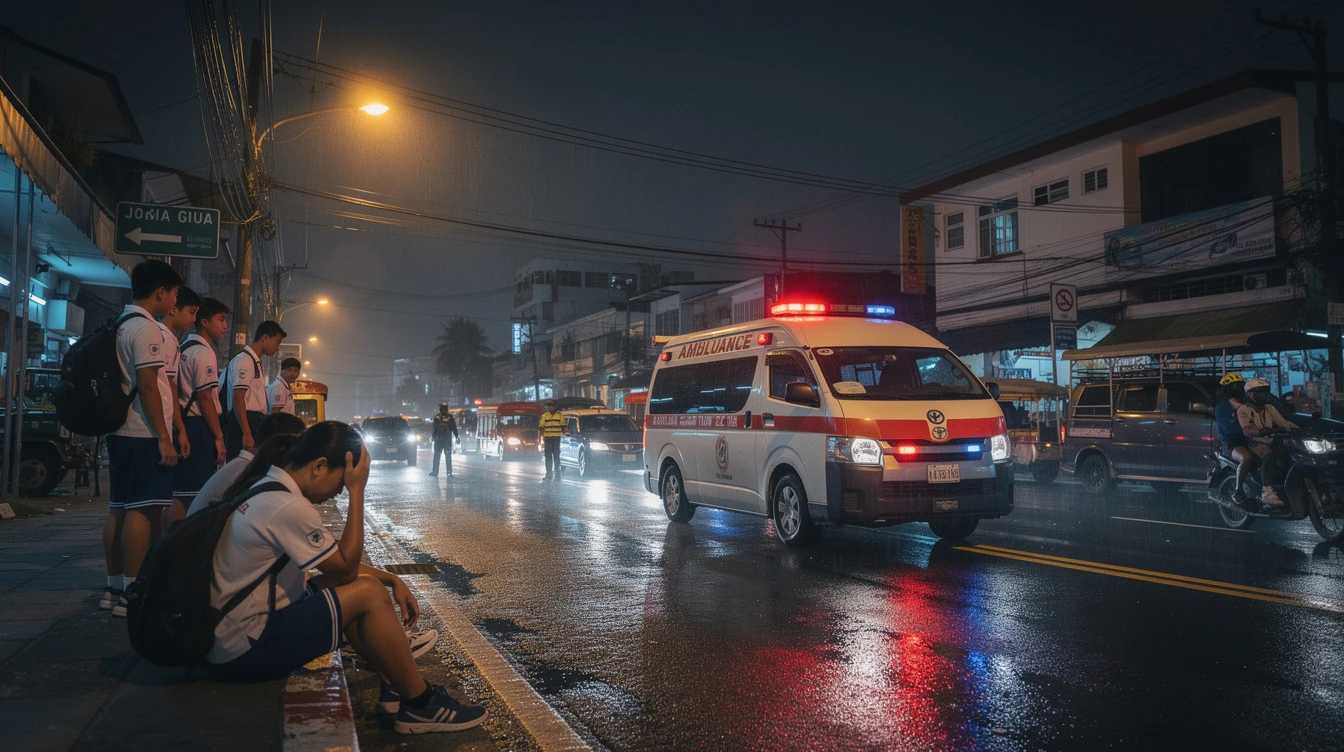
A counterflowing ambulance struck a motorcycle on the Archbishop Reyes Avenue flyover in Cebu City, killing a 17-year-old female college student and injuring the motorcycle driver. The fatal accident occurred Tuesday evening, prompting an immediate investigation by Cebu City Police Office (CCPO) and the Land Transportation Office (LTO).
The victim, identified as a first-year college student, was pronounced dead at the scene after being run over by the emergency vehicle. Her 18-year-old companion, the motorcycle driver, sustained injuries and was rushed to a nearby hospital for treatment. The ambulance was reportedly responding to a medical call when the collision happened.
Police Major Eduard Sanchez, CCPO traffic investigator, confirmed the ambulance was traveling against the flow of traffic. "Initial investigation shows the ambulance was counterflowing on the flyover when it hit the motorcycle," Sanchez stated. "We are determining if all emergency protocols were followed."
The Land Transportation Office has launched a parallel probe into the driver's compliance with Republic Act 4136, the Land Transportation and Traffic Code. LTO-7 Director Victor Emmanuel Caindec emphasized that emergency vehicles must exercise "extraordinary diligence" even when using privileges. "The right of way is not absolute," Caindec told local media.
This tragedy highlights a critical safety issue affecting millions of Filipino commuters nationwide. With over 8.7 million registered motorcycles in the Philippines as of 2023, two-wheeled vehicles dominate Philippine roads. Many Filipino families rely on motorcycles as primary transportation due to affordability and traffic congestion.
Cebu City, with its dense urban traffic and frequent emergency responses, faces particular challenges. The incident occurred on a major thoroughfare connecting to Cebu's business districts, where traffic congestion often prompts emergency vehicles to counterflow. Similar incidents have been reported in Metro Manila, Davao, and other urban centers.
Medical institutions and emergency services across the Philippines follow protocols based on Department of Health (DOH) and Philippine Red Cross guidelines. These protocols allow counterflowing during life-threatening emergencies but require sirens, flashing lights, and extreme caution. The investigating team is reviewing whether all required warnings were activated.
The victim's family has been notified as the community mourns the loss of a young student with promising future. Local officials have expressed condolences while promising a thorough investigation. Cebu City Mayor Michael Rama has ordered a review of all emergency vehicle operations in the city.
For Filipino readers, this tragedy underscores the vulnerabilities of motorcycle commuters who constitute a massive portion of the transportation landscape. The incident raises urgent questions about emergency vehicle training, road design safety, and public awareness. Many Filipino families have members who commute daily on motorcycles through similar traffic conditions.
Overseas Filipino Workers (OFWs) with family members in the Philippines will recognize this as part of broader road safety concerns affecting their loved ones. The Philippines consistently ranks among countries with high road fatality rates, with motorcycles involved in approximately 50% of all road crashes according to WHO data.
This case may prompt nationwide policy reviews as authorities balance emergency response efficiency with public safety. The outcome could influence training protocols for ambulance drivers across all 1,634 cities and municipalities, potentially saving lives through improved standards and accountability measures.