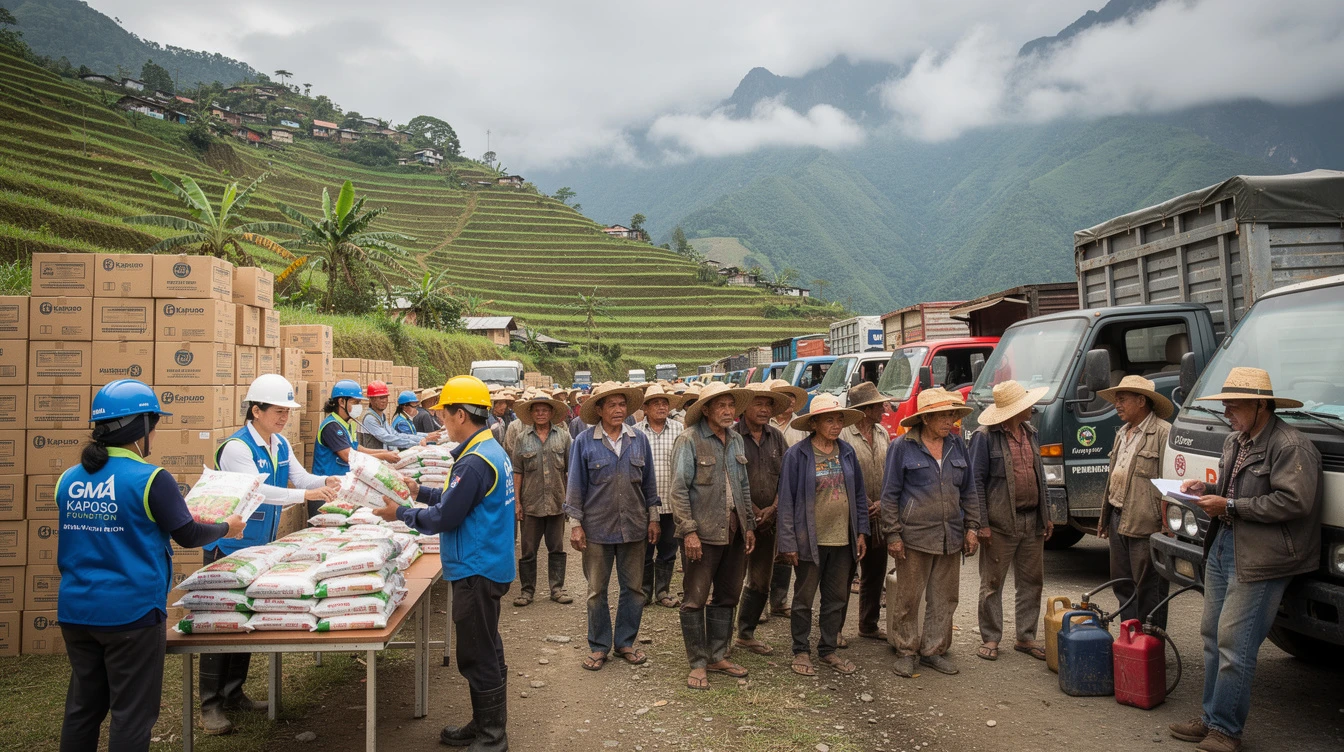
The GMA Kapuso Foundation distributed essential food packs to approximately 4,000 affected individuals in Bauko, Mountain Province this week, providing critical aid to local farmers and truck drivers grappling with soaring fuel prices.
The sharp rise in fuel costs, exacerbated by ongoing tensions in the Middle East, has severely impacted agricultural production and transportation in the vital Cordillera vegetable-growing region.
"Farmers and drivers are among the most vulnerable when fuel prices spike," a foundation representative stated, highlighting the direct link between global oil markets and local Filipino livelihoods.
Recipients like Allen and Marily, vegetable farmers from the area, received the assistance, which aims to offset some of the financial strain caused by increased costs for operating farm equipment and transporting goods to market.
The relief operation targeted individuals whose incomes have been squeezed, as higher transport costs reduce profit margins for fresh produce traveling from the highlands to major Philippine cities like Manila.
This initiative underscores how international conflicts can trigger domestic economic pressure, directly affecting remote Philippine communities dependent on sectors sensitive to fuel price fluctuations.
The Mountain Province, a key source of vegetables for the nation, faces a compounded challenge where increased production costs could eventually lead to higher food prices for all Filipino consumers.
For the thousands of Filipino families dependent on the agriculture and logistics sectors in the Cordillera, this aid provides immediate nutritional support during a period of significant economic uncertainty.
The foundation's intervention is a direct response to the cascading effects of global events on local Philippine economies, particularly in regions with limited alternative employment.
High fuel prices not only increase farm operational costs but also raise the price of fertilizers and other inputs, creating a multi-layered crisis for Philippine food producers.
Truck drivers, essential for the Philippine food supply chain, also struggle as fuel expenses consume a larger portion of their earnings from transporting agricultural goods.
The situation in Mountain Province mirrors challenges faced nationwide, where millions of Filipinos in transport and agriculture are calling for government support amid the sustained price hikes.
This private sector relief effort complements ongoing public discourse regarding potential government subsidies or interventions to stabilize fuel costs and protect vulnerable industries.
The distribution in Bauko serves as a microcosm of a broader national issue, demonstrating how global oil market volatility requires localized support systems for Philippine communities.
As the foundation concludes this mission, the long-term sustainability of aid for affected sectors remains a pressing question for Philippine economic planners and policymakers.
The significance for Filipino readers, both in the Philippines and abroad with families in affected regions, is profound. This news highlights the tangible human impact of global economic forces on local Philippine communities. For OFWs, it underscores the economic pressures their families may face in agricultural regions, reminding them of the interconnectedness of global markets and provincial livelihoods. It also showcases the role of private Philippine institutions in providing a social safety net, a model that may be replicated in other fuel-sensitive sectors across the nation to mitigate similar crises in the future.