Philippine civilian mission raises flag at Pag-asa Cay 2 in South China Sea
The Philippines and China have exchanged fresh accusations over a civilian mission to Pag-asa Cay 2 in the South China Sea, with Manila affirming its sovereignty claims and Beijing denouncing what it called provocative actions in disputed waters.
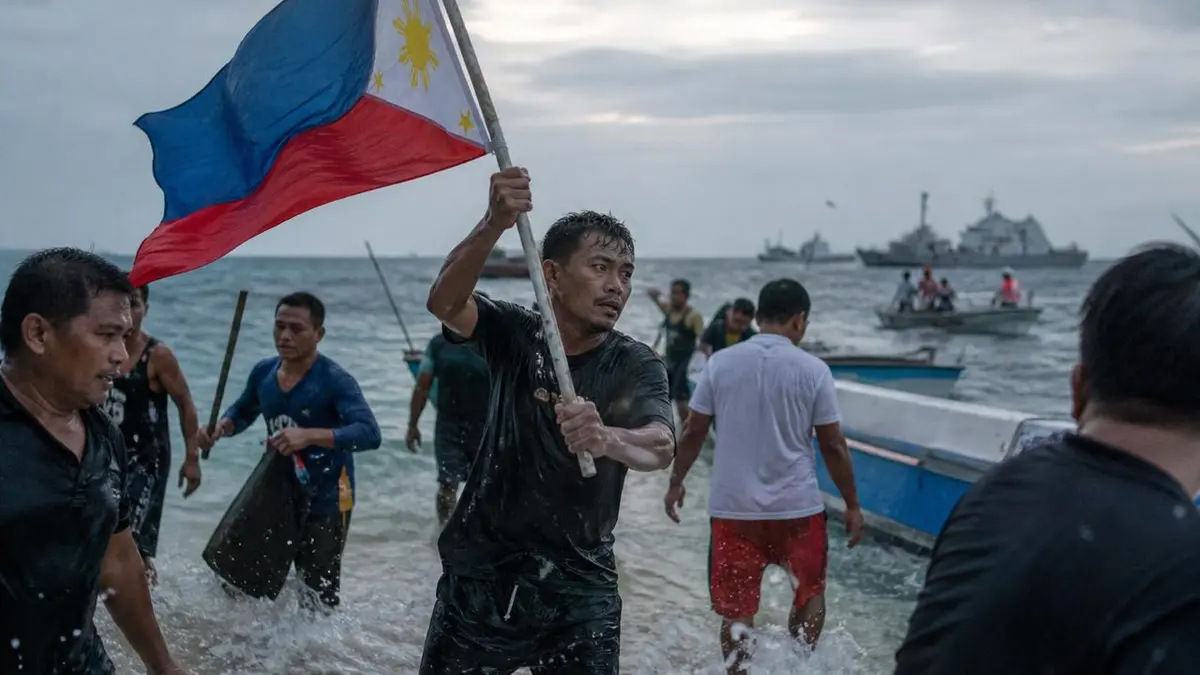
The mission, organized under the Atin Ito (This is Ours) program, successfully reached the contested feature where participants raised the Philippine flag in a ceremony that has since drawn sharp diplomatic protests from Beijing.
Mission Reaches Disputed Feature
The civilian delegation reached Pag-asa Cay 2, known internationally as Thitu Island, aboard chartered vessels coordinated with the Philippine Coast Guard and Armed Forces Western Command. The mission, which included journalists, local officials, and civilian volunteers, conducted its flag-raising ceremony on the island's shoreline, marking the occasion with official remarks affirming Philippine presence in the contested waters.
Pag-asa Cay 2 sits within the Kalayaan Island Group, a municipality of Palawan province that the Philippines has administered since 1971. The feature hosts a small civilian population, a municipal government building, and military installations that serve as Philippine sovereign presence in the Spratly Islands.
Manila Defends Sovereignty Claims
Philippine government officials immediately defended the mission as a legitimate exercise of sovereignty, rejecting China's territorial claims over the area. The Department of Foreign Affairs issued a statement reaffirming Manila's rights under international law, particularly the United Nations Convention on the Law of the Sea (UNCLOS).
"These missions demonstrate our unwavering commitment to assert our territorial rights and support our citizens in our own territories," officials stated, noting that such activities comply with Philippine law and international regulations.
President Ferdinand Marcos Jr. has consistently upheld the previous administration's approach of actively asserting maritime rights in the South China Sea while seeking peaceful resolution through diplomatic channels. His administration has authorized expanded civilian and official missions to disputed features as part of a broader strategy to reinforce Philippine claims.
Beijing Responds With Accusations
China's Foreign Ministry responded with strong condemnation, labeling the mission a deliberate provocation designed to challenge Chinese sovereignty claims. Ministry spokespersons accused Philippine vessels of entering Chinese territorial waters without authorization and demanded Manila cease what Beijing described as destabilizing activities.
China claims nearly the entire South China Sea based on its expansive "nine-dash line" assertion, a position rejected by an international tribunal ruling in 2016 but one that Beijing continues to enforce militarily. The China Coast Guard has repeatedly confronted Philippine vessels conducting legitimate operations in the area.
"The Philippines should immediately cease all illegal activities in waters under China's jurisdiction," the ministry statement read. "China will continue to take necessary measures to safeguard its sovereignty and legitimate rights."
Regional Tensions Remain Elevated
The incident follows a series of confrontations between Philippine and Chinese vessels in the contested waters over the past year. Manila has documented numerous incidents where China Coast Guard ships deployed water cannons against Philippine supply vessels, obstructed resupply missions to military outposts, and conducted aggressive maneuvers near Philippine-occupied features.
Despite ongoing diplomatic negotiations and existing communication mechanisms between the two nations, tensions have persisted. The Atin Ito program, which aims to demonstrate Philippine presence in disputed areas through civilian participation, has become a cornerstone of Manila's strategy to counter Beijing's expansive territorial claims.
International Law Framework
The South China Sea dispute remains among the world's most complex maritime conflicts, involving multiple nations including Vietnam, Malaysia, Brunei, and Taiwan alongside the Philippines and China. The 2016 arbitration ruling by the Permanent Court of Arbitration determined that China's sweeping claims had no legal basis under UNCLOS, a decision China refuses to recognize.
The Philippines, as a signatory to UNCLOS, maintains that its activities in the Kalayaan Island Group and surrounding waters fully comply with international law. Philippine maritime officials emphasize that their operations respect navigational rights and do not threaten freedom of navigation in the strategic waterway through which billions of dollars in trade pass annually.
Future Implications
The latest confrontation underscores the persistent challenge facing both nations as they attempt to balance territorial claims with regional stability. Philippine officials have indicated their intention to continue civilian missions to disputed features, viewing them as essential to sustaining sovereign presence despite Chinese objections.
Regional analysts watching the situation note that such incidents reflect broader strategic competition in the South China Sea, where Philippine and American interests increasingly align against Chinese expansion. The United States has reaffirmed its treaty commitments to the Philippines under the Mutual Defense Treaty, providing Manila with diplomatic and strategic backing as it asserts maritime claims.
As both nations navigate the dispute, observers expect diplomatic consultations to continue while tensions remain elevated. The Atin Ito missions, now firmly established as Philippine policy, ensure that the territorial question will remain an active source of contention between Manila and Beijing for the foreseeable future.