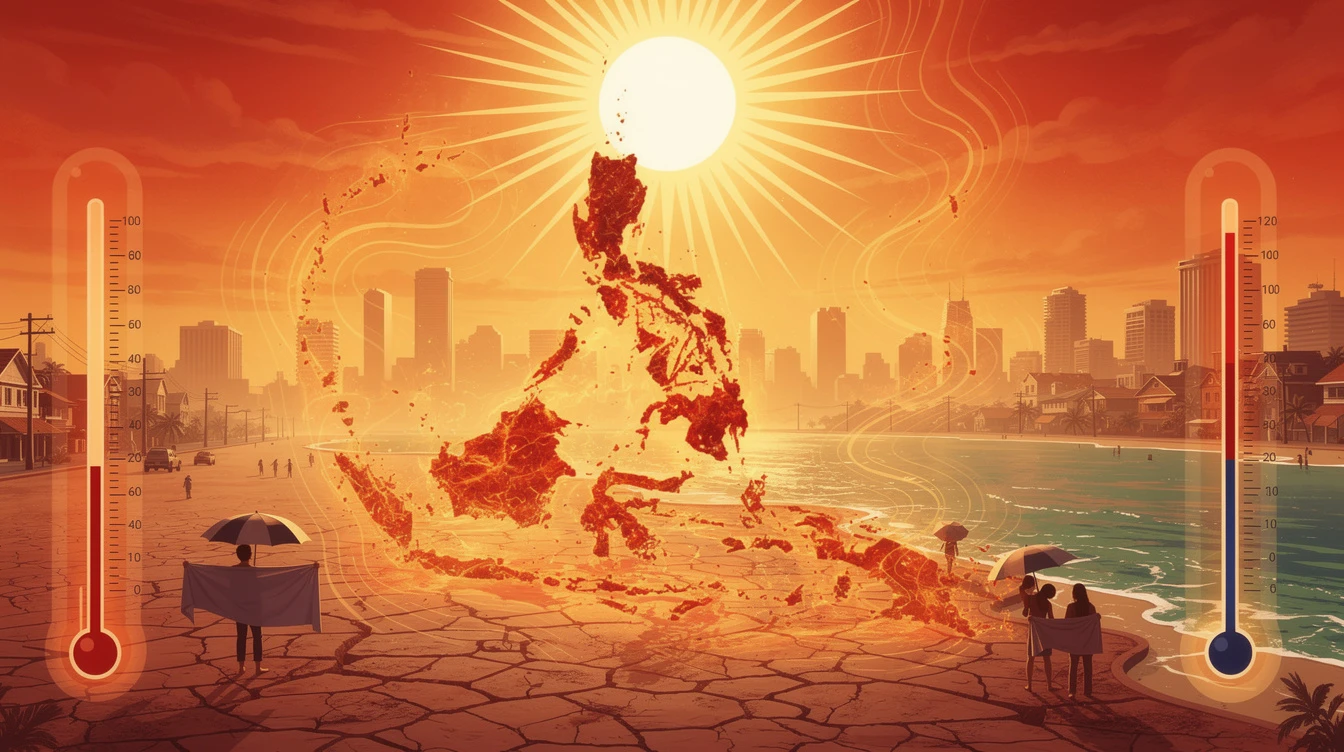
MANILA, Philippines — The Philippine Atmospheric, Geophysical and Astronomical Services Administration (PAGASA) has placed 14 areas under a 'danger' level heat index warning for May 3, with temperatures expected to hit a scorching 42°C to 47°C in the hottest spots.
Among the areas forecast to experience the most extreme heat are Laoag, Ilocos Norte and Dagupan City, Pangasinan, where the heat index may reach as high as 47°C. Other areas include Itbayat, Batanes and Aparri, Cagayan, according to reports from [GMA News](https://www.gmanetwork.com/news/weather/content/986182/pagasa-14-areas-to-have-danger-level-heat-index-on-may-3/story/) and [MSN Philippines](https://www.msn.com/en-ph/news/national/pagasa-warns-of-dangerous-heat-index-levels-in-14-areas/ar-AA21GlQc). The warning covers both Luzon and parts of the Visayas.
What Is the 'Danger' Level Heat Index?
PAGASA defines the 'danger' level as a heat index ranging from 42°C to 51°C. At this level, people are at high risk for heat cramps, heat exhaustion, and even heat stroke with prolonged exposure or physical activity.
The heat index — also called the 'apparent temperature' — factors in both air temperature and humidity to measure how hot it actually feels to the human body. Even if the air temperature is lower, high humidity can push the heat index into dangerous ranges.
For May 3, the highest 'danger' levels are forecast in Laoag, Ilocos Norte and Dagupan City, with a predicted heat index of 47°C. These areas top the list due to their geographic location and low wind speeds, according to PAGASA's Effect-Based Impact Forecasting system.
Full List of 14 Areas Under Danger Level Heat Index on May 3
- Laoag, Ilocos Norte — 47°C
- Dagupan City, Pangasinan — 47°C
- Itbayat, Batanes — 43°C
- Aparri, Cagayan — 41°C
- San Jose, Occidental Mindoro — 41°C
- Puerto Princesa City, Palawan — 41°C
- Cuyo, Palawan — 41°C
- Legazpi City, Albay — 41°C
The remaining six areas were not fully named in the initial reports, but PAGASA's bulletin includes additional locations in Camarines Sur,Masbate, and parts of the Visayas. A full list is expected to be released in the agency's 5 p.m. weather advisory on May 2.
Why Is the Heat Index So High in These Areas?
The extreme heat is driven by a combination of the El Niño phenomenon, which is still in effect across the Philippines, and the easterlies — warm winds coming from the Pacific Ocean. These conditions are trapping heat and moisture near the surface, causing the heat index to spike.
Laoag and Dagupan are particularly vulnerable because they are located in low-lying coastal plains where the sea breeze is minimal, and humidity combines with high daytime temperatures. In contrast, mountainous areas like Itbayat experience slightly lower heat index values but still fall within the danger threshold.
PAGASA's Climate Monitoring and Prediction Section noted that May is typically the hottest month in the Philippines, with the heat index reaching its annual peak between the last week of April and the first week of June.
Health Risks: What Happens at 47°C?
At a heat index of 47°C, the body's ability to cool itself through sweating is drastically reduced. The Department of Health (DOH) warns that prolonged exposure can lead to heat exhaustion (characterized by heavy sweating, weakness, dizziness, and nausea) and heat stroke (a life-threatening condition where body temperature rises above 40°C, causing confusion, seizures, and loss of consciousness).
Children, the elderly, those with chronic illnesses, and outdoor workers are at the highest risk. PAGASA advises that anyone in affected areas should stay indoors between 10 a.m. and 4 p.m., the peak hours for heat accumulation. Drinking plenty of water, wearing light clothing, and using electric fans or air conditioning are crucial preventive measures.
How to Stay Safe: PAGASA and DOH Guidelines
- Limit outdoor activities — especially strenuous exercise or work.
- Drink water regularly — even if you don't feel thirsty. Avoid alcohol and caffeine as they dehydrate.
- Wear light, loose, and light-colored clothing to reflect heat.
- Take cool showers or apply cold compresses to lower body temperature.
- Monitor symptoms — if someone shows signs of heat stroke (hot, dry skin; confusion; rapid pulse), call emergency services immediately.
PAGASA also recommends that local governments in affected areas activate their Heat Emergency Response Plans, including opening cooling centers and providing hydration stations in public markets and transport terminals.
FAQ: Heat Index in the Philippines
What's the difference between air temperature and heat index?
Air temperature is the actual temperature measured by a thermometer. The heat index is how hot itfeels when humidity is factored in. For example, 35°C air temperature with 70% humidity can feel like 47°C.
How often does PAGASA issue heat index warnings?
PAGASA issues daily heat index forecasts as part of its regular weather bulletins, especially during the dry season (March to May). When multiple areas reach 'danger' or 'extreme danger' levels, they release a special advisory.
Can the heat index be higher than 47°C in the Philippines?
Yes. PAGASA's 'extreme danger' level starts at 52°C, which has been recorded in areas like San Jose, Occidental Mindoro and Legazpi City during severe El Niño events.
Why This Matters for Filipinos
The May 3 heat index warning underscores a growing public health risk in the Philippines, where extreme heat events are becoming more frequent due to climate change and the ongoing El Niño. For millions of Filipinos — especially farmers, construction workers, and street vendors — these temperatures aren't just uncomfortable; they are a direct threat to livelihoods and lives.
Knowing which areas are at 'danger' level allows families, LGUs, and businesses to prepare and adapt. As PAGASA continues to refine its Effect-Based Impact Forecasting, Filipinos can expect more localized and timely warnings — but the ultimate protection lies in heeding the advice: stay cool, stay hydrated, and stay safe.
For more updates, visit the PinoyPulse News section for the latest on weather and public safety. Learn about the agency behind the warnings on our About Page.