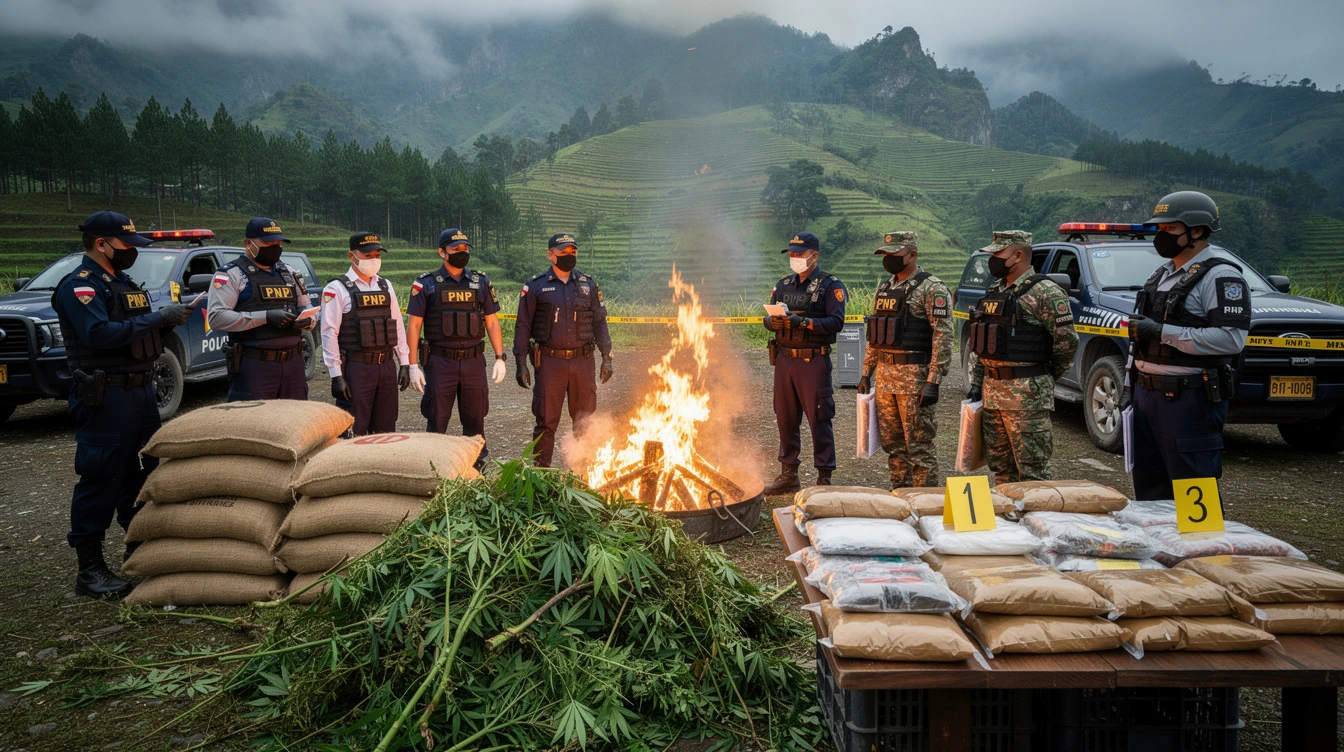
Philippine anti-narcotics agents destroyed over P27 million worth of marijuana plants and seized shabu in a concentrated week-long operation across the Cordillera Administrative Region (CAR) in early April 2026. The Philippine National Police (PNP) and Philippine Drug Enforcement Agency (PDEA) targeted cultivation sites in remote highland areas, a persistent source of supply for the domestic drug market.
According to official reports, the eradication campaign from April 6 to 12, 2026, led to the burning of 93,528 fully grown marijuana plants and 12,290 seedlings. Per a PNP Cordillera report, the destroyed cannabis had an estimated Dangerous Drugs Board value of over P22.8 million.
In a related operation detailed by the Philippine Information Agency, authorities also confiscated approximately 126.6 grams of shabu (methamphetamine) valued at around P4.2 million. Combined, the total value of illicit drugs seized and destroyed during the period exceeded P27 million.
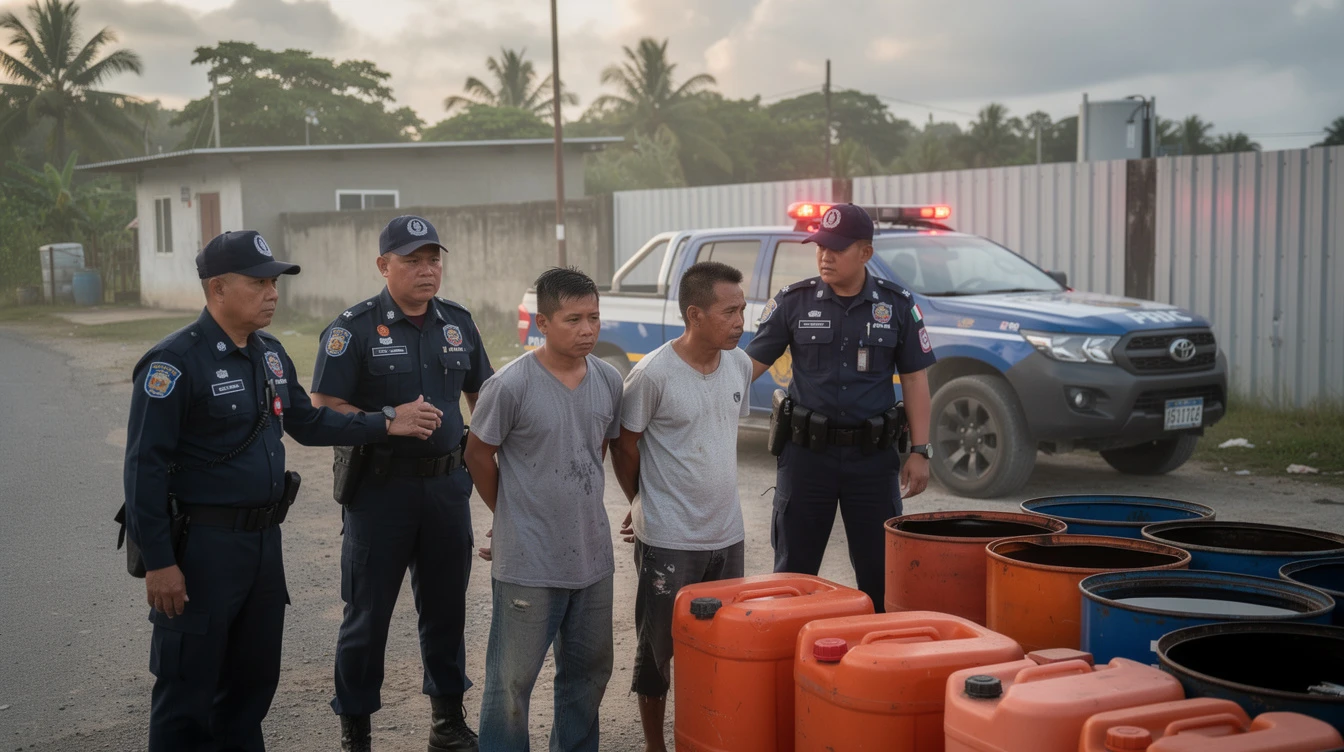
One suspect was arrested in connection with the drug haul, according to a PNP statement. The operations were conducted across several provinces in the CAR, a mountainous region long identified as a primary cultivation area for marijuana in the Philippines due to its rugged terrain.
The Cordillera region, particularly areas in Benguet and Kalinga, has been a focal point for government eradication efforts for decades. These latest figures indicate ongoing, large-scale cultivation despite previous crackdowns, highlighting the economic incentives for farmers in impoverished upland communities.
Authorities emphasized the operation was part of the Marcos administration's continued \"war on drugs,\" which has shifted focus towards supply reduction and rehabilitation. The destruction of plants at the source is a key strategy to prevent distribution to urban centers like Metro Manila.
The seizure of shabu alongside the marijuana suggests interconnected distribution networks. Law enforcement officials stated the simultaneous operations aimed to dismantle both cultivation sites and trafficking channels operating within the region.
Community involvement and reporting were cited as crucial to the operation's success. The PNP encouraged continued public cooperation through its hotlines to report illegal drug activities, underscoring a whole-of-nation approach to the anti-drug campaign.
For Filipino readers, this significant drug bust directly impacts national security and public health. The destruction of P27 million worth of drugs prevents their circulation in local communities, potentially reducing drug-related crime and addiction. It demonstrates the government's sustained, albeit challenging, effort to curb a major domestic source of narcotics, with implications for law enforcement priorities and resource allocation in the ongoing national campaign.