Seafarers' Lives Hang in Balance as Gulf Crisis Deepens
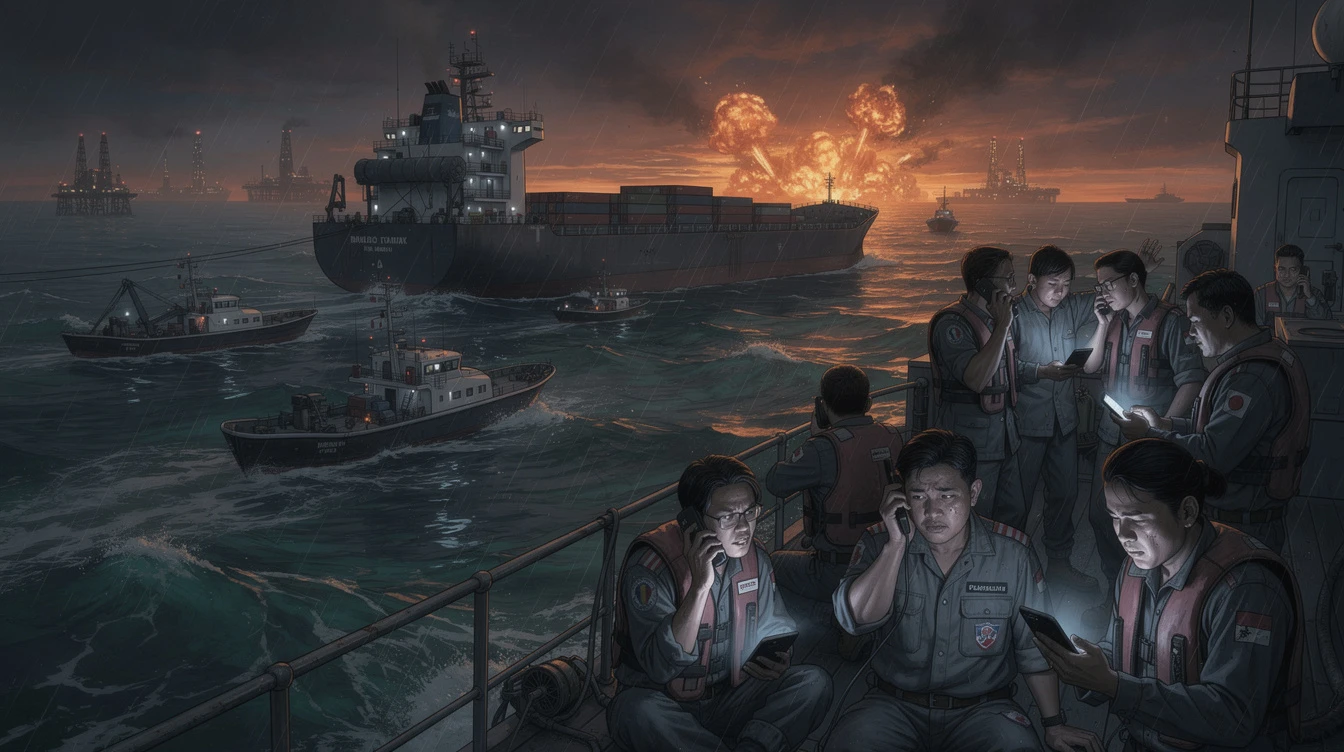
Seafarers' helplines are being overwhelmed with desperate messages from crews trapped in the Persian Gulf amid the escalating Middle East war. Around 20,000 seafarers and 15,000 cruise ship passengers remain stuck in the region, facing mounting shortages and deteriorating conditions aboard vessels that cannot move.
Growing Humanitarian Emergency Aboard Stranded Vessels
According to reports, thousands of seafarers are trapped on ships that can no longer sail, carrying cargo that is either hazardous or beginning to decay. In some cases, crews are forced to remain on board alongside colleagues who have been injured or killed, with no means of evacuation.
- Ships carrying hazardous materials cannot be offloaded or redirected
- Crew members report severe food, water, and medical supply shortages
- Communication with families has become increasingly difficult
The situation has created what humanitarian workers describe as a silent crisis, where maritime workers find themselves caught between warring factions with little recourse for safety or rescue.
Economic Fallout Overshadows Humanitarian Crisis
While global markets rightly focus on oil prices, natural-gas prices, and fertilizer access, the human cost of the conflict remains largely invisible. The Persian Gulf is one of the world's most critical shipping lanes, and the war has brought maritime commerce to a near standstill in the region.
Supply Deliveries Face Significant Challenges
Delivering essential supplies to trapped vessels requires substantial time and resources. The conflict has disrupted normal shipping routes, making it nearly impossible for relief organizations to reach stranded crews safely.
- Normal supply chains have been completely disrupted
- Navigational hazards have increased dramatically
- Aid organizations struggle to secure safe passage for relief vessels
The UN's International Maritime Organization has been pressed to intervene, but practical solutions remain elusive as the conflict continues to intensify.
International Community Urged to Take Action
According to the Financial Times, on March 24, Iran circulated a letter to members of the International Maritime Organization, announcing that "non-hostile vessels" would be permitted to transit. However, Tehran stated it had "taken necessary and proportionate measures to prevent the aggressors and their supporters from exploiting the Strait of Hormuz to advance hostile operations against Iran."
Calls for Protected Maritime Corridors
Maritime advocacy groups are now calling on world leaders to establish protected corridors specifically for civilian vessels. The goal would be to allow non-combatant ships to pass safely, regardless of which nations are involved in the conflict.
- Establish demilitarized shipping lanes through the Gulf
- Guarantee safe evacuation for injured and deceased crew members
- Coordinate international naval presence for merchant vessel protection
Seafarer welfare organizations warn that without immediate international intervention, the death toll among maritime workers could rise sharply in the coming weeks. The trapped crews continue to send distress signals, hoping someone in the global community will hear their pleas for help.