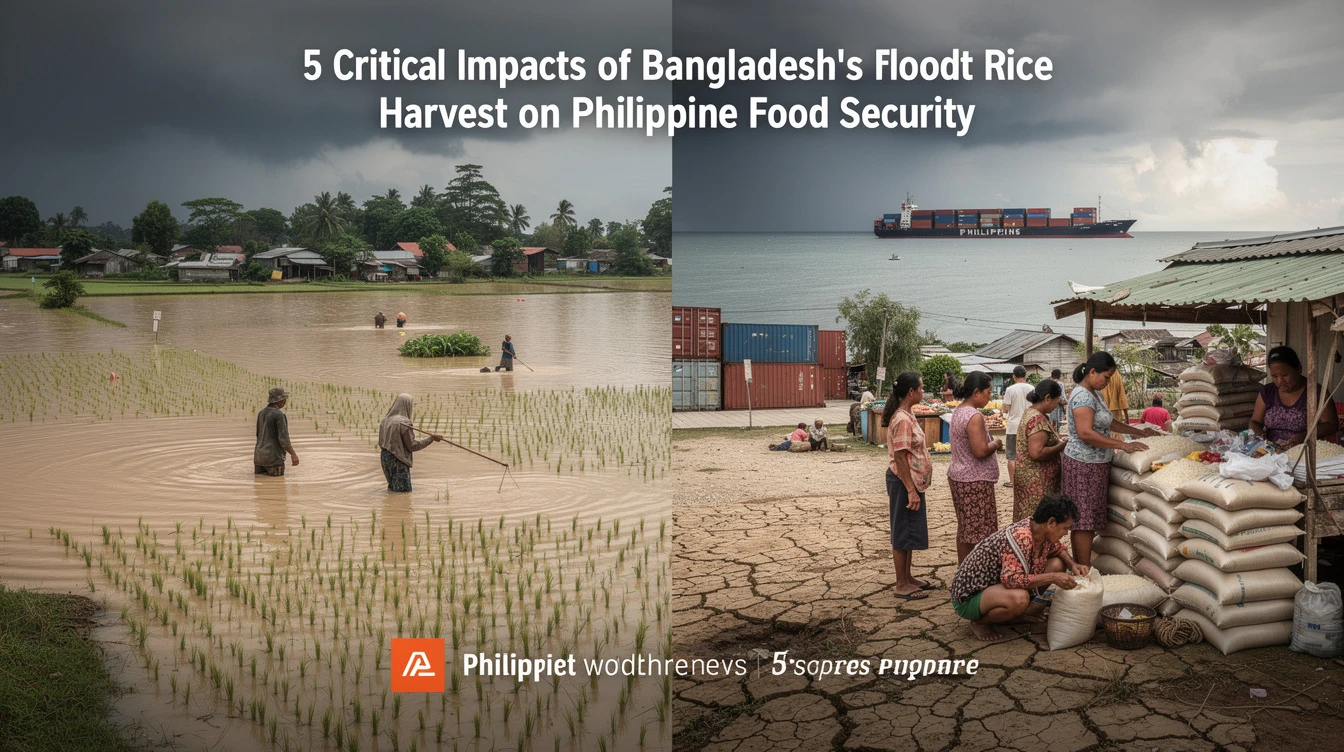
Heavy pre-monsoon rains and surging upstream flows from India have swamped northeastern Bangladesh, threatening the country's crucial summer rice harvest. Farmers are wading through knee-deep water to salvage partially submerged crops, according to reports on April 29.
While the disaster is unfolding thousands of kilometers away, its ripple effects could reach the Philippines. As a major rice importer, the Philippines is highly sensitive to global rice supply shocks.
The Scale of the Crisis in Bangladesh
Bangladesh's northeastern haor basin — a network of bowl-shaped wetlands — is the country's rice bowl. This region produces a large portion of the Boro rice crop, harvested from April to May.
Days of continuous rain, combined with inflows from India's Meghalaya and Assam regions, have raised river levels dangerously high. The Bangladesh Meteorological Department forecasts more rainfall in the coming days.
Farmers in Desperate Race Against Time
Villagers have been rushing to their fields, wading through knee-deep water to cut partially submerged rice stalks. Strong winds and thunderstorms have made the task even more difficult, officials told Reuters.
“We are trying to save whatever we can,” one farmer told local media. The harvest typically provides a lifeline for millions of rural households, and any loss threatens both livelihoods and national food stocks.
5 Ways This Affects the Philippines
1. Global Rice Prices Could Spike
Bangladesh is one of the world's largest rice producers. Any shortfall in its domestic harvest forces it to buy more from the global market. Increased demand from Bangladesh pushes up international rice prices.
The Philippines, which imports around 3-4 million metric tons of rice annually, would face higher import costs. This could lead to higher retail prices for Filipino consumers.
2. Competition for Supply from Vietnam and Thailand
Bangladesh typically imports rice from India and Myanmar, but if its own crop fails, it may turn to Vietnam and Thailand. Those are the same key suppliers that the Philippines relies on.
This increased competition could drive up prices and potentially lead to supply delays. Philippine importers may need to place orders earlier and pay a premium to secure shipments.
3. Philippine Rice Reserve May Come Under Pressure
The National Food Authority (NFA) maintains a buffer stock to stabilize prices during emergencies. A global price surge could make it more expensive for the NFA to replenish its reserves.
If the NFA cannot afford to buy at high prices, the country's ability to respond to typhoons or drought-induced shortages could be weakened.
4. Possible Inflationary Impact on Filipino Consumers
Rice accounts for a significant portion of the Filipino household budget. Any price increase directly affects inflation and purchasing power. The Bangko Sentral ng Pilipinas monitors food prices closely.
A sustained rise in rice prices could force the central bank to adjust interest rates, affecting loans and business costs. This is particularly worrying given the recent inflation trends in the Philippines.
5. Opportunity for Local Philippine Rice Production
Higher global prices could make Philippine-grown rice more competitive. This might encourage the Department of Agriculture to boost support for local farmers, especially those in Central Luzon and Isabela.
Investments in irrigation and high-yield seeds could reduce the country's dependence on imports in the long run, making the Philippines more resilient to global shocks.
Expert Perspectives on Food Security
Climate Change and Extreme Weather
Climate scientists warn that extreme rainfall events like this will become more frequent. The Intergovernmental Panel on Climate Change has highlighted South Asia as a hotspot for climate-induced food insecurity.
Bangladesh's vulnerability is compounded by its geography — it lies at the delta of several major rivers originating in the Himalayas. Upstream dams and deforestation in India can exacerbate flooding.
Philippine Vulnerability
The Philippines faces similar challenges from typhoons and the El Niño phenomenon. Agriculture Secretary Francisco Tiu Laurel Jr. has repeatedly stressed the need to modernize the sector.
The country's rice self-sufficiency rate hovers around 80%, leaving a gap that must be filled by imports. Any disruption in global trade exposes the nation to price volatility.
Real-World Impact: What This Means for Your Household
If Bangladesh's rice crisis worsens, Filipino consumers could see price increases at the palengke within 3-6 months. The Philippine government may need to reduce import tariffs to keep prices affordable.
The Rice Tariffication Law already allows private sector imports, but high global prices may discourage traders from bringing in shipments. The government may need to step in with subsidies.
FAQ Section
Will rice prices in the Philippines definitely increase because of the Bangladesh floods?
Not automatically, but there is a high risk. If Bangladesh's rice harvest loss is severe, the global supply-demand balance will tighten. The Philippine government has tools to mitigate price spikes, such as reducing tariffs and increasing imports early.
How much rice does the Philippines import from Bangladesh?
The Philippines does not import rice directly from Bangladesh. The impact comes indirectly through global market competition. When Bangladesh buys more from Vietnam and Thailand, those suppliers have less rice available for the Philippines.
Can the Philippines replace lost imports with local production?
Partially, but not fully. The Philippines currently produces about 19-20 million metric tons of rice annually, but consumes around 15-16 million metric tons. The shortfall of about 3-4 million metric tons must come from imports.
What is the Philippine government doing to prepare for this?
The Department of Agriculture is monitoring global rice prices and has urged importers to secure supplies early. The NFA is also working to maintain buffer stocks. Long-term programs focus on improving local productivity through modern seeds and irrigation.
Conclusion: A Wake-Up Call for Philippine Food Security
The flooding in Bangladesh is a stark reminder of how interconnected the global food system is. Events halfway across the world can directly affect the price of rice on Filipino tables. While the immediate impact depends on the final extent of crop damage, the trend is clear: climate change will continue to disrupt food production.
The Philippines must accelerate its efforts to boost local rice production, diversify import sources, and strengthen social safety nets for vulnerable consumers. The time to act is now, not when the next crisis strikes.
For more insights on how global events affect your daily life, visit ourFood Security section andlearn more about PinoyPulse.