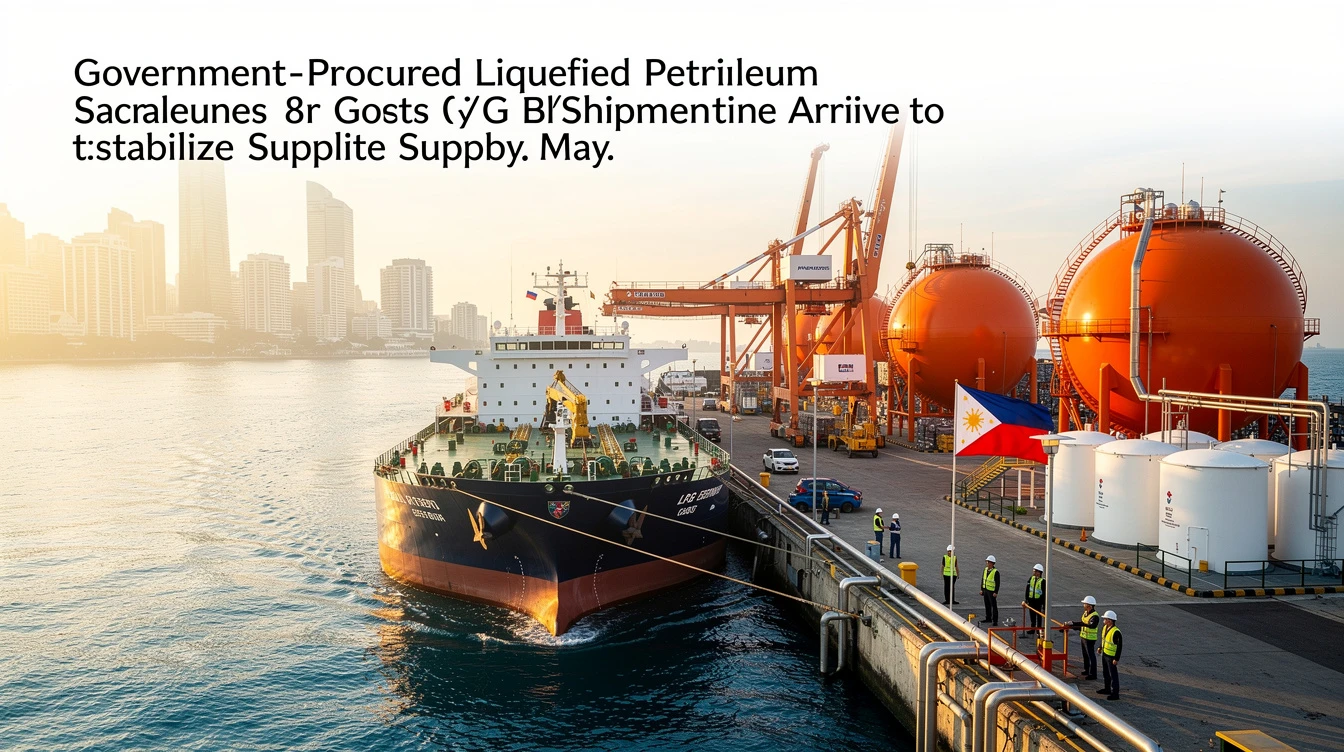
The Department of Energy (DOE) confirmed on Tuesday that 22,000 metric tons of government-procured liquefied petroleum gas (LPG) will arrive in Philippine ports in May. This strategic import is designed to boost national reserves and stabilize prices ahead of the peak demand season.
The shipment is a direct intervention to prevent hoarding and ensure sufficient supply for over 10 million Filipino households reliant on LPG for daily cooking. Energy Secretary Raphael Lotilla stated the move is "preemptive" to shield consumers from volatile global market prices.
"This procurement is a buffer stock to guarantee that our public markets and sari-sari stores have affordable, accessible LPG," Lotilla said in a statement. The DOE will coordinate closely with the Philippine National Police to monitor warehouses and crack down on illegal stockpiling.
The Philippine LPG industry currently requires approximately 1.25 million metric tons annually to meet domestic demand. Local production only accounts for a fraction, around 22,000 MT, making the country heavily dependent on imports from the Middle East and Southeast Asia.
Global supply chain disruptions and conflicts in key oil-producing regions have recently pressured international LPG prices. The DOE's buffer stock aims to insulate the local market from these external shocks for at least the next quarter.
Industry data shows sales of smaller, more affordable 5-kg LPG cylinders have increased significantly. This trend indicates heightened sensitivity to price changes among lower-income Filipino families and micro-enterprises like street food vendors.
The government's procurement will supplement the inventories of major oil companies and distributors nationwide. The DOE has mandated that a portion of the imported volume be allocated for the refilling of standard 11-kg and the more economical 5-kg cylinders.
"We are ensuring that the supply chain, from the ports to the provinces, is fully stocked," a senior DOE official explained. The agency will publish weekly inventory reports to promote transparency and deter speculative practices in the market.
For overseas Filipino workers (OFWs), stable LPG prices in the Philippines mean less financial pressure on the families they support back home. Sudden spikes in basic commodity costs directly impact the remittances sent to cover household expenses.
The arrival of the LPG in May is timed before the onset of the rainy season and the back-to-school period, when household consumption typically rises. Stable energy costs are also critical for restaurants, bakeries, and food manufacturing sectors.
This government action underscores the Marcos administration's focus on managing inflation through direct market interventions. Securing essential commodity supplies is a key part of the country's overall economic stability strategy.
For Filipino readers, this proactive measure by the DOE is crucial for maintaining household budget predictability. It directly affects the cost of preparing meals, a fundamental daily expense for every family, and helps curb the overall inflation rate that impacts all goods and services.