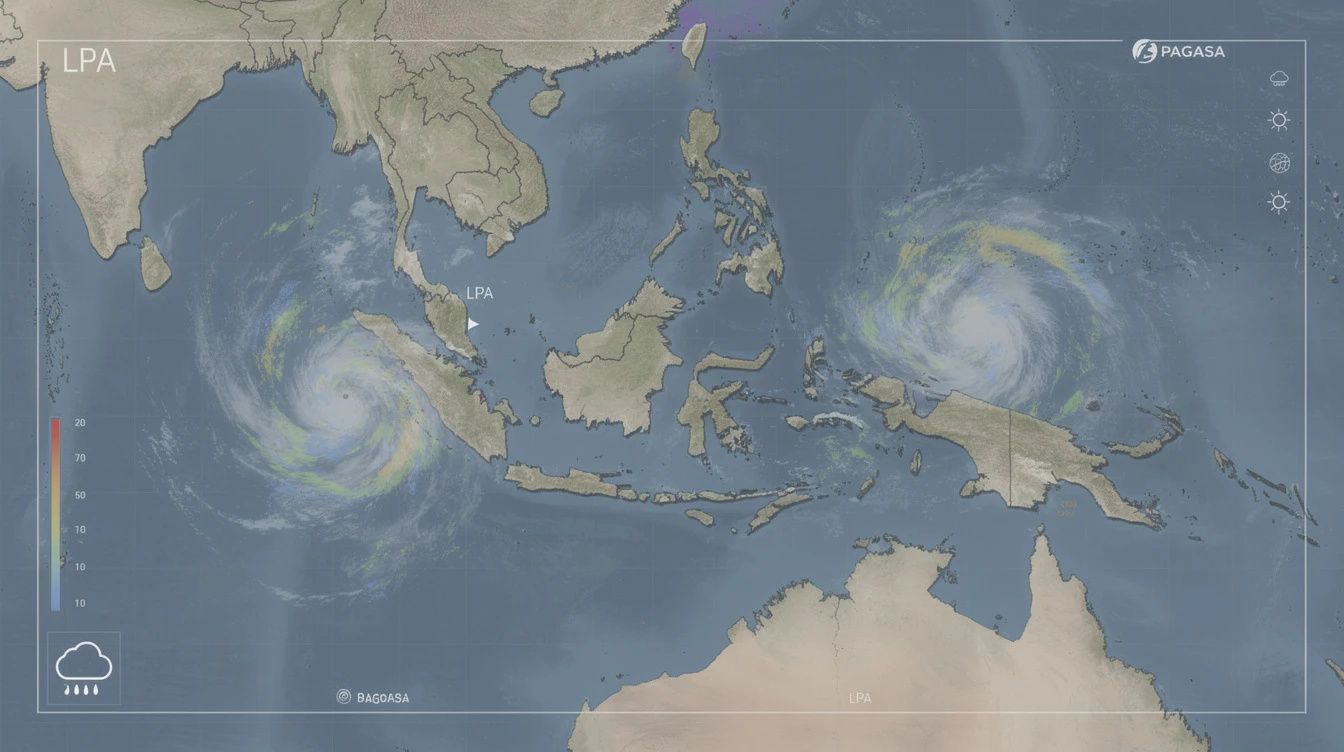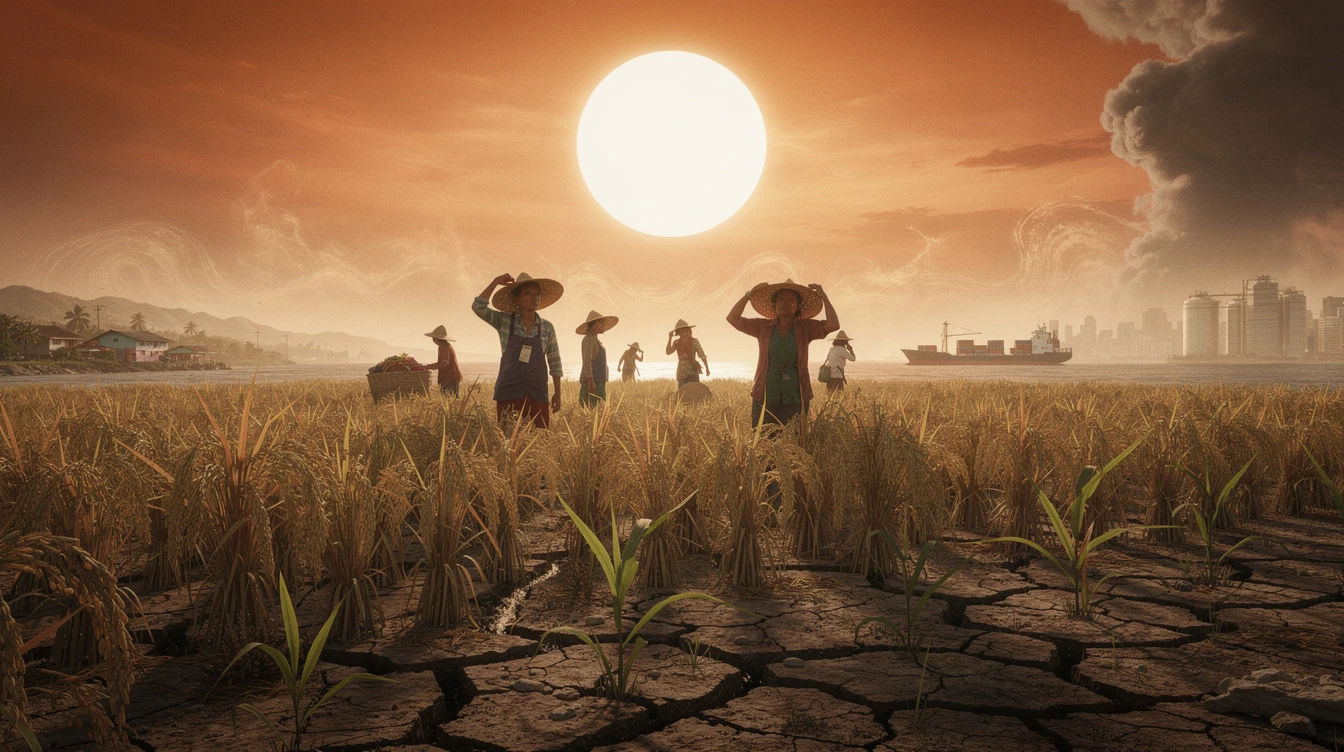
The world is getting hotter — and our food is paying the price. A landmark report released on April 22, 2026, by the Food and Agriculture Organization (FAO) and the World Meteorological Organization (WMO) warns that extreme heat is pushing global food systems to the brink.
For the Philippines, a nation where agriculture employs nearly a quarter of the workforce, this is not a distant threat. It is a present crisis unfolding under the tropical sun.
Extreme
The report highlights that extreme heat currently causes about half a trillion work hours lost each year worldwide. It threatens crops, livestock, fisheries, and the livelihoods of more than 1 billion people .
"This work highlights how extreme heat is a major risk multiplier, exerting mounting pressure on crops, livestock, fisheries, and forests, and on the communities and economies that depend upon them," said FAO Director-General Qu Dongyu in the report.
When temperatures climb above a certain threshold, crops stop growing optimally. Heat stress damages plant cells, reduces photosynthesis, and can trigger toxic compounds in food crops. Livestock suffer reduced milk production and fertility. Fish stocks shift to cooler, deeper waters — reducing catches for coastal communities.
Pushes
The FAO-WMO report found that for every 1°C rise in average global temperatures, yields of the world's four major crops — maize, rice, soy, and wheat — fall by about 6%. This is not a future risk. It is already happening at current warming levels of around 1.2°C above pre-industrial averages.
Globally, extreme heat already causes roughly half a trillion work hours of lost labor annually. The International Labour Organization (ILO) has called this one of the most significant climate threats to workers worldwide.
Research consistently shows that crop yields decline progressively as temperatures rise. The table below summarizes projected impacts on the world's major staple crops:
| Warming Level | Maize Yield Loss | Rice Yield Loss | Soy Yield Loss | Wheat Yield Loss |
|---|---|---|---|---|
| 1°C above pre-industrial | ~6% | ~6% | ~6% | ~6% |
| 2°C above pre-industrial | ~12–15% | ~10–12% | ~9–11% | ~11–13% |
| 3°C above pre-industrial | ~20–25% | ~15–18% | ~14–17% | ~17–20% |
For the Philippines, where rice is the staple food on every table, a 6% loss per degree already means less harvest per hectare. At 2°C of warming — which scientists project could arrive by mid-century without ambitious climate action — Philippine rice production could face double-digit yield losses annually.
The Philippines ranks among the world's most climate-vulnerable nations. As an archipelago of over 7,600 islands , its food systems are deeply tied to climate patterns. Rice farmers in Luzon , fisherfolk in the Visayas , and coconut growers in Mindanao all face the same escalating threat: temperatures that make traditional farming harder every year.
According to the FAO-WMO report, extreme heat events have increased sharply in frequency, intensity, and duration over the last 50 years . The Philippines has already experienced record-breaking heat indices exceeding 50°C in some areas during the 2024 dry season. Schools suspended classes. Construction and agricultural workers were told to stay home.
If global warming reaches 2°C , the intensity of extreme heat events is expected to roughly double. At 3°C , it will quadruple compared to 1.5°C. The country must prepare for a future where extreme heat is not just uncomfortable — it is dangerous and economically devastating.
More than 1 billion people globally depend on agriculture for their livelihoods. In the Philippines, smallholder farmers form the backbone of rural communities, yet most lack access to irrigation, heat-resistant seeds, or crop insurance.
When temperatures exceed safe working thresholds, farmworkers face a cruel choice: risk heatstroke in the fields or watch their crops wither. The loss of half a trillion work hours annually worldwide translates to lower harvests, reduced household income, and deepening poverty in rural areas already struggling with thin margins.
Livestock face similar stress. Dairy cows produce less milk under extreme heat, with fat and protein content declining. In Philippine fisheries, warming waters push fish populations to deeper, cooler areas — reducing catch sizes for coastal fishing communities that depend on daily catches for protein and income.
Without adaptation, the FAO-WMO report warns that extreme heat will force more land into agricultural production to maintain output, accelerating deforestation and biodiversity loss in already-fragile ecosystems.
The FAO-WMO report, titled "Extreme Heat and Food Systems", represents the most comprehensive joint analysis of the crisis to date. Mr. Zahedi , an FAO official, emphasized that adaptation alone is insufficient.
"The only lasting solution is ambitious, coordinated action to curb climate change," the report states. For the Philippines, this means both global advocacy — pushing for stronger emissions cuts under the Paris Agreement — and local investment in climate-resilient agriculture.
At the local level, experts recommend: expanding access to heat-tolerant rice varieties , improving irrigation infrastructure , deploying weather forecasting tools that help farmers plan around extreme heat events, and establishing early warning systems for heatwaves in farming communities.
FAO Director-General Qu Dongyu added that governments must support smallholder farmers — who produce roughly one-third of the world's food — with targeted climate finance and technology transfer. Without this support, the frontlines of the food crisis will keep deepening.
In practical terms, a warming world driven by extreme heat translates into higher food prices at the palengke. When rice yields fall 6% per degree of warming, reduced supply meets steady demand — pushing prices upward. The poorest Filipino families, who spend a disproportionately large share of income on food, bear the greatest burden.
Beyond rice, livestock and fisheries — critical sources of protein for Filipino households — face their own climate pressures. Smaller catches and lower milk production mean families may lose access to affordable nutrition.
The UN report is a clear wake-up call: every Filipino who eats rice, fish, or vegetables is connected to the food systems that extreme heat is dismantling. Every farmer who tills the land under a blazing sun bears a cost that the global emissions from industrialization have imposed on them.
For more on how climate change is affecting Philippine agriculture, read our article on Climate Change and Philippine Agriculture.
The FAO-WMO report is unambiguous: extreme heat is a "major risk multiplier" that worsens existing vulnerabilities in food systems and rural communities worldwide.
The path forward requires action on two fronts simultaneously. At the international level, the Philippines — as a signatory to the Paris Agreement — must advocate for stronger global emissions commitments. Every fraction of a degree of warming prevented averts real, measurable suffering.
At the national and local level, the government must invest in climate-resilient agriculture : heat-tolerant crop varieties, solar-powered irrigation, weather-indexed crop insurance, and community heat early-warning systems. Farmer cooperatives and local government units need resources and training to implement these solutions at scale.
Global
Climate finance from developed nations — promised but largely undelivered — must flow to countries like the Philippines that contribute least to global emissions yet suffer the most from their consequences. The alternative is a future where food scarcity drives conflict, displacement, and hunger on a scale the country has never seen.
The time to act is not next year or next decade. It is now, in every planting season, in every policy decision, and in every global negotiation where emissions commitments are made — or broken.