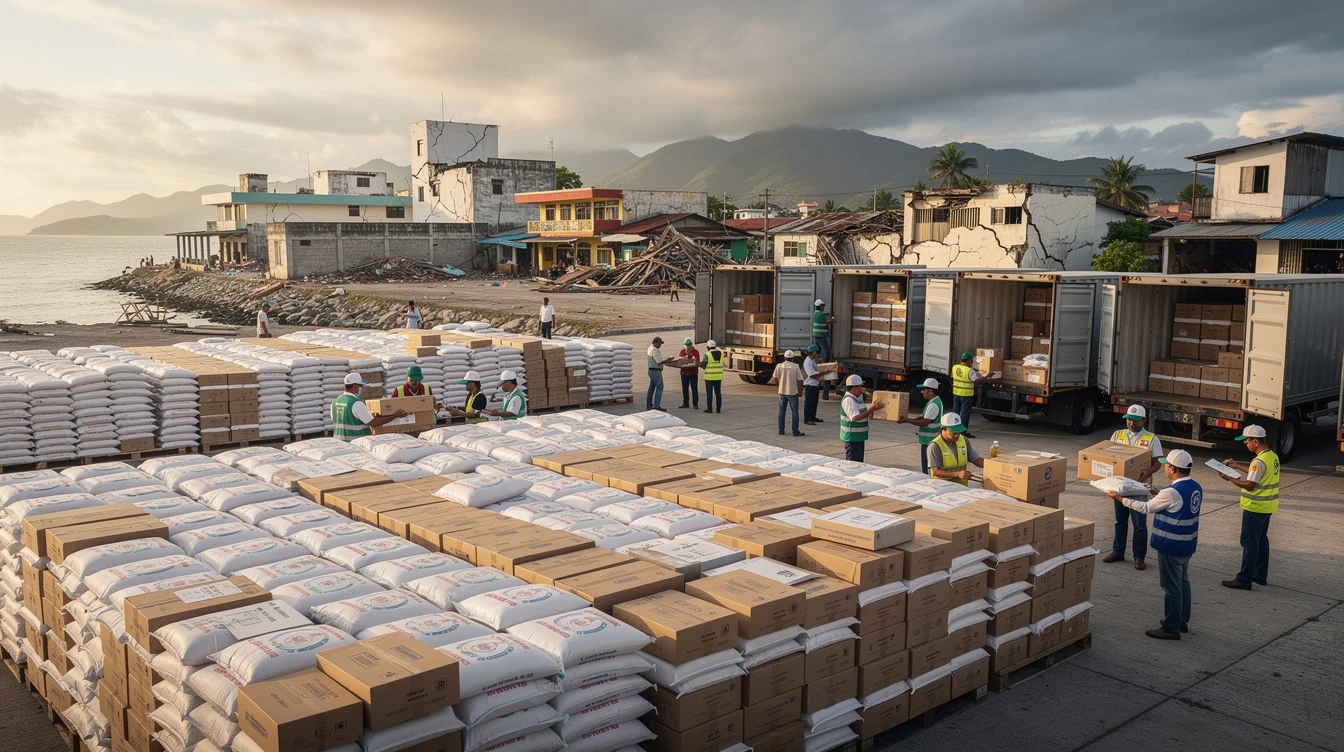
The Department of Social Welfare and Development (DSWD) announced Tuesday it is ready to deploy 443,000 family food packs following a magnitude 5.1 earthquake that struck near Bogo City, Cebu. The quake, recorded by the Philippine Institute of Volcanology and Seismology (PHIVOLCS), hit at a shallow depth, causing strong shaking in the area.
DSWD Secretary Rex Gatchalian confirmed the agency's disaster response teams are on standby. "We have prepositioned resources and are coordinating with local government units," Gatchalian stated. The family food packs contain rice, canned goods, and other essential items for a family's immediate needs.
The earthquake's epicenter was located 3 kilometers northwest of Bogo City. Initial reports indicated no major structural damage, but assessments are ongoing. The tremor was felt across parts of Cebu and neighboring islands in the Central Visayas region.
This rapid mobilization highlights the DSWD's enhanced disaster preparedness protocols. The agency maintains stockpiles in strategic warehouses nationwide. The 443,000 packs represent a significant portion of the national reserve for such emergencies.
Local disaster risk reduction management councils in Cebu have been activated. They are conducting rapid damage assessments and needs analysis. The Philippine National Police and Coast Guard are also on alert for possible aftershocks.
The earthquake serves as a stark reminder of the Philippines' vulnerability to seismic activity. The country lies on the Pacific Ring of Fire, experiencing frequent quakes. Preparedness at both national and household levels remains critical for Filipino community resilience.
For affected families, the immediate provision of food packs mitigates the initial shock and displacement. It allows local governments to focus on structural safety inspections. The aid ensures no family goes hungry in the critical first 72 hours post-disaster.
The DSWD's response is crucial for the socio-economic stability of the affected region. Cebu is a major economic hub, and disruptions can impact livelihoods. Timely government intervention prevents a deeper crisis for vulnerable populations.
This event underscores the importance of the National Disaster Risk Reduction and Management Council's (NDRRMC) integrated approach. Seamless coordination between national agencies and LGUs is essential for effective disaster response across the Philippine archipelago.
For millions of Filipinos living in earthquake-prone zones, this mobilization demonstrates the government's capacity to respond. It reinforces the need for every household to maintain their own emergency kits and family preparedness plans, as state resources, while robust, must be distributed widely.