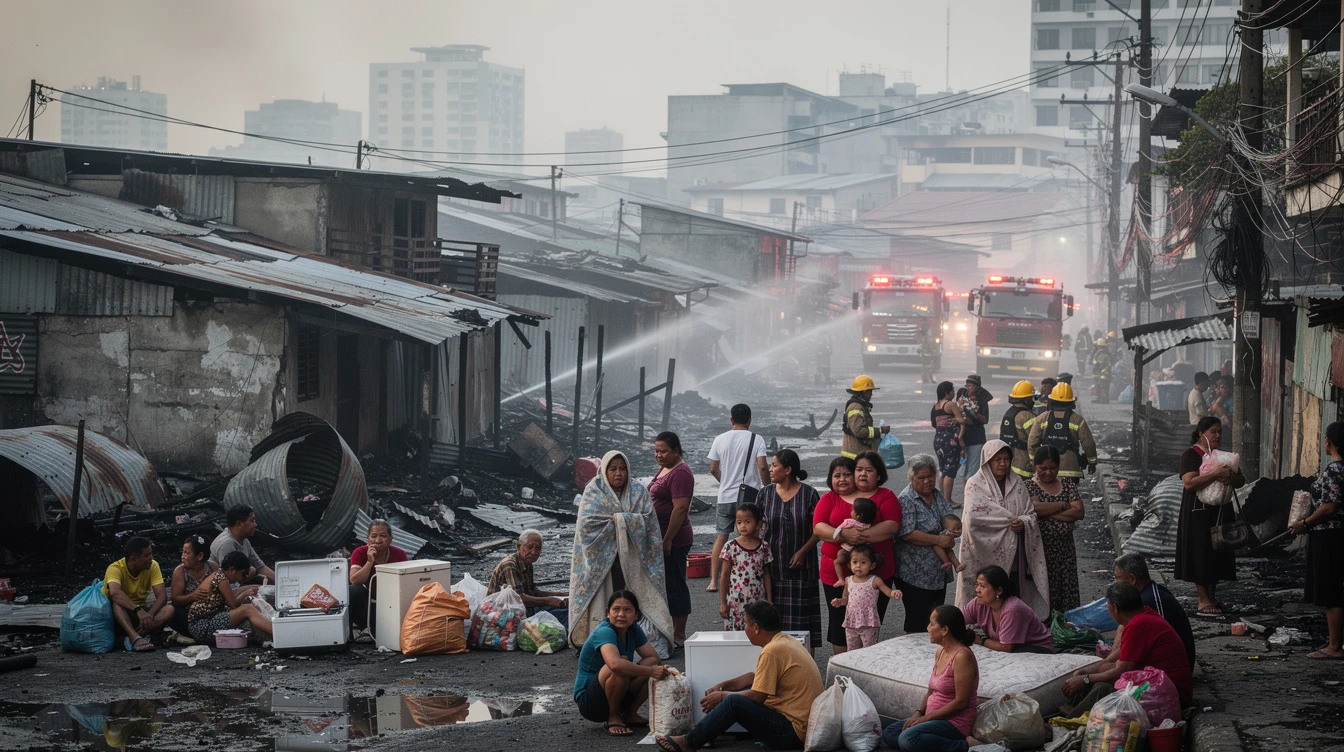
A fast-moving fire gutted residential houses in Sitio Proper, Barangay Ermita, Cebu City on Saturday night, April 4, 2026, displacing 98 families comprising 349 individuals. The blaze was the largest of five separate fires that struck Metro Cebu that day, intensifying concerns about urban fire safety in high-density communities.
The Cebu City Public Information Office confirmed the scale of displacement, noting that all affected residents were left homeless. Firefighters battled the flames for hours, successfully preventing any fatalities despite the rapid spread of the fire through tightly packed structures.
"Our personnel responded immediately, but the density of the area presented significant challenges," a Bureau of Fire Protection (BFP) official stated. The cause of the fire remains under investigation by authorities, who are assessing the total property damage.
This incident follows a troubling pattern for Cebu City, which recorded 26 fire incidents throughout March 2026 alone. The most destructive March fire occurred in Sitio Univille, Barangay Kasambagan on March 7, causing an estimated P3.9 million in damage and affecting nearly 300 residents.
The consecutive major blazes have placed immediate strain on local social services and emergency housing resources. The City Social Welfare and Development office is currently providing temporary shelter and essential aid to the hundreds of displaced individuals from the Ermita fire.
Urban planners note that many affected areas in Cebu City feature informal settlements with narrow access roads, making firefighting operations difficult. These conditions allow fires to escalate quickly, threatening large populations living in close proximity.
Community leaders in Barangay Ermita are calling for a comprehensive review of fire prevention measures and improved emergency response coordination. They emphasize the need for regular fire safety inspections and public education campaigns in vulnerable neighborhoods.
The BFP has reiterated its commitment to enhancing fire prevention efforts, particularly in identified high-risk areas. However, officials acknowledge that addressing underlying issues like overcrowding and substandard electrical wiring requires a multi-agency approach.
As displaced families begin the recovery process, local government units are coordinating relief efforts. The incident serves as a stark reminder of the persistent vulnerability of urban poor communities to devastating fires, especially during the dry season.
The total number of individuals displaced across all five Metro Cebu fires on April 4 exceeded 350, according to consolidated reports from the BFP and local disaster offices. This collective displacement underscores the regional scale of the fire safety challenge.