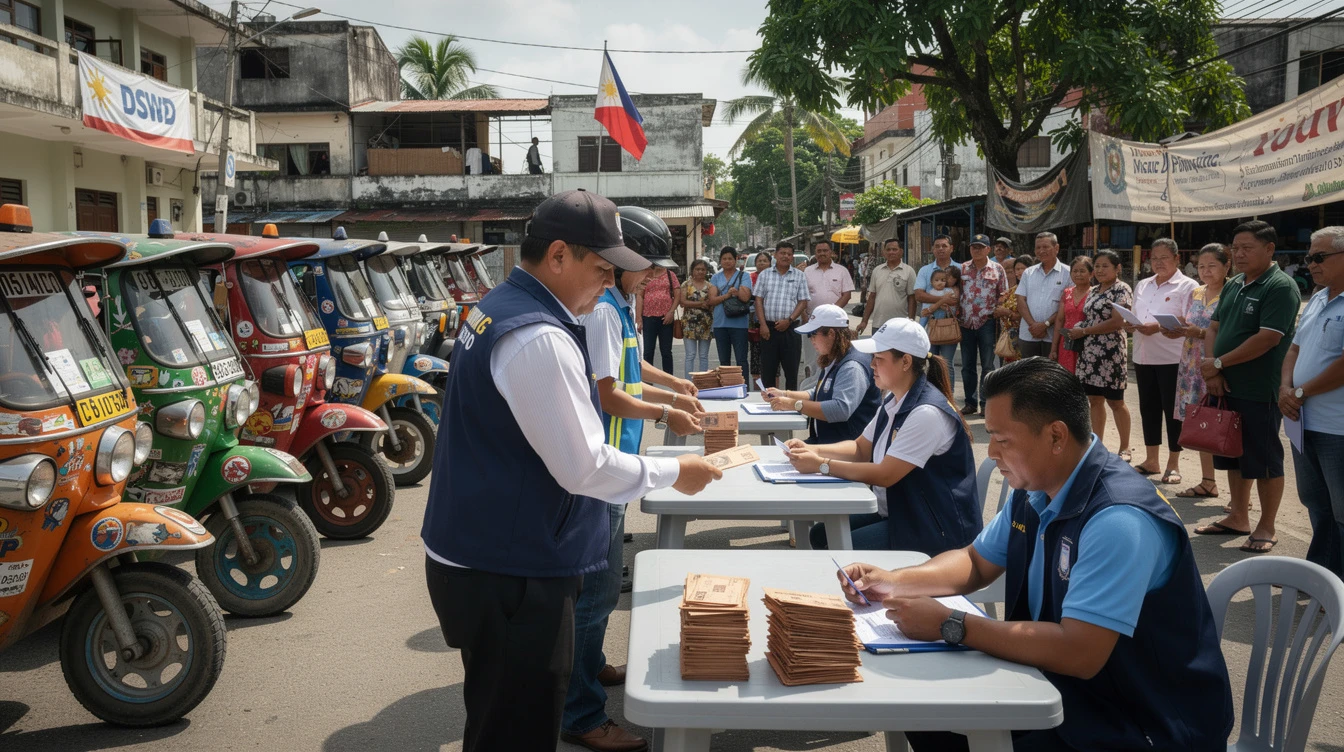
The Department of Social Welfare and Development has begun distributing P105 million in cash relief to approximately 21,000 tricycle drivers across the Philippines. The nationwide payout started this week, with each beneficiary driver receiving a one-time assistance of P5,000.
DSWD Secretary Rex Gatchalian confirmed the rollout, stating the aid targets drivers who are registered with their local government units. The program aims to provide immediate economic relief to a vital yet vulnerable sector of the informal transport industry.
"This assistance is for our tricycle drivers who continue to serve their communities despite economic challenges," Gatchalian said in a statement. The funds are being released simultaneously in various provinces to ensure wide coverage.
Tricycles are the primary mode of transportation in countless Philippine barangays, connecting residents to main roads and commercial centers. Drivers often face volatile daily incomes and high fuel costs, making them economically susceptible.
The cash aid program was initiated under the government's broader social protection framework. It seeks to cushion the impact of rising commodity prices and recent fuel price adjustments on essential service providers.
Local DSWD field offices are coordinating with local tricycle operators and drivers associations (TODAs) for the distribution. Beneficiaries are required to present valid identification and registration documents to claim their assistance.
The P105 million fund release represents a direct injection of capital into local economies nationwide. This sector-specific aid follows previous government support programs for jeepney drivers and other transport workers.
For the average tricycle driver, the P5,000 aid can cover several days of fuel, family groceries, or minor vehicle maintenance. This direct cash transfer bypasses bureaucratic layers for faster delivery of support.
The DSWD has assured the public that the distribution follows strict monitoring protocols to prevent duplication and ensure transparency. The department used its Listahanan database and LGU registries to identify qualified beneficiaries.
This initiative highlights the government's recognition of the tricycle sector's role in Philippine mobility. Millions of Filipinos, especially in rural and suburban areas, rely on tricycles for their daily commute and livelihood.
The payout is significant for Filipino families as it directly supports a ubiquitous but often overlooked profession. Many tricycle drivers are sole breadwinners, and this aid helps stabilize household incomes during difficult periods.
For the broader Philippine economy, supporting informal transport workers maintains essential mobility links. This ensures other workers and students can continue their daily routines, supporting overall economic activity.
The program's success could pave the way for more targeted aid for other informal sector groups. It demonstrates a policy shift towards recognizing and supporting the gig and informal economy that employs millions of Filipinos.