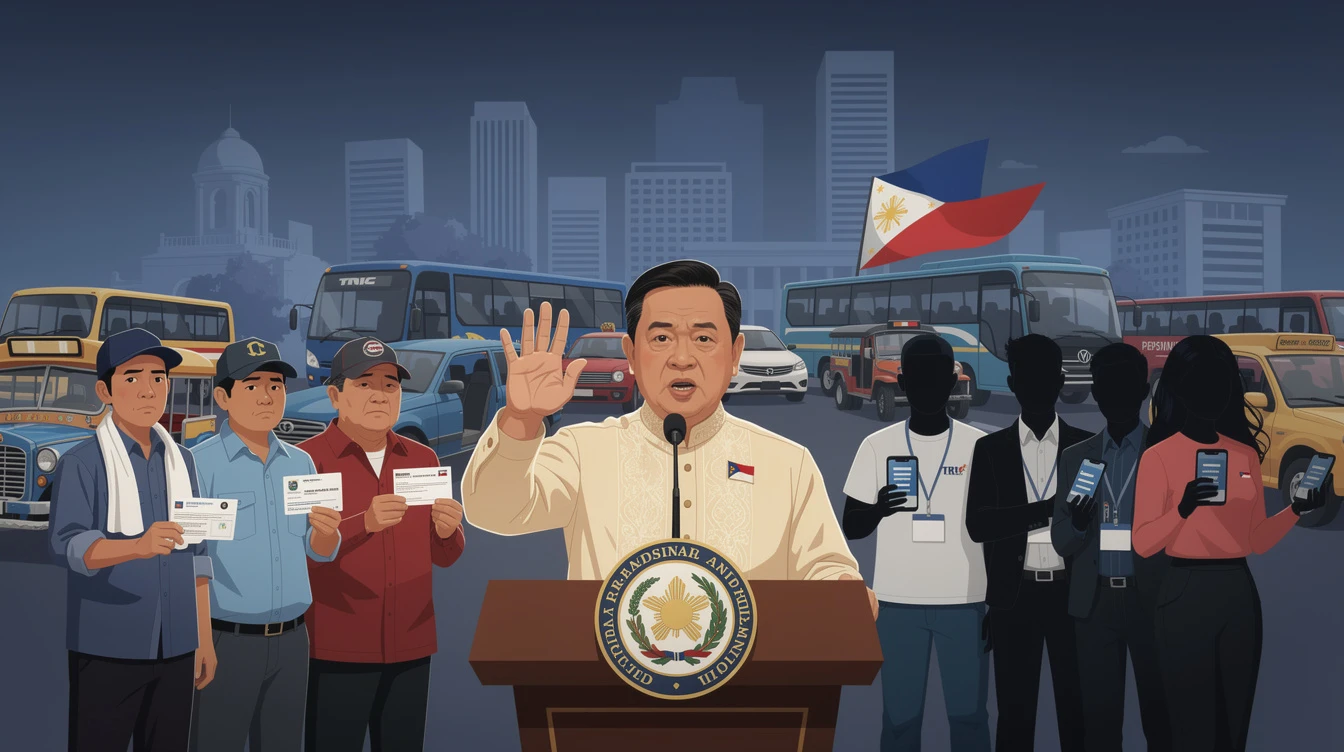
The Department of Social Welfare and Development (DSWD) Secretary Rex Gatchalian has issued critical reminders to transport network companies (TNCs) and their drivers ahead of a special cash aid payout for qualified public utility vehicle (PUV) workers. The warning comes amid reports of erroneous classifications and missing names from beneficiary lists, for which the government has been unfairly blamed.
Secretary Gatchalian specifically called out TNCs to strengthen communication with their riders and drivers to ensure all qualified beneficiaries are properly notified. He emphasized that the government is committed to expediting the cash aid distribution for jeepney drivers and other PUV operators affected by recent transport modernization programs and economic pressures.
"We urge TNCs to correct their classification of drivers and riders," Gatchalian stated in a recent press release. The DSWD chief noted that inaccurate data from private companies has led to confusion and delayed assistance for many Filipino families dependent on the transport sector for their livelihood.
The secretary also issued a direct warning to transport network vehicle service (TNVS) drivers: do not confront payout staff at distribution sites. Instead, drivers who believe they have been wrongly excluded should first check with their respective TNCs to verify their status and submission to the DSWD master list.
This special cash aid program targets thousands of Filipino transport workers grappling with rising fuel costs and reduced incomes. The payout is part of a broader government social protection package designed to cushion vulnerable sectors from economic shocks.
For the Philippine context, this intervention is crucial. The transport sector employs millions of Filipinos directly and indirectly, supporting entire households nationwide. Delays or errors in aid distribution can significantly impact family welfare, especially for those with members working overseas who rely on local income.
The DSWD's proactive stance aims to prevent chaotic scenes at payout centers, ensuring orderly and efficient delivery of assistance. The department is working to finalize accurate beneficiary lists before commencing large-scale distributions in key transport hubs across Metro Manila and major provinces.
Secretary Gatchalian reiterated that the government is not at fault for initial discrepancies. "The erroneous classification originated from the TNCs' submissions," he clarified, urging companies to rectify their data immediately to facilitate swift aid release.
This situation highlights ongoing challenges in public-private partnership for social services in the Philippines. It underscores the need for reliable data sharing between government agencies and private entities managing large workforces.
For overseas Filipino workers (OFWs), the efficient delivery of this aid provides assurance. Many OFW families include members in the transport sector, and timely support reduces the financial burden on those working abroad to send supplemental remittances.
The DSWD chief's commitment to expedite the process reflects the Marcos administration's focus on social protection as inflation and transport reforms continue to affect low-income households. The success of this payout will be closely watched as a model for future targeted aid distributions.
Ultimately, this news matters to every Filipino because it demonstrates the government's mechanism for supporting critical sectors during economic strain. It also serves as a reminder for private companies to uphold their responsibility in social partnership, ensuring that aid reaches the intended beneficiaries—the drivers and operators who keep the Philippine economy moving.