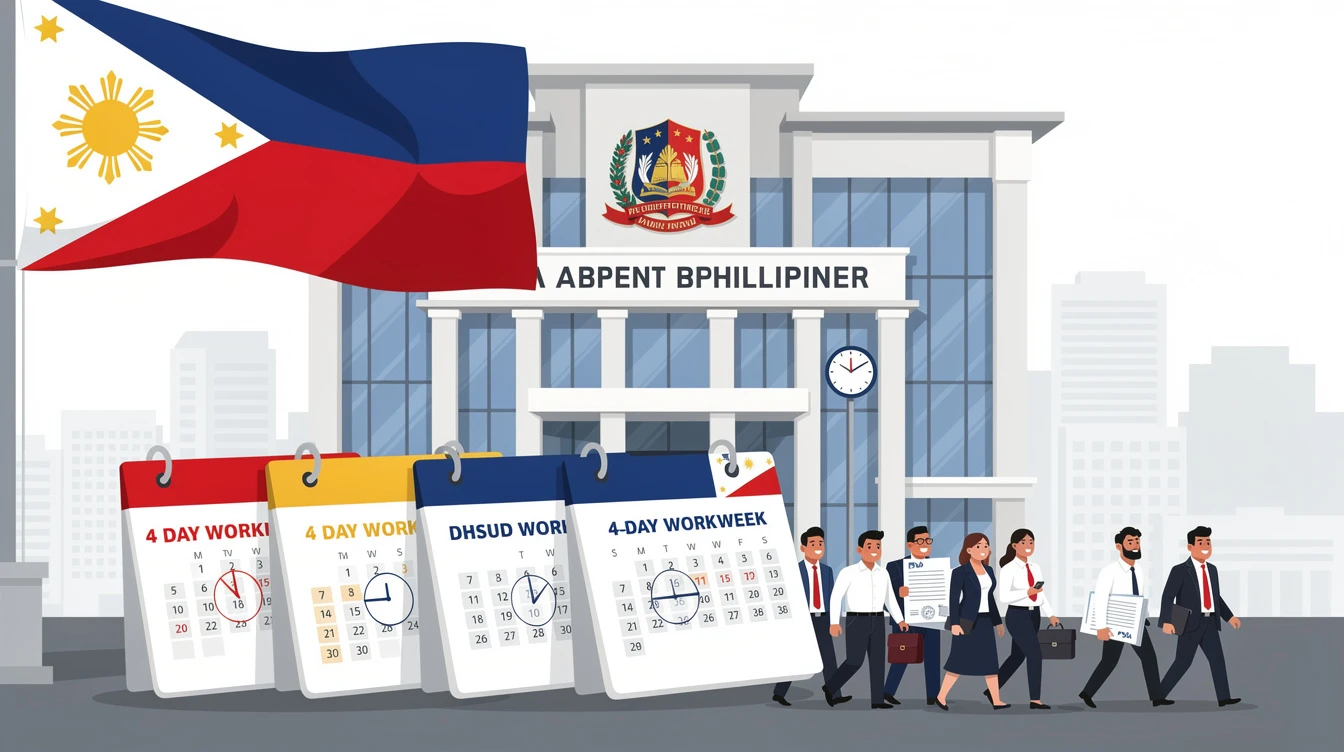
The Department of Human Settlements and Urban Development (DHSUD) will implement a compressed four-day workweek from April 13 to 17, 2026, following a formal directive from the Office of the President. The schedule requires employees to work from 8:00 AM to 5:00 PM from Monday, April 13, through Thursday, April 16. A regular eight-hour shift will resume on Friday, April 17. This move is part of a broader Philippine government initiative to enhance operational efficiency and reduce costs.
DHSUD Secretary Jose Rizalino Acuzar stated the adjustment aims to streamline public service delivery. "This compressed workweek allows us to consolidate our efforts and resources," Acuzar said. "We advise all clients and stakeholders to plan their transactions accordingly during this period." The department handles critical housing programs and urban development projects affecting millions of Filipinos.
The policy originates from Malacañang Memorandum Circular No. 114, officially enacted on March 16, 2026. The circular mandates the four-day compressed workweek across national government agencies. President Ferdinand Marcos Jr.'s administration promotes it as a strategy for modernizing the Philippine bureaucracy. The goal is to improve work-life balance for civil servants while maintaining public service continuity.
International studies on compressed workweeks, cited by the Philippine government, show significant benefits. A notable state implementation resulted in a 13% reduction in energy consumption. It also estimated employee savings of up to $6 million in gasoline costs. For the Philippines, this translates to lower utility expenses for government offices and reduced commuting costs for thousands of employees.
For Filipino DHSUD employees, the schedule means longer daily hours but a three-day weekend. This can benefit those with long commutes in Metro Manila and other urban centers. The potential savings on transportation are substantial given high fuel prices. It also allows more time for family, which is a core value for many Filipino workers.
The policy's impact on public service accessibility is a key consideration. DHSUD assures the public that essential services related to housing permits and beneficiary programs will remain available. The department will utilize online platforms to facilitate transactions during the adjusted workweek. This aligns with the government's push for digitalization in the Philippines.
For OFW families and beneficiaries of government housing programs, the announcement requires planning. Those needing to process documents with DHSUD should note the operational hours for that week. The department encourages using its online portals to avoid inconvenience. This is part of a larger shift toward more efficient, citizen-centric governance in the Philippines.
The compressed workweek experiment reflects a global trend adopted locally. If successful, it could lead to permanent adjustments in the Philippine government's work culture. The Marcos administration views it as a test case for improving productivity and employee welfare in the public sector. Other agencies are expected to follow DHSUD's implementation closely.
This policy matters deeply to Filipino readers as it directly affects government service delivery and the lives of civil servants. For a nation grappling with traffic congestion and high living costs, innovative work arrangements can offer relief. It represents a tangible step toward modernizing the Philippine bureaucracy for the benefit of both workers and the citizens they serve.